 blog
Is Hiring a Certified Steel Erector Worth It?
Table of Contents
- What Certification Actually Means for a Steel Erector
- Certified Steel Erector Qualifications and Credentials
- Steel Erection Contractor Cost: Certified vs. Non-Certified
- Risk, Liability, and Insurance: Why Certification Protects Your Project
- Questions to Ask a Steel Erection Contractor Before You Hire
- Steel Erection Project Timeline and Schedule Expectations
- How to Verify and Vet a Certified Steel Erector
- Conclusion
- Frequently Asked Questions
Last Updated: October 14, 2026
What Certification Actually Means for a Steel Erector
A certified steel erector has completed formal training, passed industry-recognized examinations, and maintains credentials proving competency in structural steel installation, including blueprint reading, structural safety standards, welding techniques, and on-site erection processes.
Certification signals that someone has met specific technical standards and understands the regulations governing structural steel work.
What most project managers miss is that certification creates a paper trail. If something fails later, a certified erector's credentials and documented training become critical evidence in liability investigations. A non-certified crew leaves you exposed.
Certified Steel Erector Qualifications and Credentials
The credentials that matter most vary by project type and location. Common ones include AWS (American Welding Society) credentials, OSHA safety certifications, and specialized structural steel erection training.
Entry-level positions typically require high school completion and willingness to learn on the job.
The real question is whether the credentials your project needs are present. A structural integrity issue on a commercial building requires different expertise than miscellaneous steel work on a storefront.
Steel Erection Contractor Cost: Certified vs. Non-Certified
Most pages stop at "certified costs more." What matters is what you're paying for, how the premium is structured, and whether it pays back on your project.
What actually drives the certified premium
A certified erector's higher rate is the sum of several real costs:
- Credential maintenance. AWS Certified Welder and Certified Welding Inspector credentials require testing and renewal. OSHA 10 and OSHA 30 cards, plus fall-protection and rigging training, must stay current, unpaid production time.
- Insurance and bonding. Structural steel crews carry higher general liability limits, workers' comp classifications rated for ironwork, and sometimes a surety bond, premiums baked into the labor rate.
- Supervision ratio. Structural erection under OSHA 29 CFR 1926 Subpart R requires a qualified rigger and a competent person for certain activities. A certified outfit staffs those roles; a low-bid crew often does not.
- Equipment and inspection. Certified crews are more likely to own calibrated torque equipment, keep rigging logs, and document bolt and weld inspections, all of which cost money.
How the two bids usually compare
A non-certified crew's quote is almost always lower on the labor line. On a small miscellaneous steel job, handrails, stair stringers, a storefront canopy, that gap can decide whether a project pencils out, and the certified premium often buys very little.
On structural work, the picture flips. The labor delta is a small fraction of total installed cost once you add steel material, crane time, connections, and inspection.
The costs that don't show up in the bid
Three cost categories rarely appear on either quote but hit the owner or general contractor directly:
- Re-inspection and re-testing. If a special inspector rejects welds or bolt tension, the re-test is on your dime unless the contract says otherwise.
- Schedule float. Rework pushes the critical path. On a commercial build, a week of delay can cost more in extended general conditions, crane rental, and subcontractor standby than the entire erector contract.
- Insurance and warranty exposure. If a failure traces to unqualified labor, your carrier may dispute the claim, a cost even when you win.
A simple way to decide
Ask three questions before picking the cheaper bid:
- Is the work structural, or miscellaneous? Structural connections, moment frames, and anything a professional engineer must sign off on generally require certified labor. Miscellaneous steel often does not.
- Will the work be specially inspected? If yes, the cost of failing inspection is high and predictable. Certified crews are built to pass it the first time.
- What is your downside if it fails? On a one-story shop, the downside is contained. On an occupied building, a school, or anything with public access, the downside is not.
If two or more answers are "structural," "yes," or "high," the certified premium is usually cheaper once you price the risk. If all three point the other way, a qualified non-certified crew can be right, provided you vet them as thoroughly as a certified one.
Risk, Liability, and Insurance: Why Certification Protects Your Project
"Certified crews are safer" is not a risk analysis. Here is what actually shifts when you hire a certified erector, and how to structure the contract and insurance so the protection is real.
The regulatory floor: OSHA Subpart R
Structural steel erection in the U.S. is governed by OSHA's steel erection standard, 29 CFR 1926 Subpart R. It requires a site-specific erection plan, a competent person for certain activities, qualified riggers for hoisting, and specific fall-protection and column-stability measures. A certified erector's training records are the easiest way to prove those roles are filled by qualified people. If an incident triggers an OSHA investigation, the compliance officer first asks for documentation that the competent person and riggers were qualified, and a crew with no paper trail has no defense.
How insurance actually responds, and when it doesn't
General liability policies don't exclude structural work just because the crew is uncertified. The real exposure is narrower:
- Additional insured status. Require the erector to name you and the owner as additional insureds on their general liability policy, with a primary and non-contributory endorsement. Without it, your own carrier may share the loss.
- Completed operations coverage. This responds to defects discovered after the work is done, a failed connection, a leak at a penetration, a weld that cracks in year two. Many low-cost policies limit or exclude it. Ask for the limits in writing.
- Workers' compensation classification. Ironwork carries a high experience modification rate. A poor EMR is a signal, not a disqualifier, it tells you what their safety record looks like.
- Wrap-up programs (OCIP/CCIP). On larger projects, the owner or GC may buy an Owner's or Contractor's Controlled Insurance Program covering all trades on site. If yours has one, the erector's own policy matters less for on-site injury, but their completed-operations coverage still matters for defects.
Contractual responsibility: who owns the connection
Liability follows scope. Two clauses decide most disputes:
- Scope of erection. Does the erector place steel only, or also complete final bolting, welding, and torque? If final connections go to another trade, accountability fragments and each party points at the other when a connection fails inspection.
- Standard of care and warranty. A well-drafted contract requires work to meet the contract documents, applicable codes, and AISC specifications, plus a workmanship warranty period. That warranty is only as good as the entity backing it, which is why bonding capacity matters on larger jobs.
State licensing and local code
Certification is not the same as a license. Some states and many municipalities require a contractor license for structural work, and some require a separate ironwork or steel erection classification. Verify the license at the state or local level, not just the trade credential. Local building departments also vary in how strictly they enforce special inspection for structural steel, a jurisdiction with rigorous special inspection effectively requires certified-quality work whether or not the crew holds a card.
What this means for your decision
Certification does not eliminate risk. It makes risk documentable, insurable, and contractually assignable, that is the actual value. Hire a certified erector and paper the contract correctly (additional insured, completed operations, defined scope through final inspection, warranty) and you convert open-ended liability into a bounded one. Skip those steps with an uncertified crew and you keep the savings and absorb the tail risk yourself. On structural work, that trade is rarely worth it.
Questions to Ask a Steel Erection Contractor Before You Hire
Before hiring any steel erection contractor, verify credentials and experience directly.
Request a detailed timeline accounting for site conditions, weather delays, and inspection schedules. Many projects slip because erectors underestimate fit-up, welding, and inspection time.
Ask about experience with your specific project type.
Inquire about quality control and rework. How do they handle defects found during inspection, and what's their turnaround time for fixes?
Ask whether they handle fit-up through final inspection or if they're only responsible for installation.
Steel Erection Project Timeline and Schedule Expectations
A typical steel erection timeline depends on building size, complexity, and site conditions.
Realistic timelines account for weather delays, inspection schedules, and proper connection assembly. Crews rushing aggressive schedules often skip steps that ensure structural stability.
Site conditions matter significantly. Tight spaces, existing infrastructure, or difficult access can slow work considerably. Outdoor conditions, rain, snow, extreme temperatures, affect welding quality and crew safety.
Ask for a detailed schedule broken into phases: structural erection, connection assembly, welding, and inspection. This shows they've thought through the work sequence and dependencies.
How to Verify and Vet a Certified Steel Erector
Start by requesting documentation of current certifications. Verify AWS credentials through the American Welding Society website (AWS -- Certification Search).
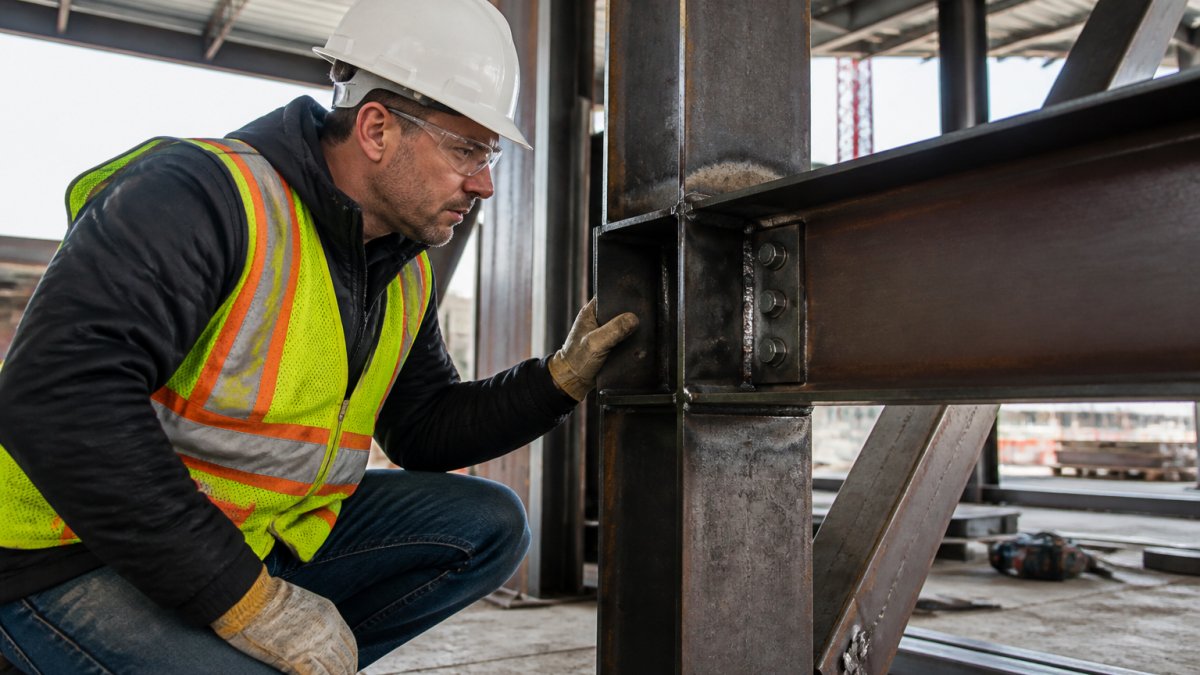
Request insurance certificates and verify coverage limits directly with the insurer.
For larger projects, consider hiring an independent inspector to observe the work and verify that connections meet specification. This adds cost but protects your investment.
Check whether the contractor has experience with your project type and building code jurisdiction.
Conclusion
Hiring a certified steel erector costs more upfront, but the protection is real: documented accountability, insurance coverage, regulatory compliance, and reduced liability if something goes wrong. Non-certified crews save money initially but expose your business to structural failures, code violations, and uninsured liability.
For structural work, certification isn't optional, it's the foundation of a safe, compliant project. At Patriot Iron Work, our focus on professional craftsmanship, high standards of safety, and efficient project execution means your steel erection work gets done right the first time.
Frequently Asked Questions
What certifications should you look for when hiring a certified steel erector?
Look for certifications from the American Welding Society (AWS), particularly AWS D1.1 for structural steel welding. Verify OSHA 30-Hour Card completion, which covers fall protection and working at heights. Check for AISC (American Institute of Steel Construction) membership or training completion. Ask for proof of current liability insurance and workers' compensation coverage. Request documentation of any specialized credentials specific to your project type, such as PEMB (pre-engineered metal buildings) experience or crane rigging certifications. Always verify credentials directly with issuing organizations rather than relying solely on contractor claims.
How can a certified steel erector reduce project risks?
Certified steel erectors understand structural integrity requirements, building codes, and safety protocols that prevent costly failures. They perform inspections and quality checks during installation, catching problems before they become expensive rework. Their training in fall protection and working at heights reduces accident risk on your site. Certified erectors carry liability insurance, protecting your project from financial exposure if something goes wrong. They follow established erection processes that maintain project schedules and prevent delays. Their documentation and compliance records simplify inspections and permit sign-offs, keeping your project moving forward.
What should you ask a steel erector before hiring?
Ask about their specific experience with projects matching your scope and size. Request references from recent clients in your industry. Inquire about their crew size, equipment availability, and ability to meet your timeline. Ask how they handle quality assurance and what happens if rework is needed. Confirm their current certifications, insurance coverage, and OSHA compliance training. Ask about their experience with on-site field work versus shop-based fabrication. Request a detailed timeline and understand their scheduling flexibility. Ask how they coordinate with other trades and whether they can serve as a single point of contact. Finally, ask for their process for handling changes or unforeseen conditions that might affect cost or schedule.
How does steel erection project timeline differ between certified and non-certified contractors?
Certified steel erectors typically follow structured erection processes that include pre-planning, inspection checkpoints, and quality verification, which can add 10-15% to upfront planning time but prevent delays later. Non-certified contractors may work faster initially but risk rework, inspection failures, and code violations that cause project stops. Certified erectors maintain detailed schedules and coordinate with inspectors proactively, avoiding surprise delays. Their experience with structural stability and working at heights means fewer safety incidents that would halt work. Certified crews are familiar with permit requirements and inspection procedures, reducing back-and-forth delays. Overall, certified erectors deliver more predictable timelines; non-certified work may appear faster upfront but often extends the overall project schedule due to corrections and compliance issues.