 blog
How to Find Reliable Welding Companies Around You
Last Updated: November 5, 2026
Quick Summary
To find reliable welding companies around you, compare capability, credentials, communication, schedule reliability, and past project evidence, and confirm whether they handle shop work, field work, or both. Ask about insurance, welder qualifications, and inspection before requesting a free quote with photos, dimensions, and site details.
- Confirm field capability before signing if your job needs on-site welding at an occupied facility.
- Mobile welding suits components too large or fixed in place to transport, plus urgent repairs.
- Ask mobile welders about power capacity, fire watch, insurance, and inspection scope.
- Settle finish and hardware before fabrication starts to avoid added cost and time.
- Send photos, dimensions, location, and timeline to get a faster, more accurate quote.
Table of Contents
- What Local Welding Companies Actually Do for Your Project
- Mobile Welding Services That Come to Your Site
- Custom Metal Fabrication: From Drawing to Installed Steel
- Steel Repair Services for Structural and Machinery Problems
- Steel Railing Fabrication and Iron Gate Work
- How to Compare Welding Companies Around You
- What to Send When You Request a Free Quote
- Frequently Asked Questions
What Local Welding Companies Actually Do for Your Project
Searching for welding companies around me usually means one thing: you have metal that needs to be cut, joined, repaired, or built, and you need someone who can do it right the first time.
The U.S. Bureau of Labor Statistics Occupational Outlook Handbook projects employment of welders, cutters, solderers, and brazers to grow 2% from 2025 to 2035, slower than the average for all occupations.
Shop Work vs. Field Work: Where the Job Gets Done
Most welding projects split into two environments, and knowing which one yours needs saves time and confusion.
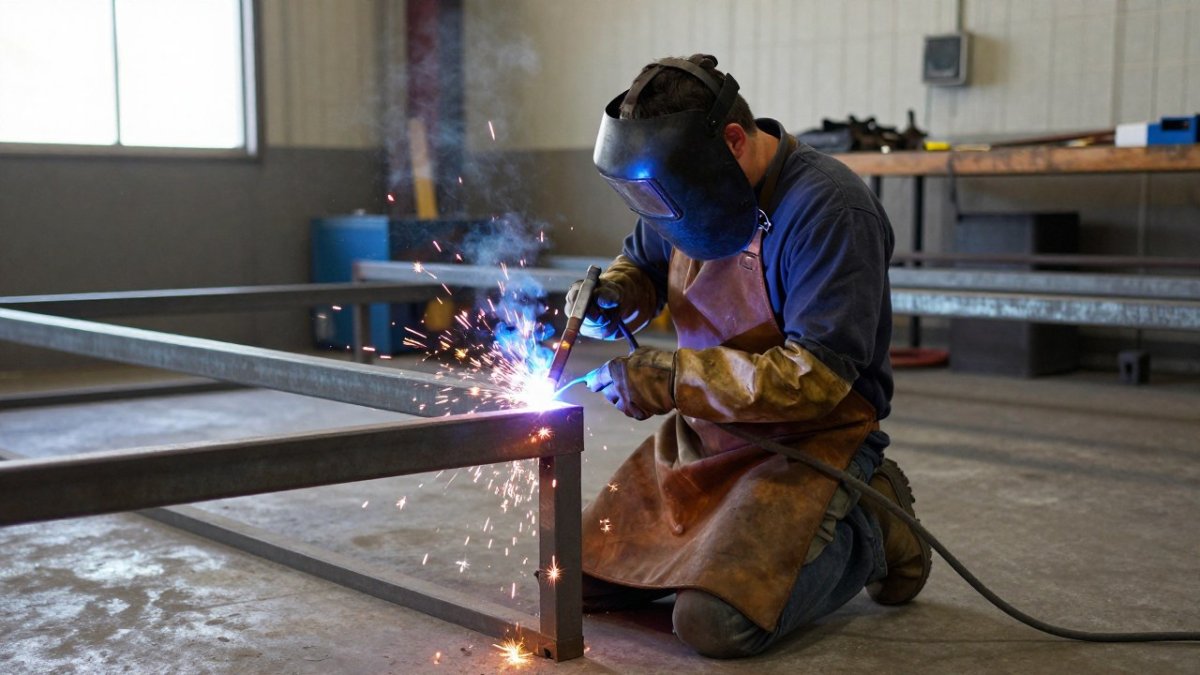
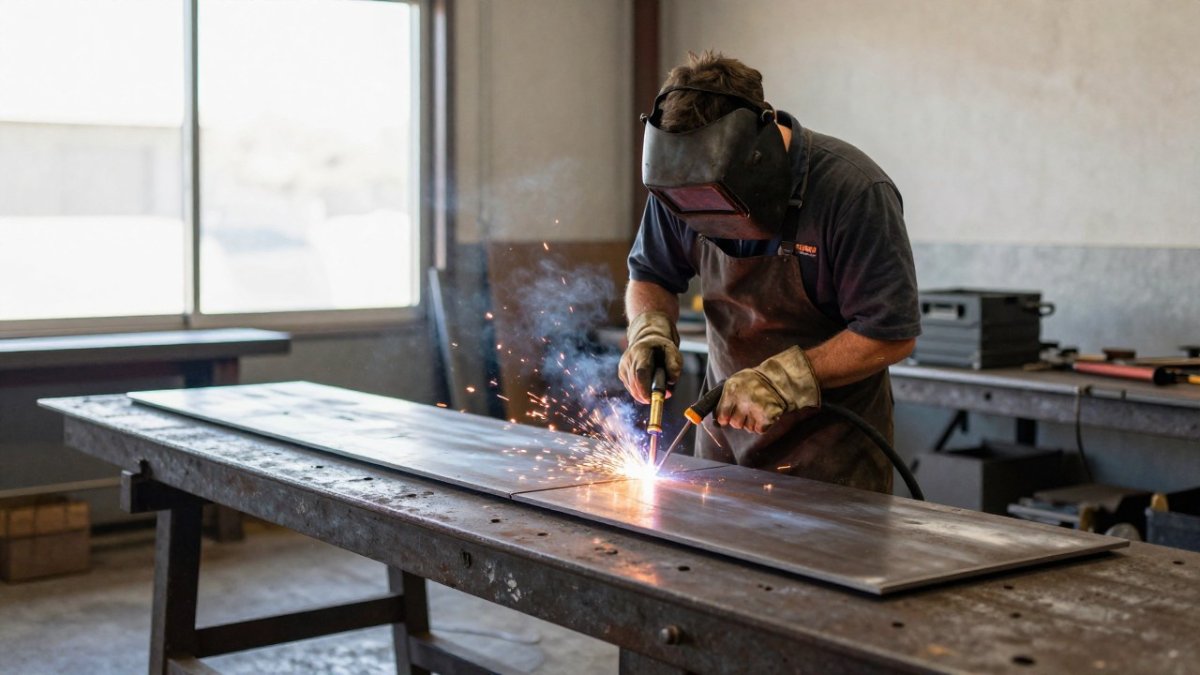
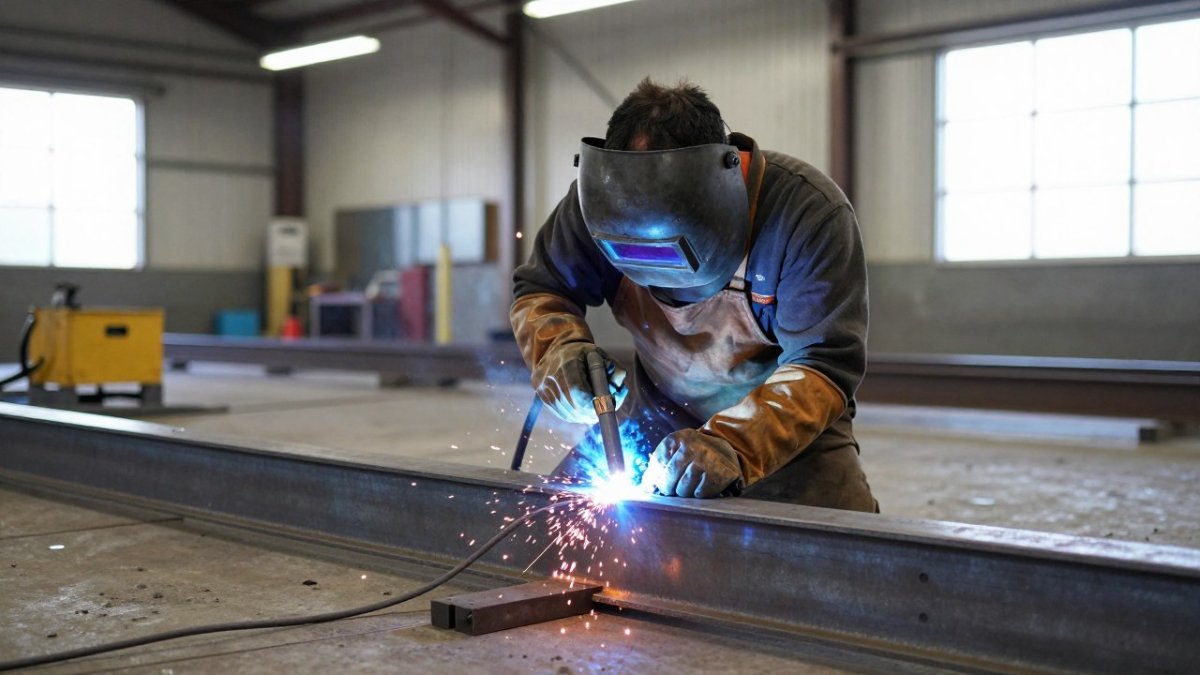
Shop work happens in a controlled fabrication facility. Components are cut, fitted, and welded on benches and jigs, then delivered to the site.
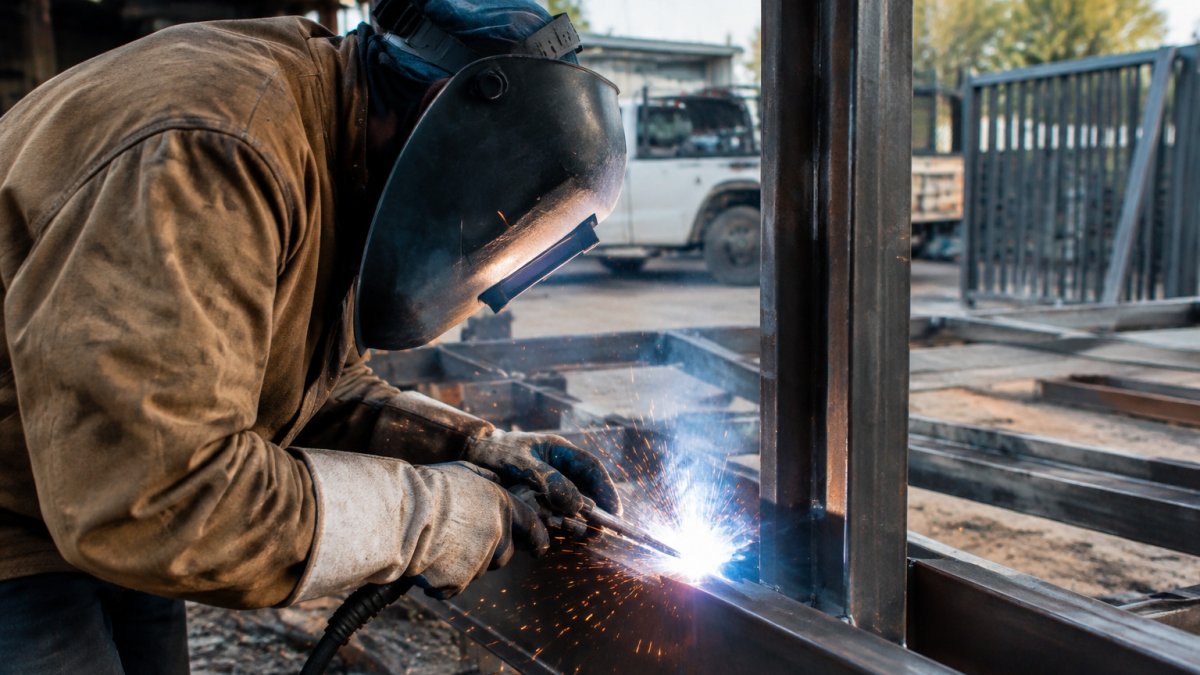
Field work happens on your property. Mobile welding brings the equipment and the welder to the jobsite.
A common mistake is assuming every shop can do both. Many are strictly shop-based.
Mobile Welding Services That Come to Your Site
Mobile welding is the answer when the metal cannot come to the shop.
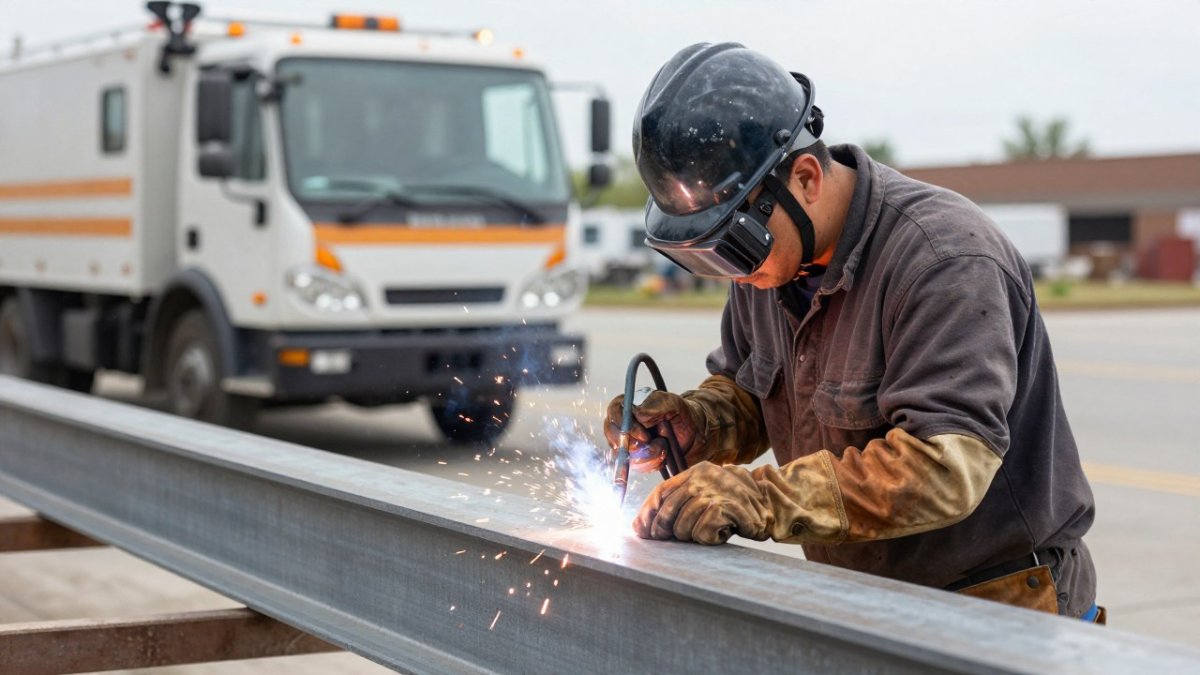
This matters most for facility managers and operations teams. A broken machine guard, a failed handrail connection, or a cracked structural bracket can stop production or fail an inspection. Hauling the component to a shop means downtime.
When Mobile Welding Is the Right Call, and When It Is Not
Mobile welding is not simply a shop on wheels. The equipment, power supply, and working conditions differ, and that affects what jobs a mobile crew can handle well.
Mobile welding is usually the right choice when:
- The component is too large or fixed in place to transport, such as a structural beam, a stair stringer welded to an existing frame, or a gate hinge post set in concrete.
- The repair is urgent and downtime is costly, like a cracked guardrail at a loading dock or a failed connection on a production line.
- The work is part of a larger site project, such as light structural steel erection or field modifications during a build-out.
- Access is tight and the job requires fitting and welding in position rather than in a controlled shop environment.
Shop work is usually better when:
- The component can be removed and transported without disrupting operations.
- The work requires precision machining, controlled atmosphere welding, or finish work that is hard to replicate in the field.
- The project involves multiple identical pieces that benefit from jigs and bench setup.
- Weather or site conditions would compromise weld quality outdoors.
A common mistake is assuming every mobile welder can handle structural work under load. Mobile rigs vary widely: some are set up for light repairs and railings, while others carry the equipment and power for structural steel. Ask directly whether the crew can handle fit-up, welding, and inspection as one scope, or whether you will still need a separate contractor for part of it.
What to Verify Before You Hire a Mobile Welder
Because mobile welding happens at your site, the vetting process matters more than for shop work. You are inviting a crew onto your property, and the work is often urgent, which can pressure you into skipping checks.
- Power and equipment capacity. Ask what machine they run and whether it can handle the thickness and process your job requires. A rig set up for light gauge sheet metal is not the same as one equipped for structural steel.
- Field safety practices. Mobile work involves hot work permits, fire watch, and coordination with your facility's safety rules. A professional crew will ask about these before arriving.
- Insurance and credentials. Confirm general liability coverage and ask about welder qualifications for structural work. Vague answers are a red flag.
- Response area and scheduling. Mobile welders serve a defined geographic radius. Confirm they cover your location and ask about typical response times for urgent calls versus scheduled work.
- Scope of work. Will they handle fit-up, welding, and inspection, or do they expect you to have the component prepped and ready? Clarify before the truck rolls.
You can review our mobile welding services for details on how on-site work is scoped. Not every mobile setup is equipped for structural work under load, so ask basic questions about power capacity, fire watch, and inspection before booking.
Custom Metal Fabrication: From Drawing to Installed Steel
Custom metal fabrication is the process of turning a design into a finished metal component, from cutting and forming raw steel through welding, finishing, and installation.
A typical custom fabrication workflow runs: review the drawing or site measurement, cut and form the material, fit and weld the assembly, finish it, then deliver and install.
If you are weighing whether custom work fits your building project, our breakdown of the 7 benefits of custom metal fabrication for commercial buildings covers the trade-offs in more depth.
Steel Repair Services for Structural and Machinery Problems
Steel repair services address damaged, worn, or failed steel in structures and equipment. That includes cracked welds, bent or fatigued members, corroded connections, and machinery components that need rebuilding rather than replacing.
Repair work depends on understanding the failure. A repair that only addresses the visible damage can fail again if the underlying cause, whether overload, poor original detailing, or corrosion, is never corrected.
For industrial plants, machinery repair is often urgent. For commercial properties, structural steel repairs often tie to an inspection finding or a visible defect.
Steel Railing Fabrication and Iron Gate Work
Steel railing fabrication and iron gate work sit at the intersection of function and appearance. Railings need to meet load and safety expectations; gates need to operate smoothly and secure the property.
Common projects include commercial stair and balcony railings, guardrails, driveway and pedestrian gates, and custom entryway metalwork for storefronts and hospitality venues. Material choice, finish, and hardware all affect how the piece holds up over years of use.
A practical tip: settle the finish and hardware before fabrication starts. Changing a finish after the steel is built adds cost and time.
How to Compare Welding Companies Around You
Comparing welding companies comes down to five factors: capability, credentials, communication, schedule reliability, and evidence of past work. Price matters, but it is the last filter, not the first. Most directories list names and phone numbers; what they do not tell you is how to separate a shop that can handle your job from one that will subcontract it or struggle with the scope.
Here is a practical comparison framework:
| What to Check | Why It Matters | Red Flag |
|---|---|---|
| Shop vs. field capability | Determines if they can do your job at all | "We only do shop work" on an on-site job |
| Credentials and insurance | Protects you if something goes wrong | Vague answers about coverage |
| Single point of contact | Fewer handoffs, fewer delays | You coordinate multiple crews |
| Schedule and milestones | Keeps your project on track | No written timeline |
| Past project evidence | Shows real workmanship | No references or examples |
What Each Factor Actually Tells You
Capability is not just whether they own a welding machine.
Credentials and insurance protect you from liability if something goes wrong. General liability coverage is the baseline.
Communication shows up in how they handle your first call. Do they ask about the job before quoting?
Schedule reliability is best judged by whether they provide a written timeline with milestones.
Past project evidence should be specific to your job type. A shop that has done many railings may not have erected structural steel.
Questions to Ask Before You Request an Estimate
Ask these before you commit, and expect direct answers:
- How do you verify weld quality? Look for a clear answer on visual inspection and any testing they perform. Our guide on how to verify structural steel weld quality walks through what to check and when.
- Who is my single point of contact? You want one person accountable from fit-up to final inspection.
- What is your process if rework is needed? The answer tells you how they handle problems.
- Can you show comparable past projects? Real examples beat a sales pitch.
- What is your typical lead time for a job like mine? This tells you how they schedule and whether they are realistic about capacity.
- Do you handle permits or coordinate with inspectors? For structural work, this matters. A company that knows the inspection process is a better partner than one that hands you a finished weld and walks away.
If you want a structured checklist for vetting contractors, our guide on how to hire reliable commercial welding contractors includes scope guidance, inspection steps, and a quote request.
What to Send When You Request a Free Quote
A complete quote request gets you a faster, more accurate estimate. Send the following:
- Photos of the site or the damaged component, from multiple angles
- Dimensions or a drawing, if you have one
- Material and finish preferences, if known
- Project location and site access details
- Timeline and any deadline constraints
- Whether the work is shop or field
The more detail you provide, the fewer assumptions the fabricator has to make. If you are still narrowing down local providers, our article on welding fab shops near me explains how to find quality local services.
Frequently Asked Questions
How do I choose a reliable welding company?
Start with the scope of your job, then match it to what the shop actually does. Ask whether the work happens in a shop or on site, what welding processes they use, and whether they carry insurance. Request a written estimate that lists materials, labor, and inspection steps. Check that the company has handled projects like yours, and ask how they handle rework if something fails inspection. A provider that answers these plainly, in writing, is usually the safer pick.
Can a mobile welder repair steel on-site?
Yes. Mobile welding services bring the equipment to your facility, storefront, or jobsite, which matters when the steel cannot be moved, such as a structural connection, a gate hinge, or a piece of machinery. Before booking, confirm the truck carries the right process for your job and that the welder can work within your site's safety and hot-work permit requirements. Ask how they handle weather and access, since outdoor field work depends on both.
How can I tell whether a welding company is qualified for structural steel work?
Ask directly what structural steel experience they have and request examples of comparable projects. Confirm they can provide a written procedure for the weld, describe how the work will be inspected, and show proof of insurance before mobilizing. For load-bearing connections, ask who signs off on the final inspection and whether they coordinate with your engineer. A company that handles fit-up through final inspection as one point of contact saves you from managing multiple trades.
What information should I provide when requesting a welding estimate?
Send drawings or clear photos of the existing condition, the material type and thickness if you know it, the quantity of pieces, and the site address. State whether the work is in a shop or on site, your target schedule, and any access limits such as loading dock hours or permit requirements. The more detail you give on project requirements up front, the more accurate the quote and the fewer change orders later.
Finding the right welding partner is about matching capability to the job, not just collecting quotes. At Patriot Iron Work, we handle custom fabrication, mobile welding, and structural steel erection as a single scope, with professional craftsmanship and high standards of safety on every project. Get started with Patriot Iron Work and put one accountable team on your next metal project.