 blog
5 Essential Steps for Industrial Metal Fabrication Projects
Last Updated: November 8, 2026
Quick Summary
The 5 essential steps for industrial metal fabrication are design and engineering, material selection, cutting and forming and assembly, quality control and inspection, and finishing and delivery and installation. Each step must be confirmed before the next begins, because metal fabrication problems caught on paper cost far less than problems caught in the shop.
- Shop drawings translate CAD intent into cut lists, weld symbols, and bend lines.
- Aluminum is roughly one-third the density of steel, which matters for overhead erection.
- Tack welding locks the layout before final welding commits the assembly.
- First-article inspection measures the first piece off each setup against the drawing.
- Cost drivers include material grade, design complexity, weld volume, finish type, and lead time.
Table of Contents
- Step 1: Design and Engineering Before Any Metal Is Cut
- Step 2: Material Selection and the Steel Fabrication Process
- Step 3: Cutting, Forming, and Assembly in the Fabrication Shop
- Understanding the Types of Metal Fabrication Processes
- Step 4: Metal Fabrication Quality Control and Inspection
- Step 5: Finishing, Delivery, and On-Site Installation
- A Practical Look at the Metal Fabrication Process Steps
- Request a Fabrication Quote for Your Next Project
- Frequently Asked Questions
Step 1: Design and Engineering Before Any Metal Is Cut
The first of the 5 essential steps for industrial metal fabrication is design and engineering, and it decides whether the rest of the project runs smoothly or fights you at every turn. A rushed drawing usually costs far more to fix in the shop than it costs to get right on paper.
Good metal fabrication starts with clear project requirements. You need to know the load, the environment, and how the finished piece connects to everything around it.
From CAD Files to Shop Drawings
Computer-aided design (CAD) is the software stage where the part takes shape as a 3D model. From there, a fabricator produces shop drawings, the detailed plans the shop floor actually builds from.
A common mistake is treating a design file as build-ready. It rarely is. Shop drawings translate intent into cut lists, weld symbols, and bend lines.
Before any cutting begins, confirm these items:
- Dimensions and tolerances match the design specifications
- Bend radius and material thickness are compatible
- Weld locations are reachable and clear
- Connection points line up with the structure on site
Prototyping a small section first catches problems cheaply. If you're new to how these services fit together, our guide to industrial metal fabrication services walks through cutting, welding, forming, and machining before you commit to a design.
Step 2: Material Selection and the Steel Fabrication Process
Material choice drives strength, weight, corrosion resistance, weldability, and lifespan. The steel fabrication process behaves differently depending on the alloy you pick, so this decision shapes every step that follows, and it is where most project risk is quietly created or avoided.
Matching the Alloy to the Application
Material selection means matching the metal to how the part will live, not to what is cheapest on the quote. A railing on a wet loading dock, a bracket inside a dry plant, and a gate exposed to road salt have very different needs. Material selection typically weighs several factors:
- Strength and load: Carbon steel and high-strength low-alloy (HSLA) steels carry structural loads with less material. Aluminum loses stiffness faster as spans grow, so it suits lighter, shorter members.
- Corrosion resistance: Stainless steel and galvanized steel resist moisture and chlorides; bare carbon steel needs a coating system or it will rust. Corrosion class should be set by the environment, not by habit.
- Weight and handling: Aluminum is roughly one-third the density of steel, which matters for overhead erection, mobile welding setups, and gate hardware.
- Weldability: Not every alloy welds the same. High-carbon steels and some aluminum grades are prone to cracking without preheat or a specific filler, so the joining method should be confirmed before the alloy is locked in.
- Availability and lead time: Standard stock shapes and common grades ship faster and cut waste. Exotic or mill-order material can add weeks before the first cut.
Here is how the trade-offs usually break down:
- Carbon steel: strong, affordable, and the default for structural work, but it needs protection from rust
- Stainless steel: resists corrosion well, which suits food plants, wash-down areas, and exterior hardware
- Aluminum: lighter and easier to handle, though it flexes more under load and needs the right filler and technique to weld
- Galvanized steel: zinc-coated for outdoor exposure such as railings and gates, but the coating must be restored at welds and cuts
For a deeper comparison, read our breakdown of steel vs aluminum fabrication for durability before you lock in a stock material.
Step 3: Cutting, Forming, and Assembly in the Fabrication Shop
Cutting, forming, and assembly turn flat stock into a finished part. Precision at this stage sets up everything else. If a cut is off, the fit-up suffers, and the weld has to fight to close the gap.
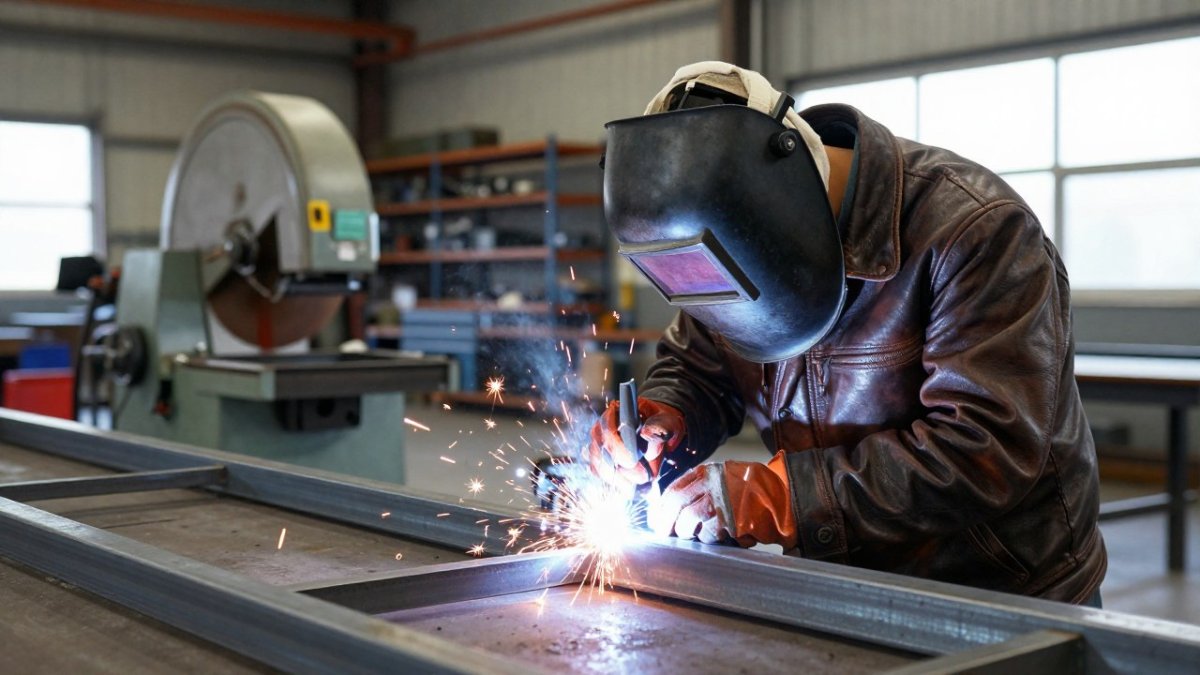
Metal cutting methods include shearing, sawing, and laser cutting. Forming and bending then shape the cut pieces, and bend radius matters because too tight a bend cracks the metal.
Welding, Fastening, and Fit-Up
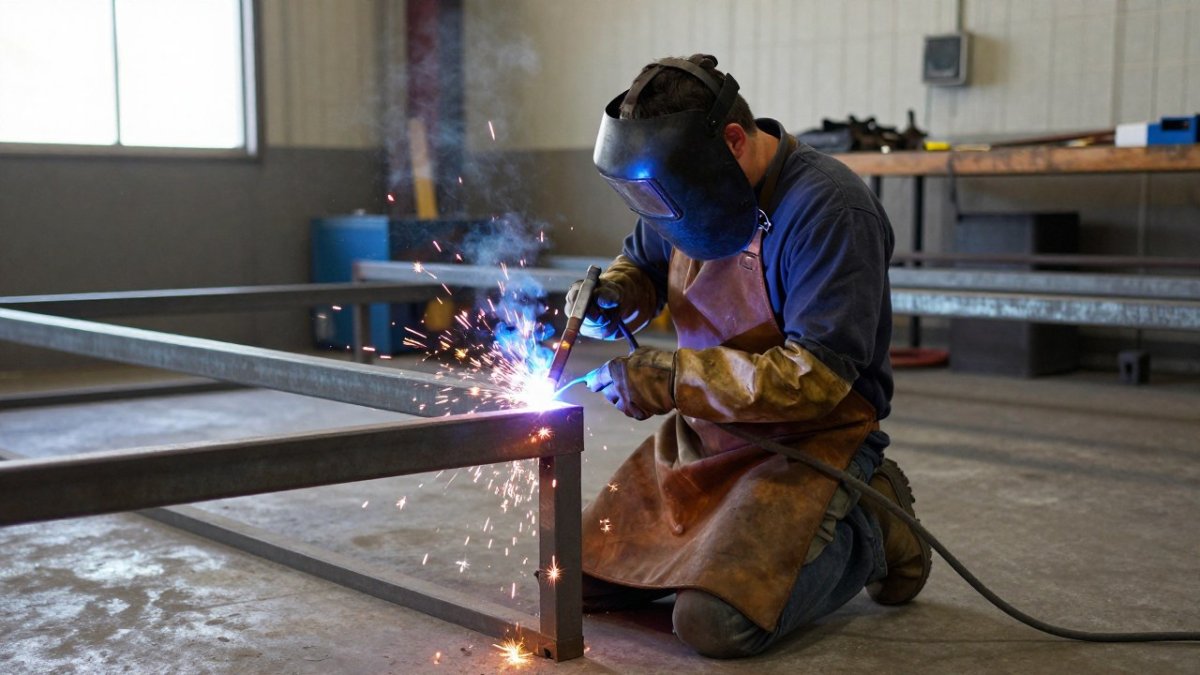
Assembly joins the pieces. Welding fuses metal for strength, while fastening and Cleco fasteners hold parts in place during fit-up so you can check alignment before committing.
Tack welding locks the layout first. Slot and tab joints help parts self-align.
Understanding the Types of Metal Fabrication Processes
The types of metal fabrication processes split into a few core families, and knowing them helps you read a quote and spot where the real work sits.
- Cutting: shearing, sawing, laser cutting
- Forming: bending, rolling, stamping
- Joining: welding, fastening, riveting
- Machining: drilling, milling, turning
- Finishing: coating, painting, galvanizing
Industrial metal fabrication often combines several of these in one job. A steel railing might be cut, bent, welded, and powder-coated before it ever leaves the shop.
Step 4: Metal Fabrication Quality Control and Inspection
Metal fabrication quality control is the checkpoint that keeps a project from failing after installation. Inspection confirms the work meets its tolerances before it ships, not after it is bolted down.
Tolerances, Testing, and Documentation
Tolerances are the allowed limits on size and alignment. They should be written on the shop drawings before fabrication, not negotiated after a part comes out wrong. An inspection plan typically sets checkpoints at several stages:
- Incoming material: verify grade, thickness, and mill certifications against the drawings before stock is cut.
- First-article inspection: measure the first piece off each setup against the drawing before the run continues.
- In-process checks: confirm bend angles, hole locations, and fit-up dimensions at each operation so errors are caught before welding locks them in.
- Final inspection: check overall dimensions, squareness, weld quality, and finish before shipment.
Dimensional accuracy gets checked against the shop drawings with tape, squares, and gauges appropriate to the tolerance. Weld quality gets a visual inspection for cracks, undercut, porosity, incomplete fusion, and spatter, with the weld size and length compared to the symbol on the drawing.
Documentation matters. Material certs, inspection records, and test results give you a paper trail if questions come up later.
If you are responsible for accepting structural work, our step-by-step guide on how to verify structural steel weld quality covers visual inspection, testing methods, and acceptance criteria.
Step 5: Finishing, Delivery, and On-Site Installation
Finishing protects the metal and sets the final look. **
Then comes delivery and installation. Site conditions rarely match the shop floor, so plan for access, rigging, and connection points ahead of time.
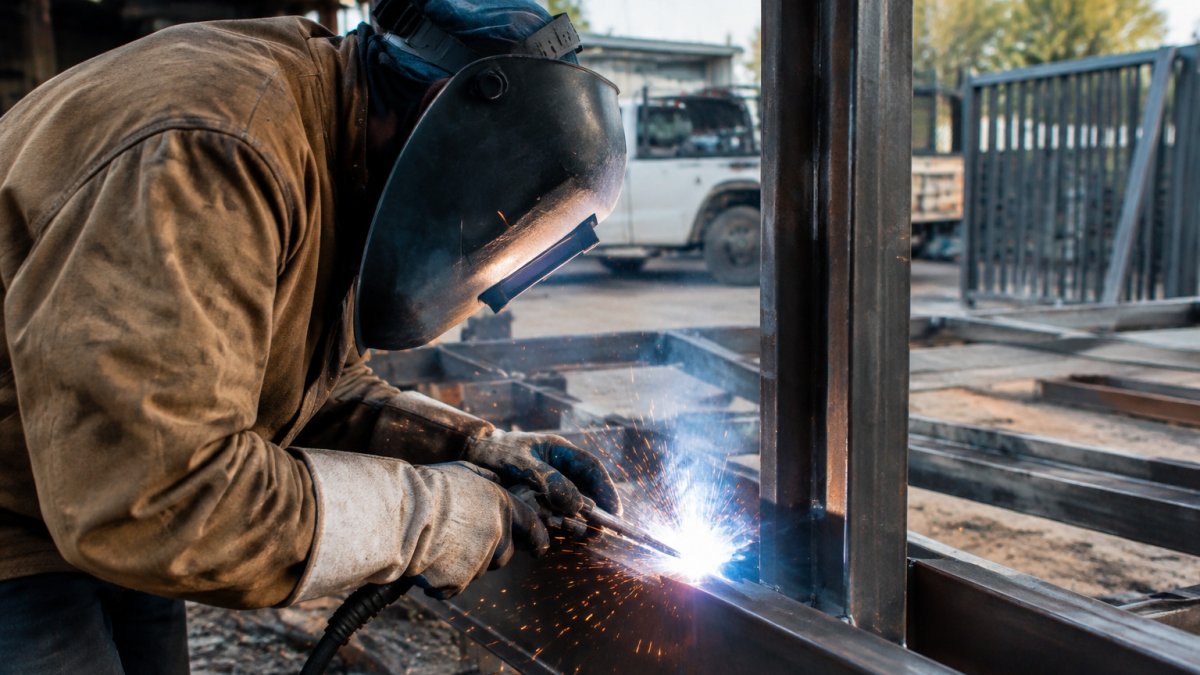
Light structural steel erection and on-site welding require careful planning around safety requirements and site conditions.
You can browse examples of finished work in our gallery to see what delivery and installation look like in practice.
A Practical Look at the Metal Fabrication Process Steps
Here's the whole workflow in one view, so you can see how the stages connect and where time and cost get decided.
| Step | What Happens | What to Confirm |
|---|---|---|
| 1. Design | CAD files become shop drawings | Dimensions and weld symbols are build-ready |
| 2. Material | Alloy chosen for the application | Strength, corrosion, and weight match use |
| 3. Cut, form, assemble | Cutting, bending, fit-up, welding | Bend radius and fit-up are correct |
| 4. Quality control | Inspection against tolerances | Certs and inspection records are complete |
| 5. Finish and install | Coating, delivery, on-site erection | Access and sequencing are planned |
Cost drivers sit in predictable places: material grade, complexity of the design, weld volume, finish type, and lead time.
Choosing a fabrication partner comes down to a few checks:
- Can they show inspection and documentation practices
- Do they handle shop work and field welding as one point of contact
- Can they meet your lead time and production volume
- Do they explain rework and quality issue turnaround up front
Safety and regulatory requirements belong in the conversation too. Ask how a shop manages field welding conditions and site safety before work starts.
Request a Fabrication Quote for Your Next Project
The gap between a smooth project and a painful one usually comes down to planning the five steps before the first cut. Get the design, material, and inspection plan right, and the rest follows.
Patriot Iron Work handles custom fabrication, welding, steel repairs, railings, gates, and light structural steel erection. We focus on professional craftsmanship and high safety standards. When you need work done on site with tight deadlines, our mobile welding service brings the shop to your facility.
Most metal projects fail on the details nobody planned for, not on the welding itself. If you want one team to own your fabrication from drawing to final inspection, Patriot Iron Work brings reliable welding solutions, high-quality service delivery, and a safety-first approach to every job. Get a free quote and tell us what you're building.
Frequently Asked Questions
What are the five essential steps for industrial metal fabrication?
The five steps are design and engineering, material selection, cutting and forming, assembly and welding, and quality control followed by finishing and installation. Each stage builds on the last, so a mistake in the design phase carries through to the finished weld.
What is the difference between metal fabrication and welding?
Welding is one joining method inside the broader metal fabrication process. Fabrication covers design, material selection, cutting, forming, assembly, quality control, and finishing. A welder joins steel; a fabrication shop turns a drawing into a finished, inspected assembly. For structural steel erection and on-site repairs, you need a shop that manages the full sequence, not just a welder with a truck.
How is quality checked during steel fabrication?
Metal fabrication quality control starts with incoming material verification, then continues through dimensional checks on cut and formed parts, weld inspection, and a final review against the shop drawings. Ask your fabricator what inspection records they keep and who signs off before material leaves the shop.
How do I choose the right fabrication partner for structural steel work?
Look for a shop that can explain its design review, material sourcing, fabrication, delivery, and on-site installation process. Ask about weld inspection practices, how they handle rework, and whether they can manage field welding at your facility under your safety requirements. For projects in Silver Spring, Montgomery County, and the DMV, confirm the shop serves your area and can meet your schedule before you award the work.