 blog
Steel vs Aluminum Fabrication for Durability
Table of Contents
- Steel vs Aluminum Fabrication: Core Differences in Durability
- Steel vs Aluminum Strength: Load-Bearing Performance
- Steel vs Aluminum Corrosion Resistance: Environmental Exposure
- Steel vs Aluminum Lifespan: Long-Term Service Life
- Aluminum Welding vs Steel Welding: Fabrication Challenges
- Choosing the Right Material: Application-Specific Recommendations
- Frequently Asked Questions
Last Updated: October 8, 2026
Steel vs Aluminum Fabrication: Core Differences in Durability
Choosing between steel and aluminum fabrication for a structural project comes down to how long the material must perform under real-world conditions, and understanding steel vs aluminum fabrication helps you make that decision.
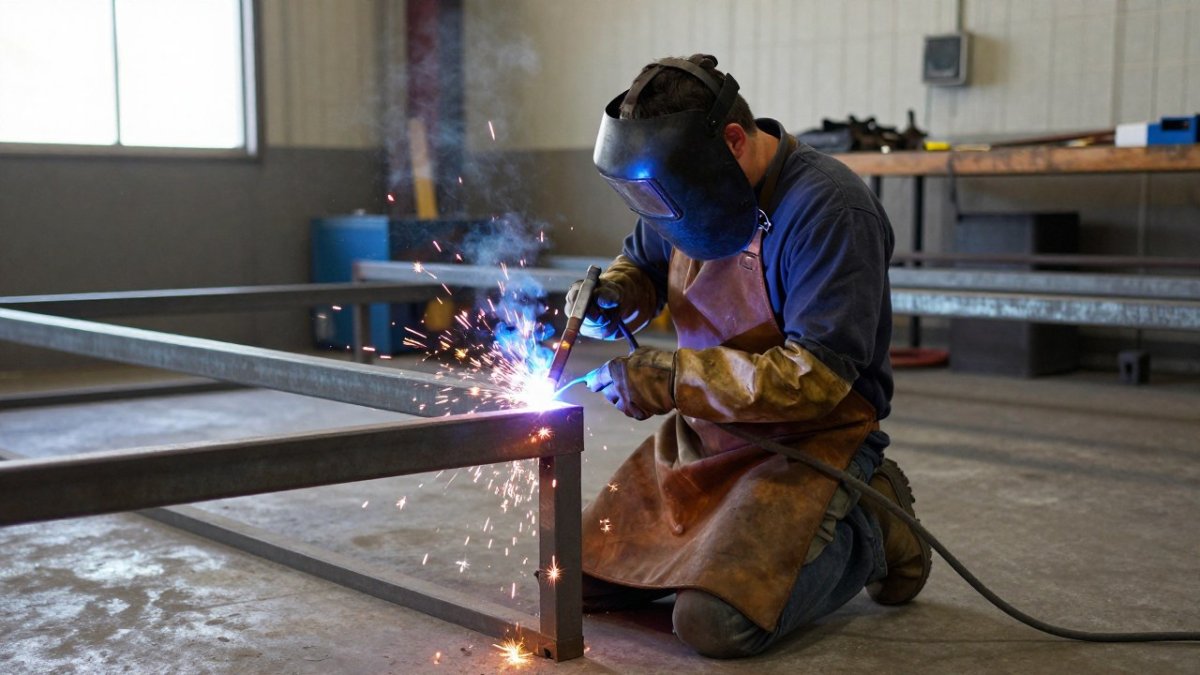
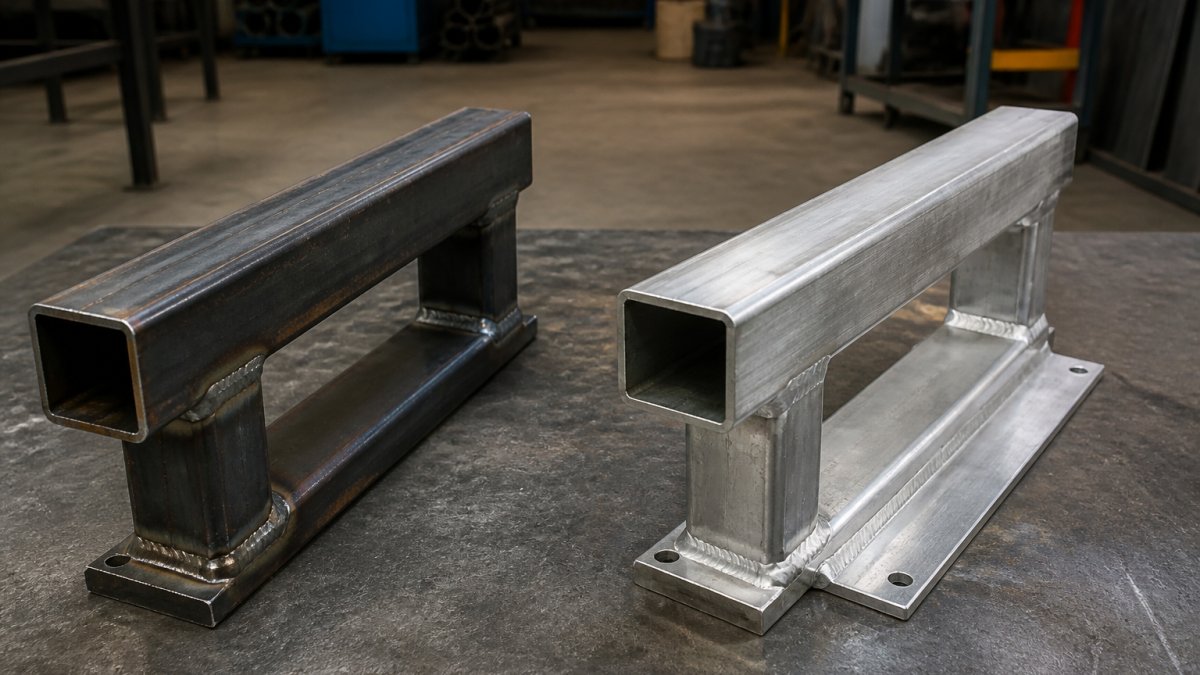
Steel fabrication produces components from iron-based alloys that are strong, dense, and affordable. Aluminum fabrication uses lightweight alloys that resist corrosion naturally.
The core question isn't which is better overall, it's which solves your specific problem.
- Steel offers higher strength per unit of material
- Aluminum corrodes less in wet or salty environments
- Steel requires more maintenance in harsh conditions
- Aluminum costs more upfront but lasts longer with zero rust protection
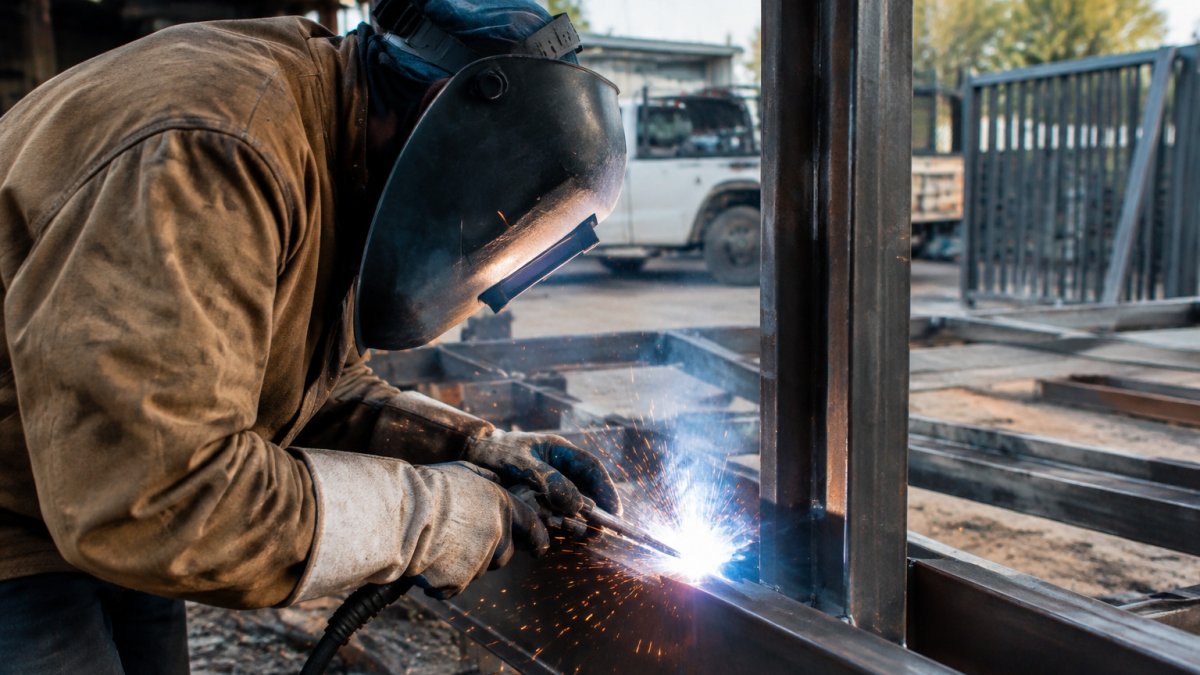
- Steel fabrication is simpler and faster in most shops
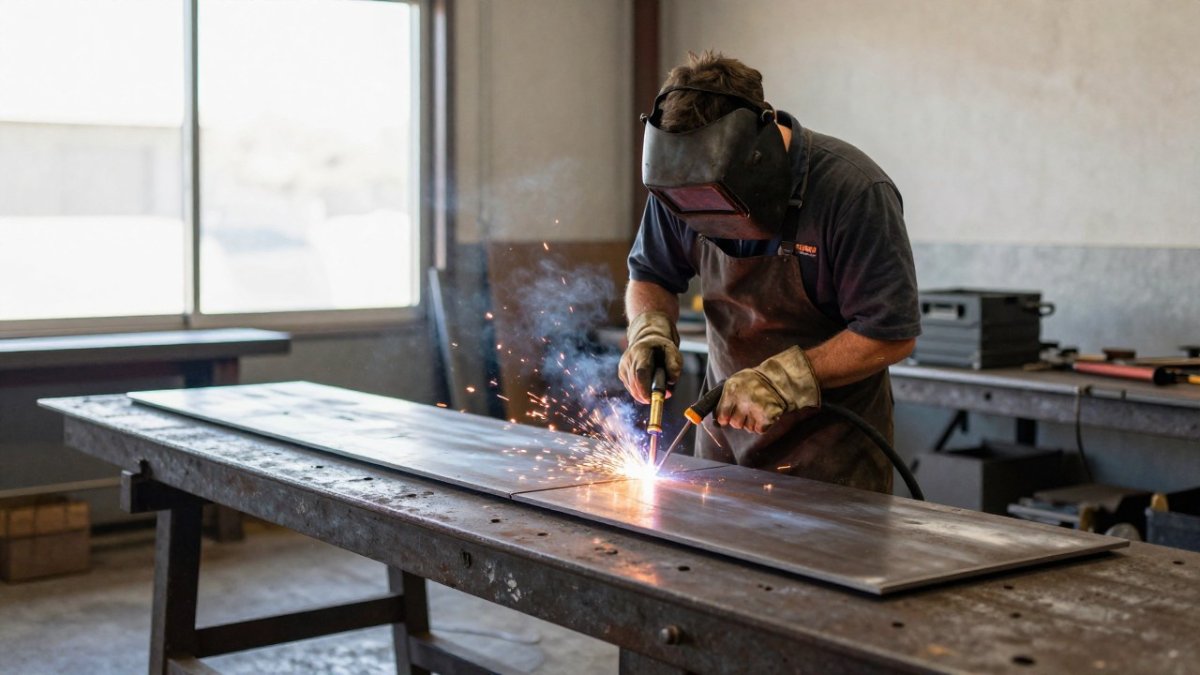
- Aluminum welding demands specialized equipment and skill
Steel vs Aluminum Strength: Load-Bearing Performance
Steel wins when raw strength matters: a steel beam carries more weight than an aluminum beam of the same size, which is why structural steel dominates high-rise construction and heavy machinery.
Mild steel has a yield strength around 36,000 to 40,000 PSI.
Strength-to-weight ratio changes the picture.
Where steel dominates:
- Heavy machinery bases and frames
- Load-bearing structural columns
- Anchoring systems under extreme stress
- Equipment that experiences shock or impact loads
Where aluminum competes:
- Aerospace and transportation components
- Structures where weight reduction cuts costs
- Applications where the load is moderate and consistent
The real limitation with aluminum isn't strength per se. It's that you must design around its lower load-bearing capacity. If your design calls for thick members anyway, steel becomes more economical.
Steel vs Aluminum Corrosion Resistance: Environmental Exposure
Aluminum naturally forms a protective oxide layer when exposed to air, preventing further corrosion. You can leave it unpainted outdoors for decades and it won't rust.
Steel corrodes aggressively without protection. Mild steel exposed to moisture and oxygen forms rust that flakes off and exposes fresh metal, continuing until the steel fails.
Environmental factors determine how much this matters:
In dry inland climates, mild steel survives years without paint if you keep water off it.
Common protection methods for steel:
- Paint or powder coat (requires repainting every 5-10 years)
- Galvanizing (zinc coating that lasts 20-50 years)
- Stainless steel (costs 2-3× more than mild steel)
- Hot-dip galvanizing (most durable, highest cost)
Aluminum protection:
- Anodizing (hardens the oxide layer, lasts 20+ years)
- Powder coat (optional, improves aesthetics)
- No rust ever, even if coating fails
For wet or coastal projects, aluminum fabrication eliminates the maintenance burden, you pay more upfront but save on repainting and repairs.
Steel vs Aluminum Lifespan: Long-Term Service Life
How long a fabricated component lasts is not a property of the metal alone.
What actually sets service life:
- Coating breakdown rate. Paint fails first at edges, welds, and fasteners where the film is thinnest; once moisture reaches bare steel, rust undercuts the coating and failure accelerates. Galvanizing's zinc sacrifices itself slowly, hot-dip galvanizing consumes about 0.1 mil of zinc per year inland, which is why thick coatings last decades and thin ones do not.
- Galvanic corrosion at dissimilar-metal joints. When aluminum and steel touch in moisture, the aluminum becomes the anode and corrodes preferentially, a common cause of premature failure in mixed-material assemblies. Isolation washers, barrier coatings, and stainless fasteners prevent it.
- Fatigue and cyclic loading. Repeated stress, vibration, traffic loading, thermal cycling, can crack a part at levels far below yield strength, usually starting at a weld toe, sharp corner, or hole. Aluminum has no true endurance limit and will eventually fail under repeated stress; steel has an endurance limit below which it can theoretically run indefinitely, which is why steel is preferred for vibration-heavy machinery.
- Creep and elevated temperature. Aluminum loses significant strength above roughly 300°F and isn't suitable for sustained high-temperature service. Steel holds its properties to much higher temperatures, which matters for exhaust components, oven parts, and engine-adjacent hardware.
Typical service life ranges (with maintenance):
| Material and protection | Typical service life |
|---|---|
| Painted mild steel, inland | 10-20 years before first repaint |
| Hot-dip galvanized steel, inland | 30-50 years |
| Hot-dip galvanized steel, coastal | 15-25 years |
| Stainless steel (304/316) | 50+ years with minimal care |
| Unprotected mild steel, wet or salty | 2-5 years |
| Anodized aluminum | 20-30 years |
| Painted aluminum | 15-25 years |
| Unprotected aluminum | 30+ years (oxidizes to a dull patina, does not rust through) |
These ranges assume correct fabrication. A poorly welded aluminum joint, an undercut weld on galvanized steel, or a sharp notch in a fatigue-loaded member can cut service life dramatically regardless of base metal.
Total cost of ownership, not just sticker price. Material purchase price is the smallest part of the lifecycle equation for most outdoor or industrial assets. The larger costs are:
- Fabrication cost. Aluminum welds slower, needs more surface prep, and consumes more filler per joint. Steel fabrication is faster and more forgiving, usually cheaper per pound of finished part.
- Coating and finishing cost. Galvanizing and high-performance paint systems add cost upfront but push out the first maintenance cycle by decades.
- Maintenance and repair cost. Repainting steel every 5-10 years is labor-intensive, especially at height or over water. Aluminum's self-renewing oxide layer eliminates most of that recurring expense.
- Replacement cost. A part that fails early because of a fabrication defect costs far more than the material savings that caused the defect.
- Transport and installation cost. Aluminum's one-third density means lighter members, cheaper freight, and smaller lifting equipment, on large or remote projects, that can offset the higher material price.
A practical rule: for a 20+ year life in a wet, salty, or chemically aggressive environment, aluminum or stainless steel usually wins on total cost despite higher upfront pricing.
Both materials are recyclable. Steel scrap has consistent market value, while aluminum scrap commands higher prices per pound, offsetting disposal costs.
Aluminum Welding vs Steel Welding: Fabrication Challenges
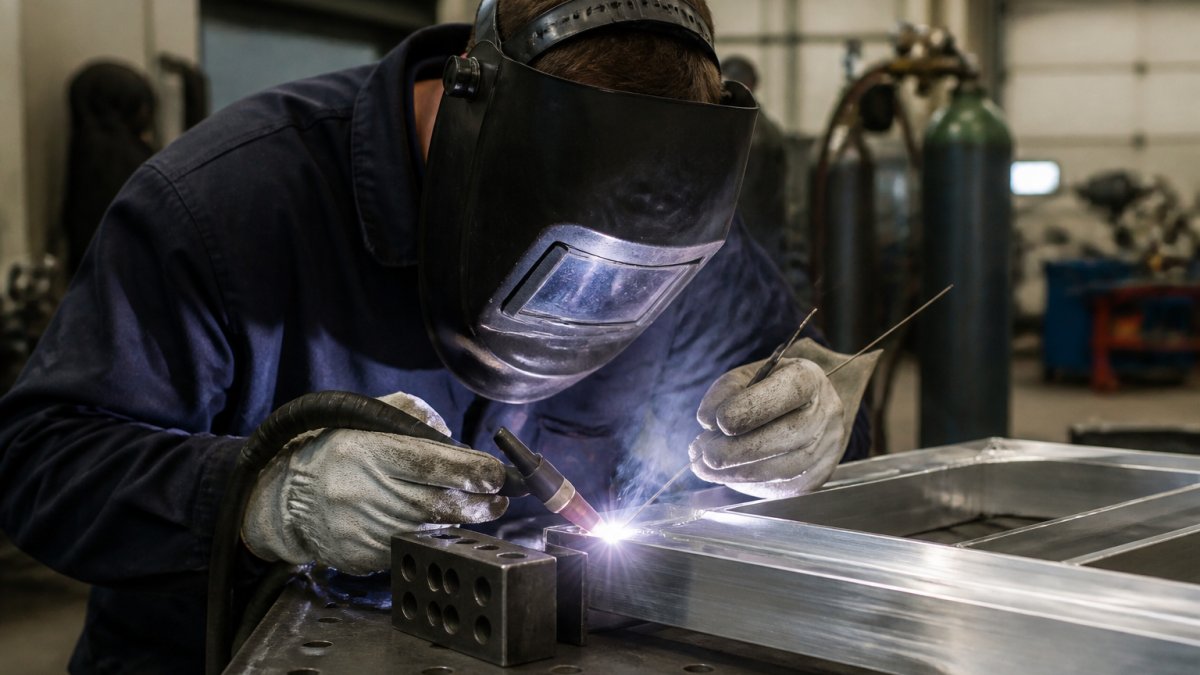
How welding changes the metal around the joint.
Welding is a controlled thermal event, and the metal next to the weld, the heat-affected zone, or HAZ, doesn't come out the same as it went in.
- Steel. Mild steel is generally forgiving. The HAZ may harden slightly, and thick sections or high-carbon grades can cold-crack without preheat or controlled cooling. For most structural mild steel work, standard procedures produce a joint as strong as the base metal.
- Aluminum. Heat-treatable alloys (6000 and 7000 series, common in structural and transportation work) lose significant strength in the HAZ, the weld may be sound, but the metal beside it can drop to roughly half its original tensile strength. Designers place welds away from peak-stress regions and specify post-weld heat treatment when geometry allows. Non-heat-treatable alloys (like 5052 and 5083) lose less strength at the joint and are often chosen for welded pressure vessels and marine structures.
Why aluminum welding is unforgiving.
- Aluminum conducts heat about five times faster than steel, so heat drains from the weld pool quickly, making full penetration harder and increasing the risk of lack-of-fusion defects that look fine on the surface and fail under load.
- Aluminum does not change color as it approaches its melting point. The welder loses the visual cue that steel provides.
- Aluminum's oxide layer melts at a much higher temperature than the metal underneath. If not removed mechanically or chemically before welding, it gets trapped and creates porosity and weak bonds.
- Aluminum has no endurance limit. A weld toe is a stress concentrator, and under cyclic loading a crack can initiate there and grow to failure, so smooth transitions, no undercut, and no sharp toes matter more on aluminum than steel.
Joint design and fabrication choices that affect durability.
- Weld size and profile. A larger weld isn't automatically stronger. On aluminum, an oversized weld adds heat input and widens the softened HAZ; on steel, it can introduce restraint and residual stress that promotes cracking. Match weld size to the calculated load.
- Fasteners vs welds. Bolted joints avoid the HAZ problem entirely and are often preferred for field assembly of aluminum structures, but they need proper isolation from steel fasteners to prevent galvanic corrosion.
- Forming and bending. Aluminum work-hardens as it forms and can crack if bend radii are too tight, especially in the 6000 series. Steel is more forgiving but can also crack on tight bends in high-strength grades. Bend radius, grain direction, and temper all matter.
- Heat treatment. Post-weld solution treatment and aging can restore much of the lost strength in heat-treatable aluminum, but it requires a furnace large enough for the whole part and isn't practical for every shop or assembly.
What this means for your project.
A steel shop doing occasional aluminum work often produces joints that pass visual inspection and fail in service, the failure modes (lack of fusion, porosity, over-softened HAZ, sharp weld toe) are hidden.
At Patriot Iron Work, we manage both processes, so your project stays on schedule without coordination headaches between multiple vendors.
Choosing the Right Material: Application-Specific Recommendations
The choice between steel and aluminum fabrication depends on four factors: environment, load, budget, and timeline.
Choose steel fabrication when:
- Load-bearing capacity is the primary concern
- The application is indoors or in dry conditions
- You need fast turnaround and cost is critical
- The component handles shock, vibration, or impact
- Maintenance access and cost are acceptable
- You need the strongest possible design in the smallest footprint
Choose aluminum fabrication when:
- Corrosion resistance matters (coastal, wet, or salt-spray environments)
- Weight reduction cuts other costs (transportation, foundation, installation)
- Long service life with zero maintenance is required
- The application is outdoors or in harsh weather
- You can afford higher material and fabrication costs upfront
- The component doesn't carry extreme loads
Decision framework by project type:
| Project Type | Best Material | Why |
|---|---|---|
| Structural building frame | Steel | Strength, cost, speed |
| Coastal railing or gate | Aluminum | Corrosion resistance, no maintenance |
| Machinery base | Steel | Load-bearing, vibration handling |
| Roofing or cladding | Aluminum | Weather resistance, lightweight |
| Heavy equipment mount | Steel | Impact resistance, durability under stress |
| Marine hardware | Aluminum | Salt spray survival, zero rust |
| Temporary structure | Steel | Cost-effective, quick fabrication |
| Permanent outdoor installation | Aluminum | 20+ year life with no maintenance |
Most projects benefit from a hybrid approach: steel for primary structure, aluminum for weather-exposed components. This balances cost and durability.
The fabrication process influences the choice too.
Choosing between steel and aluminum fabrication for durability isn't one-size-fits-all. The right material solves your specific problem: load requirements, environmental exposure, maintenance tolerance, and total lifecycle cost.
Frequently Asked Questions
Is steel or aluminum more durable for structural fabrication?
Steel generally offers superior durability for structural applications due to its higher tensile strength and yield strength, making it better for load-bearing components. Aluminum is lighter and resists corrosion naturally, but steel provides greater toughness and resistance to impact and fatigue loading. The choice depends on your specific application: steel for maximum structural performance, aluminum for weight-sensitive or corrosive environments.
Which material resists corrosion better: steel or aluminum?
Aluminum naturally resists corrosion because it forms a protective oxide layer on its surface, making it ideal for outdoor and wet environments without additional coating. Steel requires paint, galvanizing, or stainless steel grades to resist rust and corrosion. In harsh coastal or chemical environments, aluminum's corrosion resistance is a significant advantage, while stainless steel offers comparable protection but at higher material cost.
How does steel fabrication compare with aluminum fabrication for outdoor projects?
Steel fabrication requires protective coatings or stainless steel grades to withstand outdoor exposure, adding maintenance and lifecycle costs. Aluminum fabrication naturally resists weather and corrosion, requiring minimal maintenance and offering lower total cost of ownership over time. For outdoor railings, gates, and structural elements, aluminum fabrication often proves more economical and durable, while steel suits applications where maximum strength is the priority.
What factors affect the lifespan of fabricated steel and aluminum?
Material grade, environmental exposure, protective coatings, welding quality, and maintenance schedules all impact lifespan. Mild steel without protection may rust within years; stainless steel or galvanized steel lasts decades. Aluminum's natural oxide layer extends service life significantly in outdoor conditions. Fatigue from cyclic loading, impact resistance, and proper welding technique during fabrication also determine whether a component fails prematurely or performs reliably for its intended service life.