 blog
Industrial Metal Fabrication Services: A Buyer's Guide
Table of Contents
- What Industrial Metal Fabrication Services Include
- Understanding Metal Fabrication Processes
- How Custom Metal Fabrication Services Work
- Industrial Welding Services and On-Site Capabilities
- Metal Fabrication Cost: What Drives Pricing
- Choosing the Right Industrial Metal Fabrication Provider
- Frequently Asked Questions
Last Updated: October 4, 2026
What Industrial Metal Fabrication Services Include
Industrial metal fabrication refers to the process of cutting, shaping, and assembling metal materials into finished components and structures for manufacturing, construction, and infrastructure applications.
Modern fabrication shops handle everything from initial design consultation through final quality inspection, working with materials including structural steel, stainless steel, aluminum, and specialized alloys.
Core Fabrication Operations
Punching and perforating create holes, slots, and patterns in sheet metal for ventilation, drainage, or assembly purposes. Machining and finishing operations refine surfaces, add threads, and achieve tight tolerances required for moving parts or precision assemblies. Each operation demands specific equipment, operator skill, and quality control to ensure the finished component meets engineering specifications.
Materials and Applications
Metal fabrication services work with diverse materials selected based on strength requirements, corrosion resistance, temperature tolerance, and cost constraints. Structural steel dominates heavy fabrication work for buildings and bridges.
Industrial applications drive demand for custom metal fabrication across multiple sectors. Construction projects require structural steel erection, railings, and custom metalwork.
Understanding Metal Fabrication Processes
Metal fabrication processes transform raw material into finished components through a carefully sequenced series of operations.
Cutting and Shearing
Cutting and shearing operations remove material to achieve required dimensions and shapes. Computerized plasma cutters deliver precision cuts in thicker steel with minimal waste; waterjet cutting handles materials where heat damage is a concern; oxy-fuel cutting remains cost-effective for heavy structural steel work. The choice depends on material thickness, required accuracy, and production volume.
Forming, Bending, and Welding
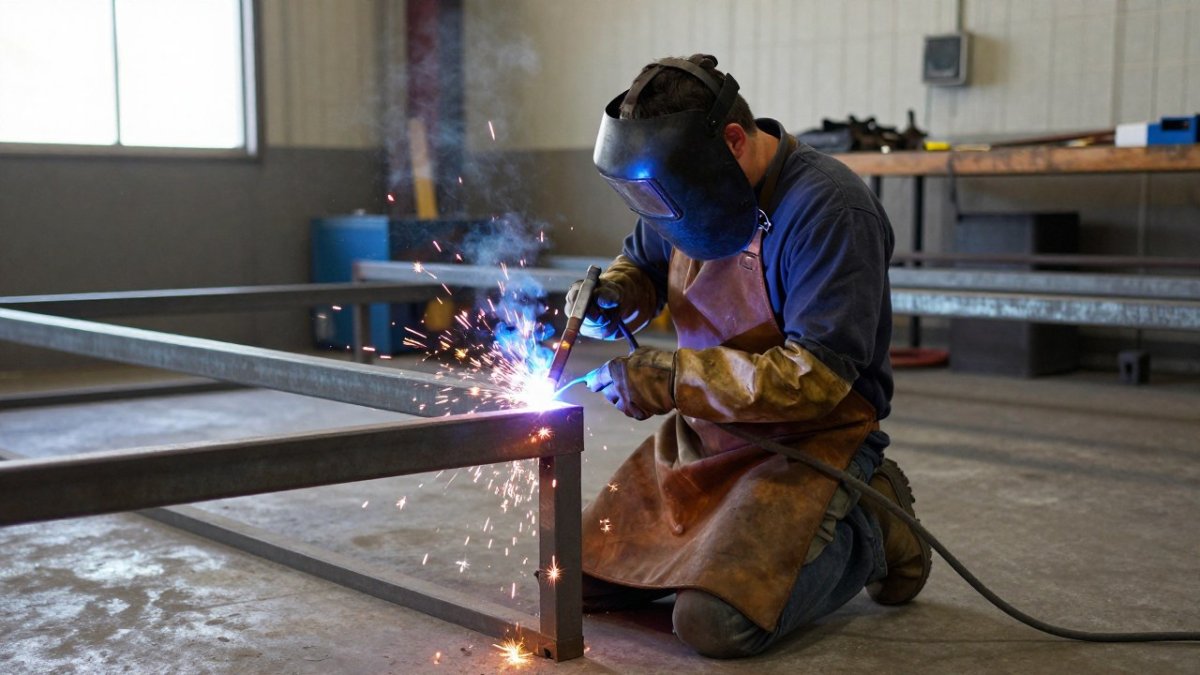
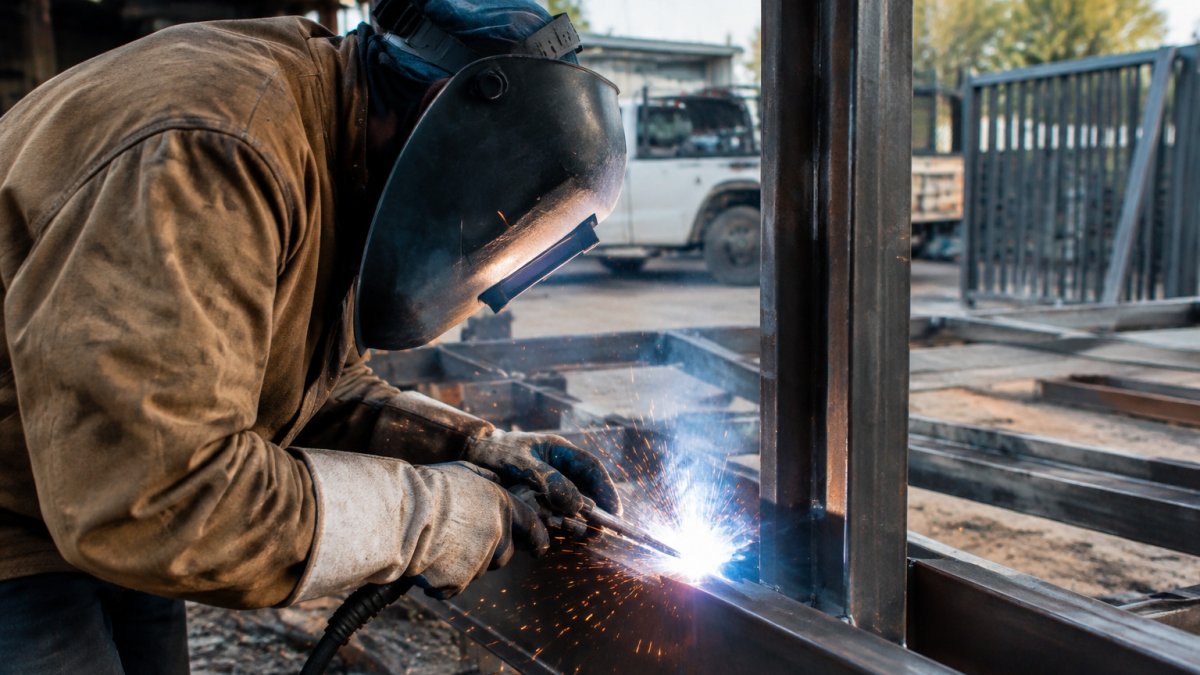
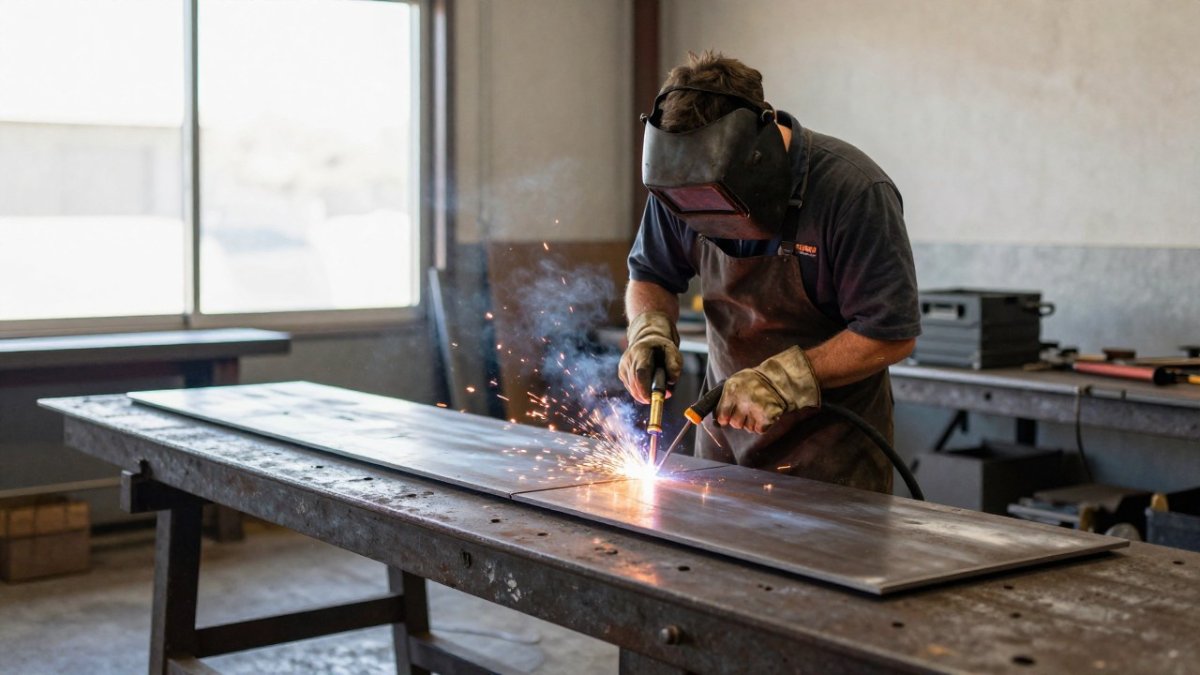
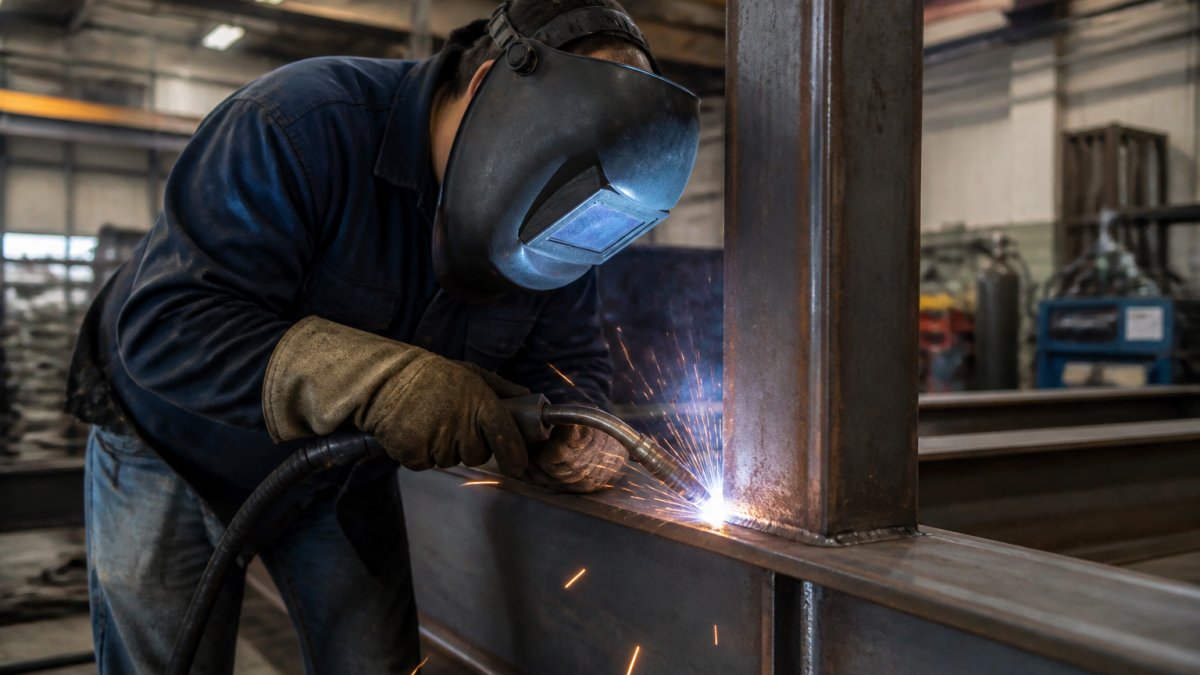
Forming and bending reshape metal without removing material, creating angles, channels, and complex geometries using press brakes, roll formers, or hydraulic presses. Welding fuses components together permanently; MIG welding offers speed for production work, TIG welding provides precision for critical applications, and stick welding delivers reliability in field conditions.
Finishing and Quality Control
Finishing operations prepare components for assembly or final use through grinding, painting or coating, and machining. Inspection protocols verify that finished components meet engineering drawings and specifications through dimensional checks, visual inspection, and non-destructive testing such as ultrasonic or radiographic inspection. Documentation of inspection results provides traceability and proof of compliance with applicable standards.
How Custom Metal Fabrication Services Work
Custom metal fabrication transforms customer requirements into finished assemblies through a structured workflow that balances engineering precision with practical production constraints. Understanding this process helps procurement teams set realistic expectations, avoid common timeline and quality issues, and make informed decisions at each stage.
Phase 1: Requirements Definition and Design Review
The fabrication process begins with detailed customer requirements. Provide your fabricator with:
- Engineering drawings or sketches showing dimensions, geometry, and assembly relationships. If drawings don't exist, a fabricator can develop them from your description, though this adds 1-2 weeks and cost.
- Material specifications: required material type (structural steel, stainless steel, aluminum, specialty alloy), grade, and any certifications (mill test reports, material traceability requirements).
- Load and environmental conditions: expected stresses, temperature range, corrosion exposure, and any applicable codes or standards (AISC for structural steel, ASME for pressure vessels, AWS for welding).
- Tolerance requirements: which dimensions are critical and which have flexibility. Specifying ±1/4 inch tolerance costs far less than ±0.050 inch, which requires precision machining and additional inspection.
- Delivery timeline and quantity: single prototype, small batch, or repeat production. This determines whether the fabricator invests in tooling or uses manual methods.
- Finish and appearance: mill finish, painted, galvanized, polished, or other coating. Finishing adds 1-3 weeks and 15-30% to cost.
During design review, an experienced fabricator identifies manufacturing challenges and proposes cost-saving modifications: simplifying geometry to standard angles, reducing tolerances on non-critical dimensions, standardizing hole sizes, choosing bolted connections instead of field welding where code permits, and optimizing material selection. A fabricator who conducts thorough design review typically saves 15-30% on cost and 2-4 weeks on timeline.
Phase 2: Material Procurement and Verification
Once design is approved, the fabricator procures material. Lead times vary: structural steel typically 1-2 weeks, stainless steel 2-4 weeks, aluminum 2-3 weeks, and specialty alloys 4-8 weeks or longer. Material verification checks physical dimensions, mill test reports, surface condition, and quantity.
Phase 3: Production Planning and Shop Fabrication
Production planning sequences operations to minimize handling, rework, and cost: cutting and shearing, forming and bending, drilling and punching, welding, machining, finishing, and final inspection. The fabricator manages this sequence to balance efficiency with quality, sometimes machining joint surfaces before welding to ensure precise fit, then re-machining after welding to remove distortion.
Phase 4: Field Operations and Installation
For projects requiring field installation, the fabricator coordinates transportation, field assembly, alignment and positioning, and testing. Field operations introduce variables that shop work avoids, weather, site access, coordination with other trades, and working at heights or in confined spaces, requiring experienced field teams to maintain quality and safety standards.
Phase 5: Quality Assurance and Inspection
Quality assurance runs parallel to production through incoming material inspection, in-process inspection, and final inspection. Incoming material inspection verifies dimensions, mill test reports, and surface condition. In-process inspection catches issues early, dimensional checks after cutting, fit-up inspection before welding, and weld inspection during production.
Timeline Expectations and Milestones
A typical custom fabrication project timeline: design review 1-2 weeks, material procurement 2-6 weeks, shop fabrication 2-6 weeks, finishing and inspection 1-2 weeks, and field installation 1-4 weeks (if required), totaling 6-20 weeks. Expedited projects compress the timeline by overlapping phases but introduce rework risk if design changes. Standard sequential scheduling is more reliable for complex projects.
Industrial Welding Services and On-Site Capabilities
Welding represents one of the most critical and specialized fabrication processes. The distinction between shop-based and field welding operations determines project feasibility, cost, and timeline for many industrial applications.
Shop-Based vs. Field Operations
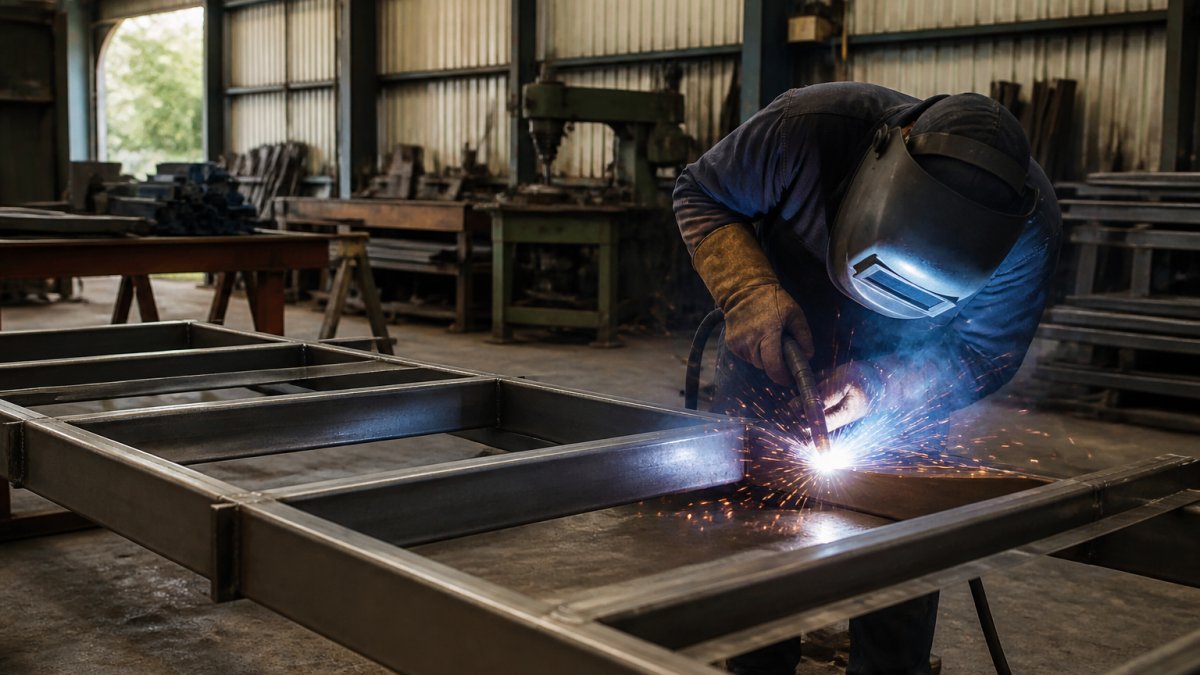
Shop-based welding occurs in controlled environments with consistent temperature, humidity, and working conditions, enabling optimal positioning and quality control. Field welding occurs at customer locations under site-specific conditions with environmental challenges that require experienced crews. Many projects combine both approaches: major components are fabricated and welded in the shop, then transported to the site for final assembly and field welding.
Structural Steel Erection and Assembly
Structural steel erection installs fabricated components into their final positions, demanding coordination between fabrication, transportation, and field crews. Bolted connections often replace welding for ease of assembly; field welding completes connections where bolting isn't practical or where code requires welded joints. On-site welding services handle equipment installation, machinery repair, and infrastructure maintenance at operating facilities.
Metal Fabrication Cost: What Drives Pricing
Understanding cost drivers helps procurement teams evaluate quotes fairly, negotiate effectively, and identify opportunities for cost reduction without compromising quality or safety. Most fabricators quote based on material, labor, and overhead, but the breakdown and drivers behind each component vary significantly.
Material Cost and Waste Optimization
Material typically represents 40-60% of total fabrication cost. Structural steel costs approximately $0.50-$0.80 per pound; stainless steel $1.50-$3.00 per pound; aluminum $1.00-$2.50 per pound. Material waste directly impacts cost, inefficient nesting patterns waste 15-25% of material, while computerized cutting systems reduce waste to 5-10%. Efficient designs that minimize scrap can reduce material cost by 10-20%.
Labor, Complexity, and Tolerance Requirements
Labor cost depends on design complexity, required tolerances, and skill level demanded. Precision components requiring tolerances of ±0.050 inch or tighter demand experienced machinists and additional inspection, adding 30-50% to labor cost. Welding complexity significantly affects labor hours, a simple fillet weld takes minutes while a multi-pass root weld on a thick pipe joint can require hours of certified welder time.
Timeline Compression and Lead Time Premiums
Standard lead times for custom fabrication run 4-8 weeks from order to delivery. Expedited delivery compressing the timeline to 2-3 weeks requires overtime labor and priority material procurement, typically carrying rush premiums of 20-50%. A 50% timeline reduction may carry a 40-50% cost premium; a 25% reduction might cost 15-20% extra.
Finishing, Coating, and Secondary Operations
Finishing operations add cost but provide essential protection and appearance. Grinding and deburring cost $0.25-$1.00 per linear foot of weld; painting or powder coating adds $0.50-$2.00 per square foot; hot-dip galvanizing costs $1.50-$4.00 per square foot. Machining operations add $25-$150 per hour of machine time.
Quantity and Repeat Production Discounts
Repeat production amortizes setup across multiple units, reducing per-unit cost. A component costing $500 as a single unit might cost $200 per unit in a batch of 10 and $100 per unit in a batch of 50. Communicate anticipated repeat orders to your fabricator during quoting; many shops offer volume discounts or suggest design modifications that enable faster production on repeat runs.
Requesting Transparent Quotes
Ask for itemized breakdowns showing material cost, labor hours and rate, overhead allocation, finishing operations, and subcontracted services. Red flags include quotes 30-40% lower than competitors without explanation, or bundled costs without itemization. Unrealistically low quotes often result in quality shortcuts, missed deadlines, or change order requests.
Choosing the Right Industrial Metal Fabrication Provider
Selecting a fabrication partner deserves careful evaluation. The wrong choice costs far more than the difference in quoted price.
Certifications and Quality Standards
Verify that your potential fabrication partner maintains certifications appropriate to your industry and application: AWS D1.1 for structural welding and ISO 9001 for quality systems. Ask about material traceability, incoming material verification, and inspection procedures. Request examples of quality documentation from similar projects and references from customers in your industry.
Capacity, Lead Times, and Reliability
Fabrication capacity determines whether a shop can handle your project timeline. Your project size should match the shop's typical work scale for best results. Realistic lead times indicate a shop that understands their capacity and communicates honestly. Ask about their typical lead times and what factors might extend schedules.
Single Point of Contact vs. Coordination Risk
A single fabrication partner handling design, shop fabrication, and field operations eliminates handoff risks and ensures accountability for the complete project. This integrated approach reduces coordination risk, accelerates timelines, and ensures consistent quality from initial design through final assembly.
Frequently Asked Questions
What processes are included in industrial metal fabrication?
Industrial metal fabrication encompasses cutting, shearing, forming, bending, welding, punching, and machining operations. Fabricators use computerized equipment and manual techniques to transform raw materials like steel, stainless steel, and aluminum into custom components and assemblies. Quality finishing operations ensure parts meet specified tolerances and performance requirements for applications in construction and manufacturing.
How much does metal fabrication cost?
Metal fabrication cost depends on material type and quantity, part complexity and tolerances, production volume, timeline urgency, and finishing requirements. A simple structural steel component costs less than a precision-machined assembly. Custom work typically costs more than standard parts. Request a detailed quote from your fabrication provider that breaks down material, labor, equipment, and overhead to understand pricing drivers for your specific project.
How do I choose an industrial metal fabrication company?
Evaluate providers on equipment capability and process capacity, relevant certifications (ISO 9001), experience with your industry and material types, ability to handle on-site work if needed, quality assurance practices and traceability, lead time reliability, and whether they offer single-point-of-contact project management. Ask for references from similar projects and verify they can meet your tolerances and volume requirements without compromising timeline.
What should I provide when requesting a fabrication quote?
Provide detailed engineering drawings or specifications with dimensions and tolerances, material requirements and quantities, finish and coating specifications, required certifications or quality standards, desired delivery timeline and volume, and any special handling or environmental requirements. The more complete your information, the more accurate the quote. If designs aren't finalized, ask whether the provider offers design-for-manufacturing guidance to optimize cost and feasibility before production.
Selecting the right industrial metal fabrication partner determines project success. Quality, reliability, and professional craftsmanship matter more than the lowest price. Patriot Iron Work delivers expert welding solutions with high standards of safety and a focus on efficiency that exceeds client expectations. Get a free quote today and discover how our professional team can handle your next project with the reliability you deserve.