 How-to
Managing On-Site Industrial Welding Safety: 2026 Guide
Table of Contents
- Step 1: Assess Hazards Before Any Arc Strikes
- Step 2: Prepare the Work Area and Set Up Controls
- Step 3: Hot Work Permit Requirements for On-Site Welding
- Step 4: Welding PPE Requirements and Worker Protection
- Step 5: Welding Fume Control and Ventilation on Site
- Step 6: Electrical Safety, Equipment Inspection, and Cylinder Handling
- Step 7: Your Welding Safety Checklist for Every Job
- Step 8: Coordination, Emergency Response, and Measuring Safety Performance
- Frequently Asked Questions
Last Updated: October 16, 2026
Step 1: Assess Hazards Before Any Arc Strikes
Managing on-site industrial welding safety starts long before a torch is lit. It begins with a slow walk of the job site, a clipboard, and the discipline to look for what can go wrong. At Patriot Iron Work, we treat that walkthrough as the foundation of every job.
The goal is simple: find the hazards while they're still theoretical. Once sparks are flying, you're reacting. Before that, you're planning.
What to Look for During a Site Walkthrough
A hazard assessment is a structured review of the work area to identify fire, electrical, fume, and physical risks before welding begins. Walk the site and note:
- Flammable liquids, paper, dust, or debris within spark range
- Overhead sprinklers, cable trays, or ductwork
- Standing water, damp concrete, or exposed wiring
Mark each item on a sketch of the area. A simple hand-drawn plan beats a mental note every time.
Site-Specific Controls for Confined Spaces
Confined spaces are where a generic checklist fails. Tanks, vaults, pits, and utility tunnels trap fumes, displace oxygen, and turn a routine weld into a rescue scenario. Before anyone enters:
- Test the atmosphere for oxygen, flammables, and toxic gases with a calibrated meter
- Set up forced-air ventilation that moves fresh air to the bottom of the space, not just the top
- Assign a standby attendant outside who stays in visual or voice contact and never enters to help
If the space can't be ventilated or monitored, it isn't a welding space. Stop and re-plan.
Wet and Damp Conditions
Water and electricity don't negotiate. Standing water, damp concrete, and wet steel change the electrical path through the welder's body. When conditions are wet:
- Move the work to a dry area, or build a dry platform above the water
- Use a ground-fault circuit interrupter on the power source
- Wear dry, insulated gloves and boots, and keep spares in the truck
A common pattern is a welder who "just finishes one pass" in a puddle and gets a shock that ends the day. The fix is a five-minute dry-out, not a shortcut.
Coordination With Other Trades
On a busy site, welders, electricians, pipefitters, and painters share the same air and the same floor. Before the arc strikes:
- Notify the site supervisor and confirm other trades are clear of the spark zone
- Check whether sprinkler systems, fire alarms, or gas lines are being isolated, and who authorized it
- Agree on a fire watch schedule with facility operations, not just the crew
A Repeatable Supervisor Workflow
The strongest crews run the same loop on every job: pre-job planning, hazard assessment, permit, active-work monitoring, and closeout. The walkthrough feeds the permit. The permit feeds the fire watch. The fire watch feeds the closeout record. When the loop is repeatable, a new job site is a variation on a known process, not a fresh gamble.
Keep a laminated copy of your permit template in the truck. When a facility manager asks for one at 7 a.m., you're not scrambling to build it from scratch.
Step 2: Prepare the Work Area and Set Up Controls
Once hazards are mapped, control them. A designated welding area keeps sparks, fumes, and hot metal in one place instead of scattered across the site.
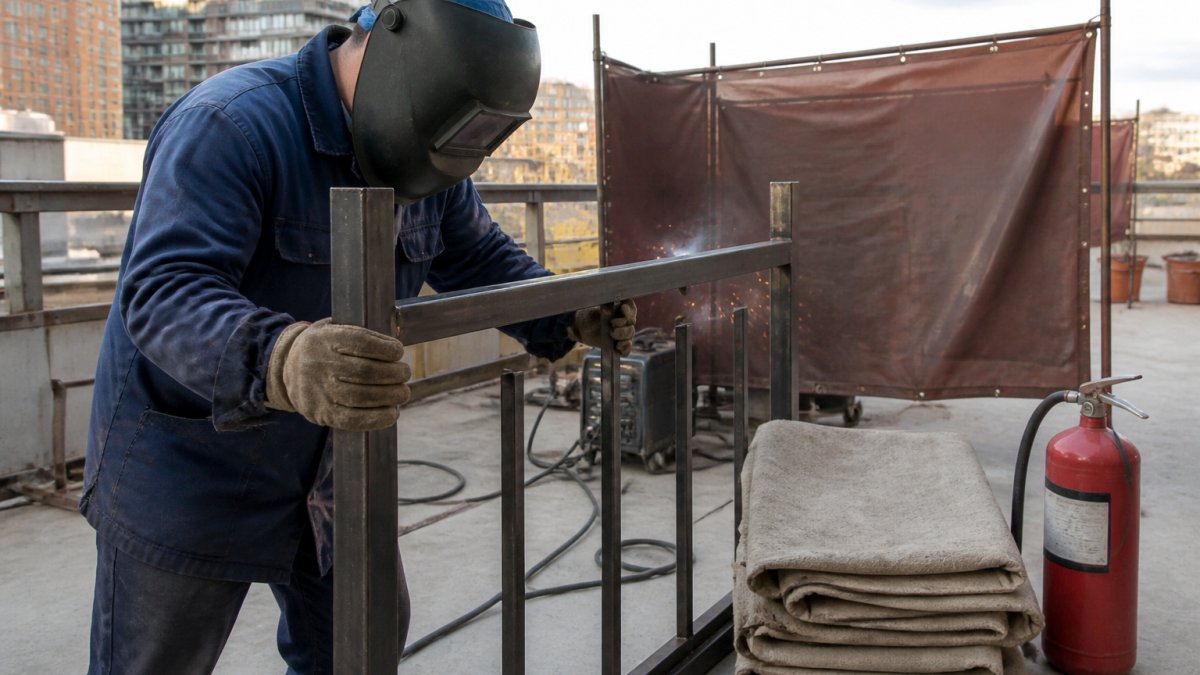
Set up your controls in this order:
- Clear combustibles at least 35 feet from the arc, or cover them with fire-resistant blankets
- Hang welding screens to protect bystanders from arc radiation
- Position a fire extinguisher within arm's reach of the welder
- Lay down fire blankets under the work if the floor can't be moved
- Mark the perimeter with cones or tape so other trades stay clear
If the work moves, the controls move with it. Mobile welding on a repair job means setting up and tearing down several times a day. That's not overhead, it's the job.
Step 3: Hot Work Permit Requirements for On-Site Welding
A hot work permit is a written authorization that confirms fire-safe conditions before any spark-producing task begins. Most commercial and industrial sites require one, and many facility managers won't let a contractor start without it.
Hot work permit requirements typically include:
- Name of the person doing the work and the supervisor approving it
- Date, time, and location of the job
- Description of the task and equipment used
The permit isn't paperwork for its own sake. It forces a second set of eyes on the setup.
Keep a laminated copy of your permit template in the truck. When a facility manager asks for one at 7 a.m., you're not scrambling to build it from scratch.
Step 4: Welding PPE Requirements and Worker Protection
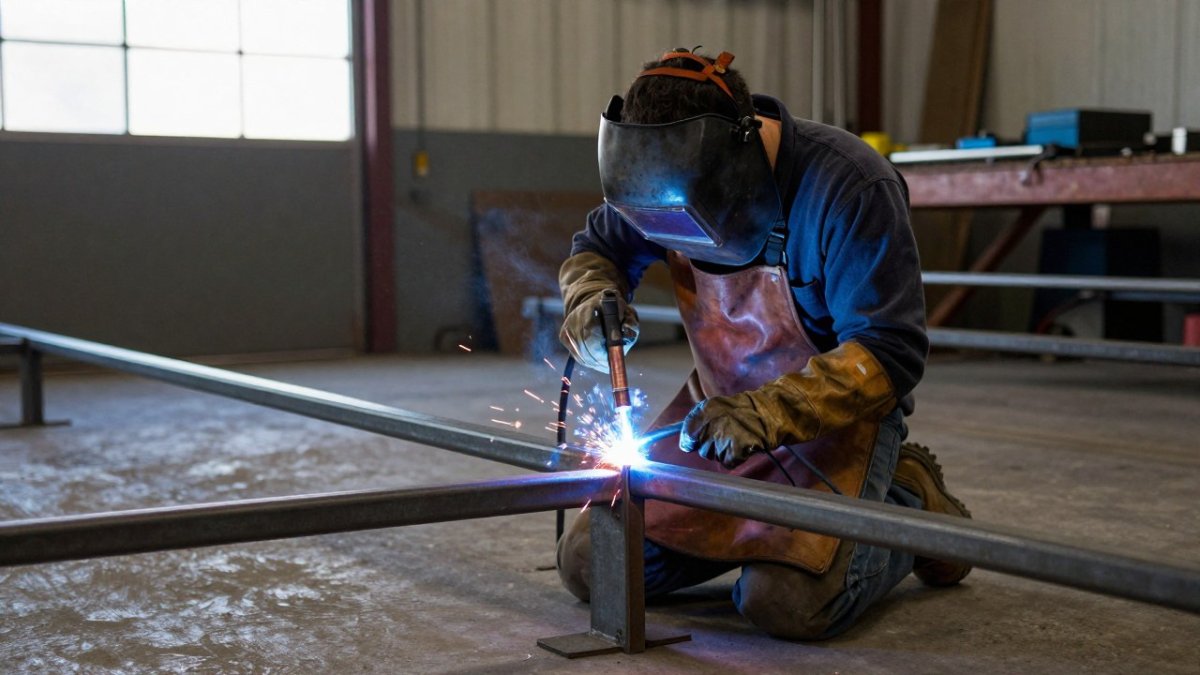
Welding PPE requirements cover the welder head to toe. Every piece exists because something has burned, blinded, or shocked a welder before it became standard.
The core kit:
- Welding helmet with the correct shade lens for the process
- Safety glasses worn under the helmet for chipping and grinding
- Welding gloves rated for heat and electrical resistance
Arc radiation burns skin and eyes even through regular clothing. UV radiation from the arc is intense enough to cause a "flash burn" on exposed skin in seconds.
Bystanders need protection too. Anyone within range of the arc should have eye protection and be shielded from direct view.
Step 5: Welding Fume Control and Ventilation on Site
Welding fume control is about keeping metal oxides, gases, and fine particles out of the welder's breathing zone. In a shop, that's a ventilation system. On site, it's often a fan, a flexible duct, or a respirator.
The hierarchy works like this:
- Local exhaust ventilation at the arc captures fumes at the source
- General ventilation dilutes fumes across the space
- Respiratory protection as a backup when the first two aren't enough
Confined spaces are the hard case. Tanks, vaults, and pits trap fumes and displace oxygen. Never weld in one without forced air movement and a spotter outside.
Step 6: Electrical Safety, Equipment Inspection, and Cylinder Handling
Welding equipment fails in predictable ways, and most failures are visible before they cause a shock or a fire. Inspect before every shift.
Check these items:
- Welding cables for cuts, splices, or exposed copper
- Electrode holders for cracked insulation
- Ground clamps for a clean, tight connection
Why Cables and Grounds Fail
A welding cable carries high current at low voltage. A cut jacket exposes copper, and a wet glove or a steel deck becomes the return path. A loose ground clamp does the same thing, the current finds a different route, sometimes through the welder. That's why the ground clamp goes on clean bare metal, not on paint, rust, or a bolt head.
Cylinder Handling
Cylinder handling deserves its own rules. Keep cylinders upright and chained. Store oxygen and fuel gas apart. Never let a cylinder lie on its side in a truck bed or on a job site floor. A damaged valve can turn a cylinder into a projectile, and a leaking fuel-gas cylinder near an arc is a fire waiting for a spark.
Electrical Safety in Wet or Damp Conditions
Electrical safety on site also means watching for wet or damp conditions. Never weld in standing water or on a damp surface without proper insulation and dry footing. If the work area is wet, stop and dry it out first. A ground-fault circuit interrupter on the power source adds a layer of protection, but it doesn't replace dry footing and dry gloves.
Emergency Response and Readiness
Every welder should know how to shut down the power source and the gas supply in seconds. Beyond that, the crew needs a clear plan for the incidents that actually happen on welding jobs:
- Burns, cool with clean water, cover, and get medical attention for anything beyond a minor flash
- Eye exposure, flush with water and seek evaluation; arc flash burns can worsen over hours
- Electric shock, cut power before touching the victim, then call for help
Know where the nearest extinguisher, exit, and assembly point are before you need them.
Measuring Safety Performance
Injury rates tell you what already went wrong. Leading indicators tell you what's about to. Track:
- Inspection completion rate
- Training status for every welder
- Hazard reports filed and resolved
A crew that logs near-misses and fixes them is a crew that avoids real incidents. The numbers are a management tool, not a scoreboard.
Step 7: Your Welding Safety Checklist for Every Job
A welding safety checklist turns everything above into a repeatable routine. Run it before, during, and after each job.
| Phase | Check | Why It Matters |
|---|---|---|
| Before | Walkthrough and hazard notes | Catches fire and fume risks early |
| Before | Hot work permit signed | Confirms site authorization |
| Before | PPE inspected and worn | Prevents burns, arc eye, shock |
| During | Fire watch in place | Stops small fires before they spread |
| During | Ventilation running | Keeps fumes out of the breathing zone |
| During | Cables and ground checked | Prevents shock and equipment failure |
| After | Shutdown and cleanup | Removes hot metal and debris |
| After | Permit closed and signed off | Documents the job is fire-safe |
Print it, laminate it, and keep it in every truck. A checklist only works if it's actually used.
Step 8: Coordination, Emergency Response, and Measuring Safety Performance
The last step is the one most crews skip: coordination with everyone else on site. On a busy job, welders, electricians, pipefitters, and painters all share the same space.
Coordinate by:
- Notifying the site supervisor before any hot work
- Confirming other trades are clear of the area
- Checking that sprinkler systems or fire alarms aren't disabled without notice
Emergency readiness means knowing where the nearest extinguisher, exit, and assembly point are before you need them.
Measure performance by tracking near-misses, permit compliance, and inspection findings. A crew that logs near-misses and fixes them is a crew that avoids real incidents.
General contractors and facility managers who want a single point of contact for on-site welding, from fit-up through final inspection.
Frequently Asked Questions
What are the 10 welding safety rules for on-site work?
Key rules include: complete a hazard assessment before starting; obtain a hot work permit; wear required PPE such as a welding helmet, safety glasses, gloves, and flame-resistant clothing; set up a designated welding area away from combustibles; use fire watches and fire blankets; ensure adequate ventilation or fume extraction; inspect equipment and cables daily; handle gas cylinders properly; keep the work area clean and dry; and follow shutdown and cleanup procedures. These practices help prevent fires, burns, electric shock, and fume exposure.
When is a hot work permit required for welding?
A hot work permit is typically required whenever welding, cutting, or other spark-producing activities occur outside a designated welding area. This includes temporary work in maintenance shops, construction sites, or any location with combustible materials nearby. The permit confirms that fire hazards have been assessed, fire watch is assigned, and precautions like fire blankets and extinguishers are in place. Requirements vary by facility and local fire code, so always check with the site safety officer before starting.
What PPE is needed for industrial welding?
Welding PPE requirements include a welding helmet with proper filter shade, safety glasses for grinding and chipping, flame-resistant welding gloves, and flame-resistant clothing such as leather aprons or jackets. Respiratory protection may be needed when ventilation is insufficient or when welding metals that produce toxic fumes. Steel-toed boots and hearing protection are also common on industrial sites. The specific PPE depends on the welding process, base metal, and site conditions, so consult your safety data sheets and supervisor.
How can teams prevent fires during hot work?
Fire prevention starts with removing combustible materials within 35 feet of the work area, or covering them with fire-resistant blankets. Assign a fire watch during welding and for at least 30 minutes after work ends. Keep a fire extinguisher immediately accessible and ensure the fire watch knows how to use it. Check for hidden combustibles in walls, floors, or ceilings. Follow your hot work permit requirements and never weld in an area with flammable vapors or dust.
Welding safety on site is a process, not a form you sign once. If your project needs structural steel erection, custom railings, iron gates, or on-site repairs, the crew matters as much as the plan. Patriot Iron Work brings high standards of safety, professional craftsmanship, and efficient delivery to every job across Silver Spring, Montgomery County, and the DMV. Get a free quote and let our team handle the welding so your project stays on schedule and up to code.