 How-to
7 Signs Your Metal Entryway Needs Repair in Silver Spring
Last Updated: November 26, 2026
Quick Summary
Metal entryway repair in Silver Spring usually covers fixing sagging or misaligned doors, rebuilding worn hinge mounts, closing cracked seams, and straightening bent frames. Most steel door problems can be repaired on site without full replacement, though large skin punctures or a rotted core often point toward replacing the door.
- Check the gap between the door and frame at the top, latch side, and hinge side.
- Loose or stripped hinge screws often signal a metal repair, not just a hardware swap.
- Fire-labeled doors must keep their label intact during any welding or grinding.
- Ask each contractor for a written scope covering door type, damaged parts, and hardware.
- Take dated photos of the damage from several angles before requesting quotes.
Table of Contents
- How Much Does Metal Entryway Repair Cost in Silver Spring?
- Diagnosing Common Metal Entryway Problems
- Steel Door Repair: What a Welder Can Fix
- Metal Door Frame Repair and Jamb Restoration
- Repair or Replace: Decision Criteria for Your Entryway
- Mobile Welding for Steel Repairs On Site
- Booking Your Entryway Repair With Patriot Iron Work
- Frequently Asked Questions
How Much Does Metal Entryway Repair Cost in Silver Spring?
Pricing for metal entryway repair depends on the door type, the damage, the hardware, the access, and the timing. For current prices or a quote, visit the Patriot Iron Work website and describe what you are seeing.
Several factors shape the final number:
- Door type and gauge: A hollow-metal door with a 20-gauge skin behaves differently under repair than a 16-gauge solid steel door or an aluminum storefront door. Thinner skins dent and distort more easily, so a repair that looks simple on a heavy door can turn into a panel replacement on a light one.
- Scope of damage: A loose hinge takes far less time than a cracked frame or a panel with rust through the steel. Surface rust, a bent bottom rail, a torn hinge mount, and a punctured skin are four different jobs with four different scopes.
- Hardware condition: If the closer, hinges, lock, and strike are sound, the repair stays on the metal. If the hardware is worn or mismatched, the scope grows to include re-drilling, reinforcement plates, or replacement hardware, and that changes both labor and material.
- Access and removal: A door at street level in an open storefront is simpler to work on than one in a tight entryway that must be removed first. If the door has to come off its hinges and be carried to a work area, that time is part of the scope.
- Finish and code requirements: A fire-rated door carries a label that must be preserved, and a repair that disturbs the label or the assembly can void the rating.
- Timing: A repair that can be scheduled during normal hours is a different job from one that must happen after tenants close.
Ask for the scope in writing before you compare any contractors, so every quote covers the same work. A written scope should name the door type, the damaged components, the hardware to be reused or replaced, the finish, and whether the fire label is affected. When you compare quotes, compare those line items, not just the bottom line.
Diagnosing Common Metal Entryway Problems
A metal entryway usually gives warning signs well before it fails. Catching them early keeps a small repair from becoming a full replacement. Check the door and frame every few months, especially after heavy use or a hard winter. The goal of a diagnosis is not to guess at the cause but to narrow the symptom to a component: the door skin, the frame, the hinges, the closer, the lock, or the threshold.
Sticking, dragging, and hard-to-close doors
A door that sticks at the top or drags on the threshold is usually out of alignment. Look at the gap between the door and the frame at the top, the latch side, and the hinge side. A gap that is even on one side and tight on the other points to a hinge or frame problem. A door that drags only at the bottom may have a swollen threshold, a bent bottom rail, or a closer that is pulling the door out of square. Try lifting the door slightly while it closes.
Sagging doors and misaligned hinges
Look at the gap between the top of the door and the frame. If it is wider on the latch side than on the hinge side, the door is dropping. Loose or stripped hinge screws are a common cause, and so is a frame that has shifted over time. On a steel door, a stripped screw hole in the hinge reinforcement is a metal repair, not just a hardware swap, because the reinforcement plate has to be rebuilt or reinforced before a new screw will hold.
Failed latches, locks, and closers
A latch that does not catch, a lock that turns but does not throw the bolt, or a closer that slams or leaks hydraulic fluid are hardware symptoms. Before replacing the hardware, check whether the door and frame are aligned. A latch that misses the strike plate is often an alignment problem, not a lock problem, and replacing the lock will not fix it. A closer that has lost its control is a safety issue on a commercial door and should be addressed before the door is returned to service.
Rust, corrosion, and dented panels
Rust that is only on the surface can often be ground off and treated. Dents along the bottom rail or near the lock usually come from impacts, and they can throw off the door's alignment even when the panel looks fine. Note the location and size of each dent, along with photos, before you request a repair.
Bent frames, cracked welds, and loose anchors
A frame that is bent from forced entry, a cracked weld at a corner, or a loose anchor where the frame meets the wall will keep a door from sealing no matter how well the hinges are adjusted. Look for cracks at the welded corners, gaps between the frame and the wall, and strike plates that have pulled loose. These are structural symptoms and should be scoped by a welder rather than patched with hardware.
Drafts, daylight, and weather infiltration
Daylight around a closed door, a draft at the threshold, or water staining on the interior floor points to a seal or alignment problem. Weatherstripping and thresholds wear out, but a persistent gap after new seals suggests the door or frame is out of square. On an exterior entryway, unresolved infiltration leads to corrosion at the bottom rail and hinge pockets, so it is worth fixing before the metal is damaged.
Safety and fire-rating checks before any repair
On a commercial steel door, the assembly may carry a fire label on the frame or door edge. A repair that cuts, welds, or drills through a labeled assembly can affect the rating, and the label itself must be preserved. Before any repair, note whether the door is fire-rated, whether it is on an accessible route, and whether the closer and hardware are part of a rated assembly.
Watch out: do not grind, weld, or drill a fire-labeled door or frame without confirming with the contractor how the rating will be preserved, because an uncontrolled repair can leave the assembly non-compliant.
Steel Door Repair: What a Welder Can Fix
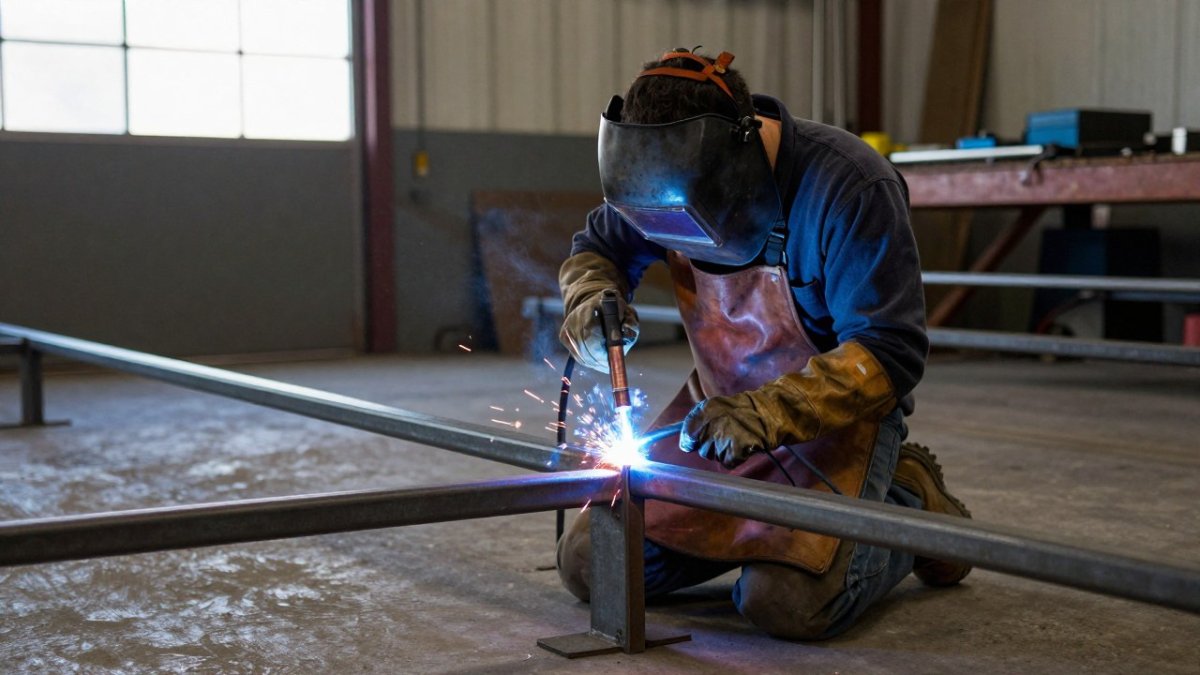
Many steel door problems are repairable without replacing the whole unit. A skilled welder can close cracked seams, reinforce weak corners, rebuild worn hinge mounts, and patch holes where a lock or closer was removed.
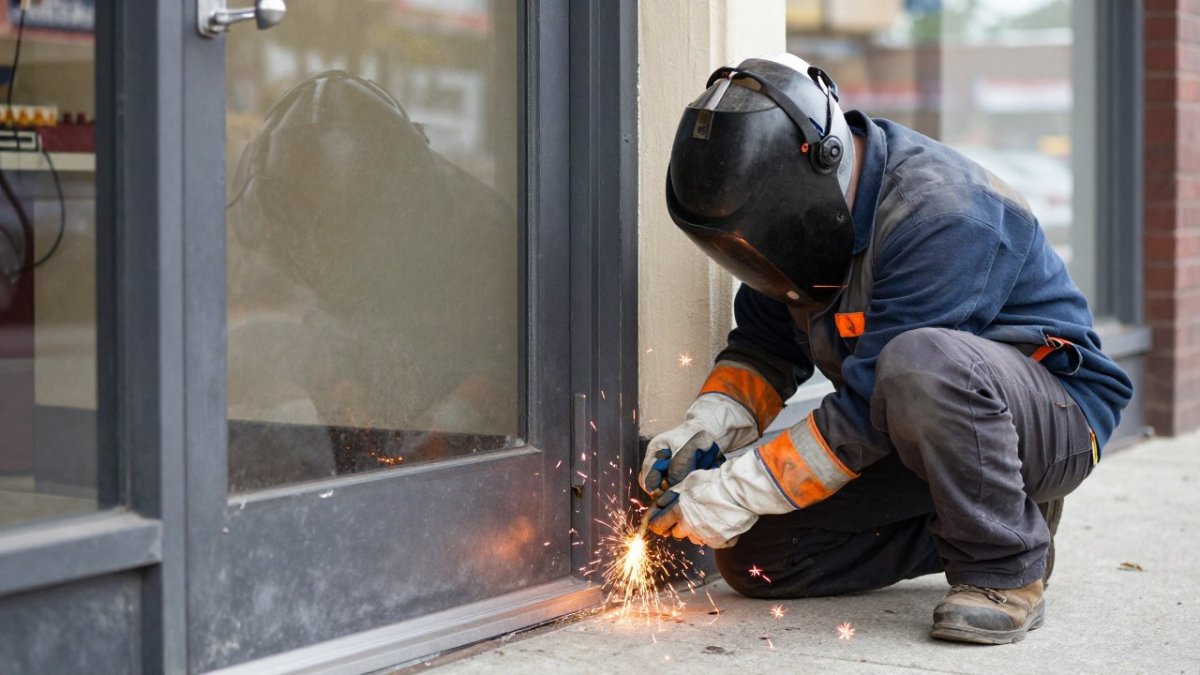
Some damage is better handled by replacement. If the door skin is punctured across a large area, or the core has rotted out, patching may cost more than a new door and still look uneven. Ask the welder to explain which option makes sense for your specific door.
A welder can handle many common steel door problems, and the table below summarises which fixes suit repair and which point toward replacement.
| Damage | Repair approach | Note |
|---|---|---|
| Cracked seams | Close with welding | Repair keeps the door in service |
| Weak corners | Reinforce by welding | Restores structural strength |
| Worn hinge mounts | Rebuild mounts | Needed before new screws hold |
| Holes from removed hardware | Patch and refinish | Refinish to match the building |
| Large skin puncture | Consider replacement | Patching may cost more and look uneven |
| Rotted core | Consider replacement | Patching is usually not viable |
Metal Door Frame Repair and Jamb Restoration
The frame carries the weight of the door and holds the strike plate. When a frame bends or cracks, the door will never seal properly, no matter how well the hinges are adjusted. Common frame problems include bent jambs from forced entry, cracked welds at the corners, and loose anchors where the frame meets the wall.
Frame repair usually means straightening the jamb, re-welding joints, and re-securing the anchors. Once the frame is square, the door can be rehung and adjusted. Re-checking alignment after the repair is important, because a frame that looks straight can still be out of plumb by a small amount that makes the latch hard to close.
Repair or Replace: Decision Criteria for Your Entryway
Choosing between repair and replacement comes down to a few questions. Work through them before you decide.
- How much of the door is damaged? Isolated dents and cracks usually favor repair. Widespread corrosion favors replacement.
- Is the frame sound? A sound frame with a bad door can often be fitted with a new door. A failing frame often means the whole assembly needs attention.
- How old is the entryway? Older doors may have gauges or finishes that are hard to match, which can make a patch look obvious.
- Does the door still meet your security and safety needs? If the lock or latch no longer holds reliably, that is a reason to act quickly, whatever the other factors say.
We recommend getting the damage described in writing first. A written scope makes it much easier to compare repair against replacement on equal terms.
Mobile Welding for Steel Repairs On Site
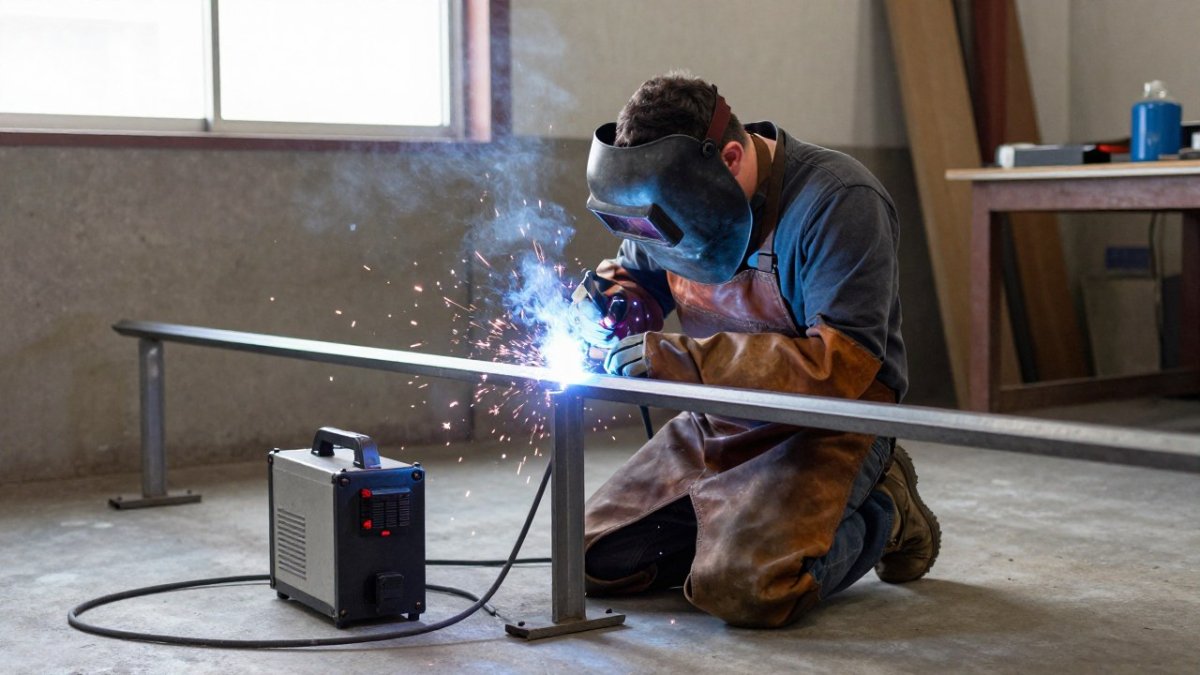
Many entryway repairs do not need to leave the building. Mobile welding lets a welder bring equipment to your property and work on the door, frame, or railing in place.
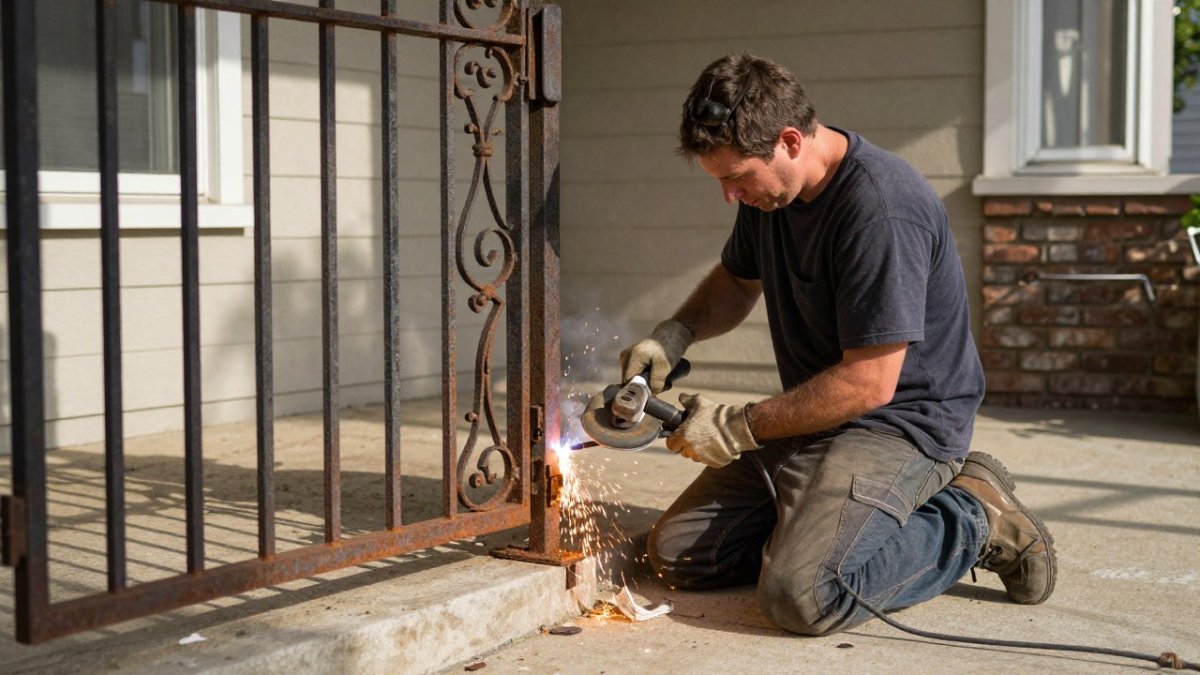
Mobile welding in Silver Spring is available for on-site steel repairs, and the same approach works for railings and gates. Our mobile welding service page describes what the work covers and how to schedule it. On-site work does require clear access to the door, a power source where needed, and a safe area for the welder to set up.
Booking Your Entryway Repair With Patriot Iron Work
When you are ready to move forward, prepare a few things first. Take dated photos of the damage from several angles. Write down when the problem started and what you have noticed since. Note any access limits, such as tenant hours or delivery schedules.
Then request a written scope from each contractor you consider. If you are still comparing options, this guide to finding structural welding near me explains how to vet local contractors. For help scoping the damage in writing, see how to get commercial metal repair done in Maryland.
If you spot a problem that goes beyond your entryway, such as equipment or machinery trouble at your facility, industrial machinery repair in Silver Spring may be the right place to start.
Get a free quote from Patriot Iron Work for your metal entryway repair.
Frequently Asked Questions
How much does it cost to replace a metal door frame?
Costs depend on the frame size, material, the number of openings, and whether the wall or hardware also needs work. Repairing an existing frame is often less expensive than full replacement, but the exact figure depends on the damage and site conditions. Contact Patriot Iron Work for a quote based on your entryway, since current pricing is not published here.
Can a metal door be repaired?
Many metal doors can be repaired. Dents, bent edges, loose hinges, and corrosion at the bottom are common problems that a welder can often address. Heavy structural damage, deep rust through the panel, or a warped door that cannot be brought back into alignment usually calls for replacement. A professional inspection shows which category your door falls into.
When should a metal door frame be repaired instead of replaced?
Repair makes sense when the frame is still structurally sound and the damage is localized, such as a bent jamb, a cracked weld at a corner, or rust confined to one area. Replacement is worth considering when the frame is rusted through, out of square in several places, or no longer holds the door securely. Steel door repair and frame work are often done together when both are damaged.
Can a welder repair a steel entryway?
Yes. Welders can repair steel entryways by patching holes, reinforcing corners, rebuilding frame sections, and reattaching hinge plates. Mobile welding allows many repairs to be done on site, which avoids removing the entire assembly. Patriot Iron Work can assess whether a repair is practical for your specific entryway.