 How-to
Need Industrial Machinery Repair in Silver Spring?
Last Updated: October 30, 2026
Quick Summary
Industrial machinery repair is the process of diagnosing, fixing, and returning production equipment to service, from a cracked weld on a conveyor frame to a worn shaft on a press. At Patriot Iron Work, we handle the metal side of that work every week: structural repairs, on-site welding, and fabricated replacement parts for equipment that cannot afford long downtime.
- A repair call runs in a fixed order, from intake and symptoms through final inspection.
- Cracked welds, bent structural members, and wallowed bolt holes can often be repaired on-site.
- Internal failures like motor windings, hydraulic pumps, and gearboxes need a specialist in that discipline.
- Monthly walks should check welds, guards, and anchor bolts for cracks or movement.
- Compare quotes on diagnosis, mobilization, repair, inspection, and documentation, not line items.
Table of Contents
- Industrial Machinery Repair in Silver Spring: What the Work Actually Involves
- Industrial Equipment Repair: What Can Be Fixed On-Site
- Mobile Welding Services for Plants Across Montgomery County
- Custom Metal Fabrication for Replacement Parts and Guards
- Industrial Machine Maintenance That Prevents the Next Breakdown
- How to Vet an Industrial Machinery Repair Provider
- Get a Free Quote for Your Silver Spring Facility
- Frequently Asked Questions
Industrial Machinery Repair in Silver Spring: What the Work Actually Involves
Industrial machinery repair is the process of diagnosing, fixing, and returning production equipment to service, from a cracked weld on a conveyor frame to a worn shaft on a press. For plant managers across Silver Spring, IBISWorld forecasts the U.S. machinery repair and maintenance market reaching $60.3 billion by the end of 2026, a 1.9% compound annual growth rate (IBISWorld machinery repair industry data). At Patriot Iron Work, we handle the metal side of that work every week: structural repairs, on-site welding, and fabricated replacement parts for equipment that cannot afford long downtime.
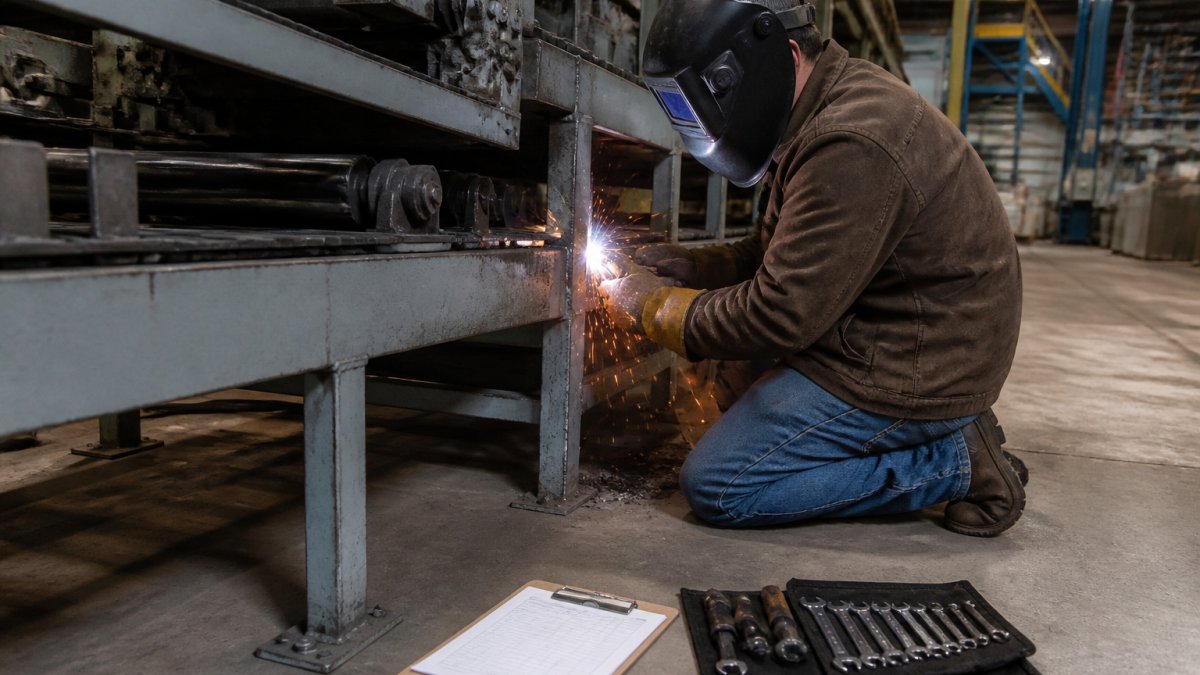
From Troubleshooting to Final Inspection
A repair call runs in a fixed order, and skipping a step is how rework happens. Our process looks like this:
- Intake and symptoms. The operator describes the failure: noise, vibration, a crack, a bent guard.
- On-site inspection. We check the frame, welds, fasteners, and mounting points for damage.
- Diagnosis and scope. We separate what failed from what caused it.
- Repair plan. Weld repair, part fabrication, or replacement, with a written scope.
- Execution. Shop fabrication or field welding, depending on access.
- Final inspection. Weld inspection and a fit check before the machine runs.
The inspection step matters most, because a crack often has a cause beyond the weld itself.
Here is the repair sequence we follow on every call, from first symptom to final sign-off.
| Step | What happens |
|---|---|
| Intake and symptoms | Operator describes noise, vibration, crack, or bent guard |
| On-site inspection | Check frame, welds, fasteners, and mounting points |
| Diagnosis and scope | Separate what failed from what caused it |
| Repair plan | Weld repair, part fabrication, or replacement, written scope |
| Execution | Shop fabrication or field welding, depending on access |
| Final inspection | Weld inspection and fit check before machine runs |
Industrial Equipment Repair: What Can Be Fixed On-Site
Some structural and weld-related industrial equipment repairs can be completed on-site. The question worth answering before you call anyone is simpler: is this a field repair or a shop repair? The answer usually comes down to whether the failure is in the steel or inside the machine.
Field-Repairable Failures
These are examples of jobs that can often be handled on-site:
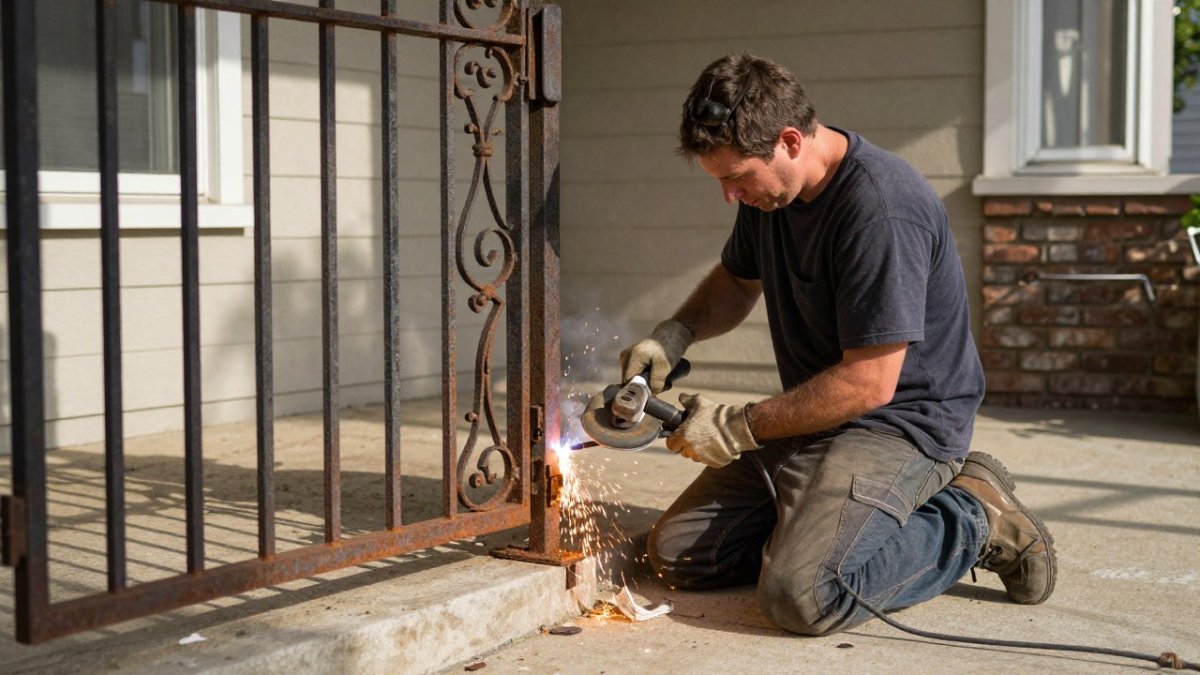
- Cracked or fatigued welds on conveyor frames, machine bases, hopper brackets, and guard mounts.
- Bent or deformed structural members, frame rails, legs, cross-braces, and mounting ears, straightened or cut out and replaced in place.
- Worn or wallowed bolt holes at anchor and mounting points.
- Cracked handrails, guards, and machine guarding that no longer meet the original design intent.
- Trailer frames, heavy equipment attachments, and small-engine mounting plates where the damage is structural rather than internal.
What Belongs in a Shop, Not the Field
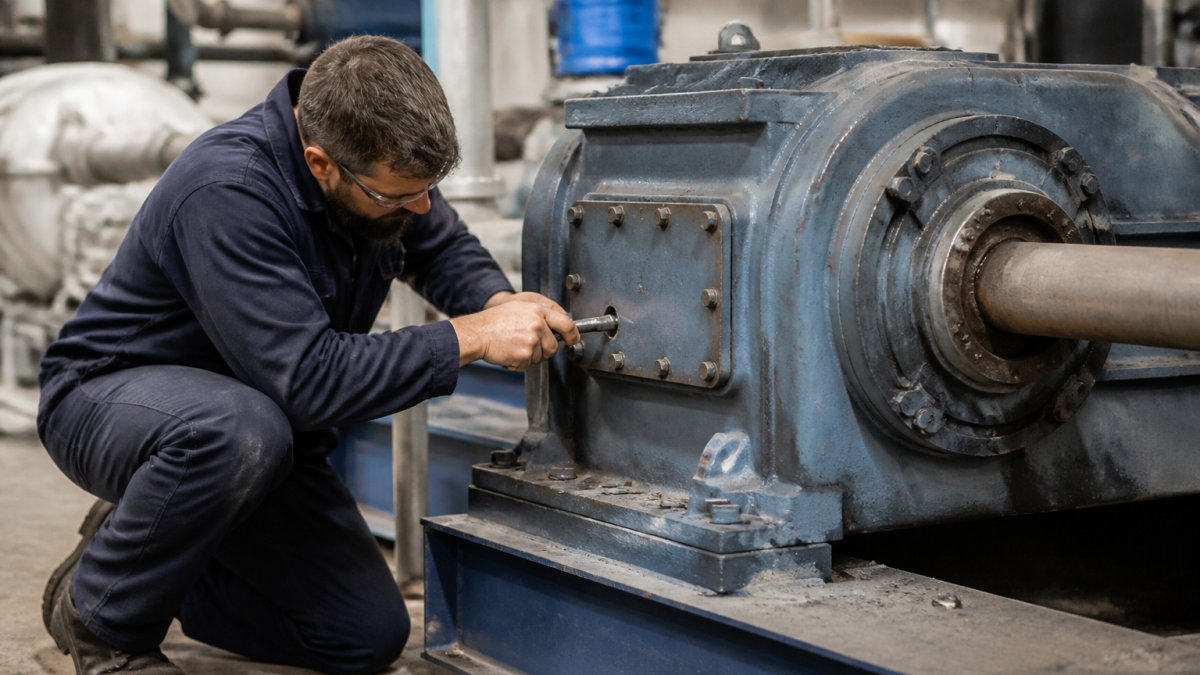
Some work is technically weldable on-site but may be better suited to a shop. Internal failures such as motor windings, hydraulic pumps, gearboxes, bearings, and control systems generally require a specialist in that discipline rather than a structural welder.
Field Constraints That Affect the Scope
On-site work can involve conditions a shop does not, such as limited access, facility-set hot work permit requirements, and lockout/tagout procedures. These are generally planned with the facility before work begins.
Mobile Welding Services for Plants Across Montgomery County
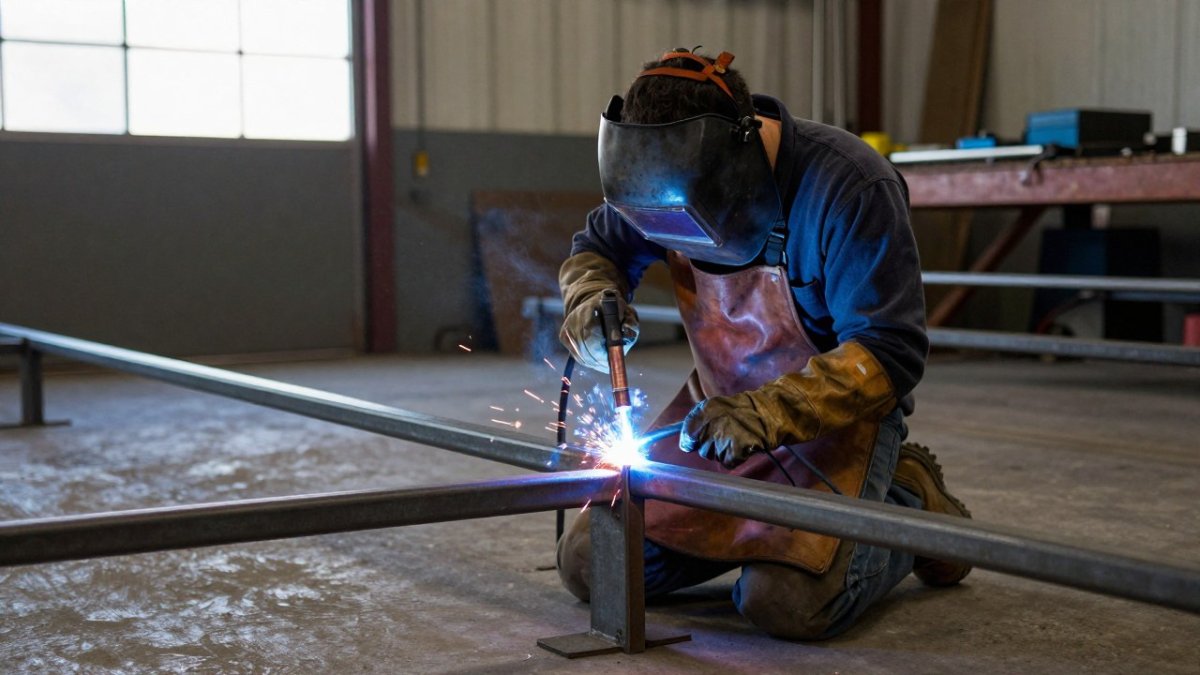
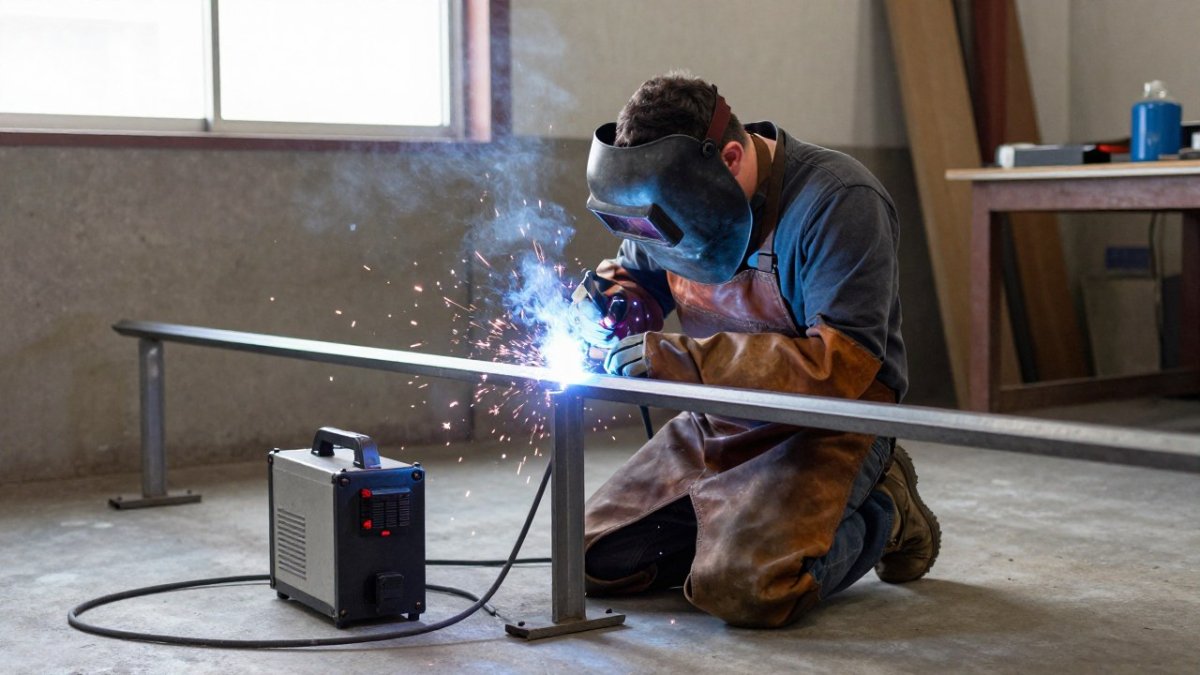
Mobile welding services bring the welding rig, gas, and tools to your facility, so equipment stays in place instead of being hauled to a shop. That matters when a machine is anchored to a foundation or a repair window is measured in a single shift. Patriot Iron Work offers mobile welding serving Silver Spring, Montgomery County, and the DMV.
Field work brings its own constraints: limited access, hot work permits, and safety requirements that vary by facility. For a closer look at how the service works, see mobile welding in Silver Spring, MD and our mobile welding service page.
Custom Metal Fabrication for Replacement Parts and Guards
When a part is discontinued or the original was undersized, custom metal fabrication is faster than waiting on a supplier. Custom metal fabrication can be used for replacement parts and guards where needed.
The trade-off is time: a fabricated part takes longer than one pulled off a shelf. When a stock part exists and fits, buy it. For a closer look at what these services cover, see this buyer's guide to industrial metal fabrication services. When it doesn't, fabrication beats a machine sitting idle.
Industrial Machine Maintenance That Prevents the Next Breakdown
Industrial machine maintenance is planned inspection and repair work scheduled before a failure stops production. Planned inspection can help catch problems early, before a failure stops production. A cracked weld, loose anchor bolt, or worn hinge is cheap to fix early and expensive to fix after it takes a line down.
A Simple Preventive Maintenance Schedule
- Monthly: Walk the line and check welds, guards, and anchor bolts for cracks or movement
- Quarterly: Inspect structural frames, mezzanine supports, and handrails
- Annually: Full structural inspection of load-bearing welds and connections
- After any impact: Immediate inspection of the affected frame or mount
Predictive maintenance using machine learning is an active research area, with published work examining how sensor data can flag equipment problems before failure (predictive maintenance research). For the structural side, the simplest predictor is still a person looking at the welds. For how certified welders and planned maintenance fit together on heavy equipment, see our guide to service delivery for heavy machinery.
How to Vet an Industrial Machinery Repair Provider
Most plant managers do not have a procurement process for structural repair, they have a phone number they trust until it fails them. A short, repeatable vetting routine fixes that. This guide to hiring reliable commercial welding contractors offers a vetting checklist, scope guidance, and inspection steps you can act on.
The Questions That Actually Separate Providers
- Who performs the welding, and what are they qualified for? Ask whether the welder is qualified for the work and whether a written welding procedure is followed. "We've been doing this for years" is not a qualification.
- What does final inspection include? A visual check is the minimum. Ask whether weld inspection, fit checks, and a written sign-off are part of the scope or an add-on.
- What is the emergency response time, and what counts as an emergency? Get the number in hours, not adjectives. Ask whether after-hours and weekend calls are covered.
- Who is the single point of contact from fit-up through inspection? One name and one number beats a dispatch queue when a line is down.
- How are parts sourced or fabricated? For discontinued components, ask whether the provider fabricates in-house or subcontracts, and how that affects lead time.
- What warranty covers the repair? Get the term and what it covers, workmanship, materials, or both.
Compare Scopes, Not Line Items
The cheapest quote is often the one that excludes mobilization, inspection, or permit coordination, so the final invoice lands well above it. Put two quotes side by side and check that both include the same five things: diagnosis, mobilization, the repair itself, inspection, and documentation. A quote missing inspection is not a lower price, it is an incomplete scope.
Documentation to Expect After the Work
Documentation such as a scope of work, inspection results, and repair photos can be requested from any provider. That record matters at the next failure, at audit time, and when you are deciding whether to repair the same component again or replace it. Ask for it before the job, not after.
A Simple Scorecard
Rate each candidate on four axes, qualification, inspection and documentation, response time, and warranty, and weight them by how critical the equipment is. A conveyor guard and a load-bearing mezzanine support do not deserve the same scrutiny.
Get a Free Quote for Your Silver Spring Facility
A machine down, a cracked frame, or a guard that needs fabricating: the fix starts with a scope. Patriot Iron Work provides mobile welding, custom fabrication, steel repairs, steel railings, iron gates, and light structural steel erection across Silver Spring, Montgomery County, and the DMV, with a commitment to high safety standards and efficiency.
Get a free quote from Patriot Iron Work to discuss your equipment.
Frequently Asked Questions
What does industrial machinery repair include?
It covers diagnosing why a machine failed, then fixing or replacing the failed component. That can mean welding a cracked frame, rebuilding a worn shaft, fabricating a replacement guard, or repairing structural steel that supports the equipment. The work usually starts with a troubleshooting visit, moves to a written repair estimate, and ends with a final inspection before the machine goes back into service.
Can a mobile welder repair industrial equipment on-site?
Yes, for many jobs. Mobile welding services bring the truck, generator, and tools to your facility so cracked frames, broken guards, handrails, and structural supports can be repaired without hauling the machine out. On-site work makes sense when the equipment is too large or too heavy to move, or when downtime is costly. Larger rebuilds may need to be handled in a shop setting.
How do I know whether industrial equipment needs repair or replacement?
Compare the repair estimate against replacement cost, remaining service life, and downtime. If the repair is a small share of replacement cost and the machine is otherwise sound, repair usually wins. If failures keep repeating, parts are hard to source, or the frame itself is compromised, replacement deserves a serious look. Ask your provider to put both numbers in writing so the decision is based on data, not guesswork.
Can a welding shop repair steel railings, gates, and structural components?
Yes. A fabrication shop that handles industrial work can also repair steel railings, iron gates, and light structural steel such as equipment platforms, mezzanine supports, and bollards. When requesting repairs, ask whether photos and an inspection before return to service are included.