 How-to
Mobile Welding in Silver Spring, MD: On-Site Solutions
Table of Contents
- What Mobile Welding Services Cover in Silver Spring
- On-Site Welding Repair for Commercial and Residential Projects
- Steel Railing Repair and Custom Metal Fabrication
- Iron Gate Repair and Structural Metalwork
- Finding a Mobile Welder Near Me: What to Look For
- How to Prepare Your Site and Request a Mobile Welding Quote
- Why Professional Welding Certification and Insurance Matter
- Frequently Asked Questions
Last Updated: October 18, 2026
What Mobile Welding Services Cover in Silver Spring
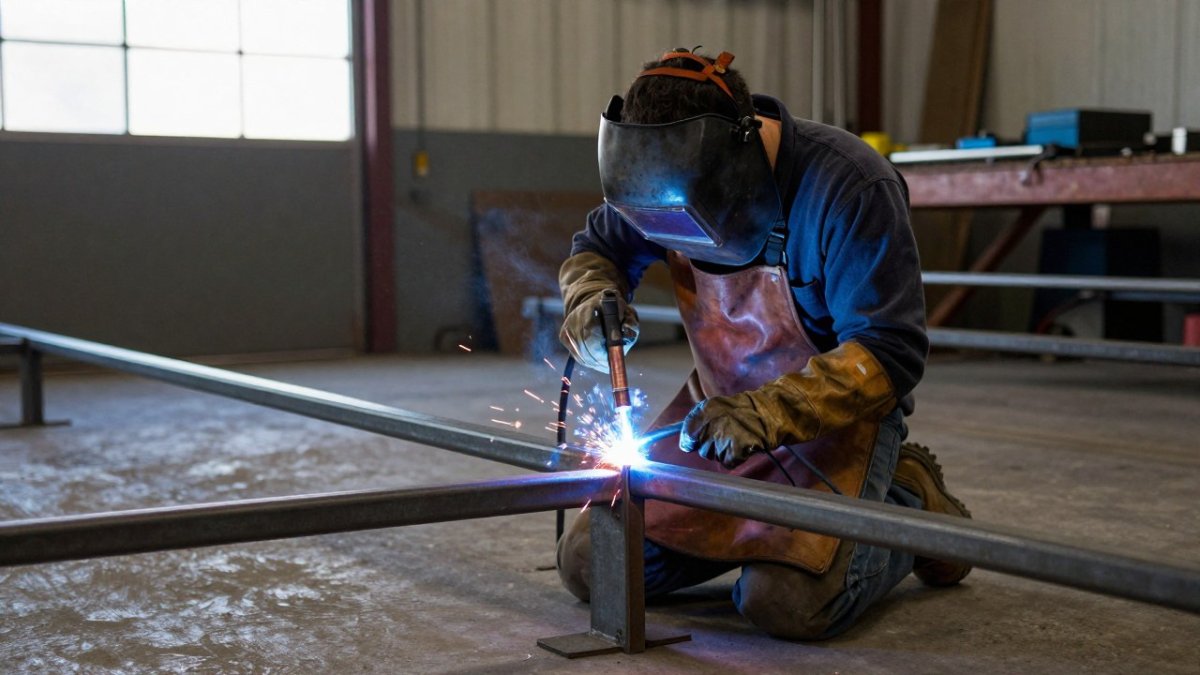
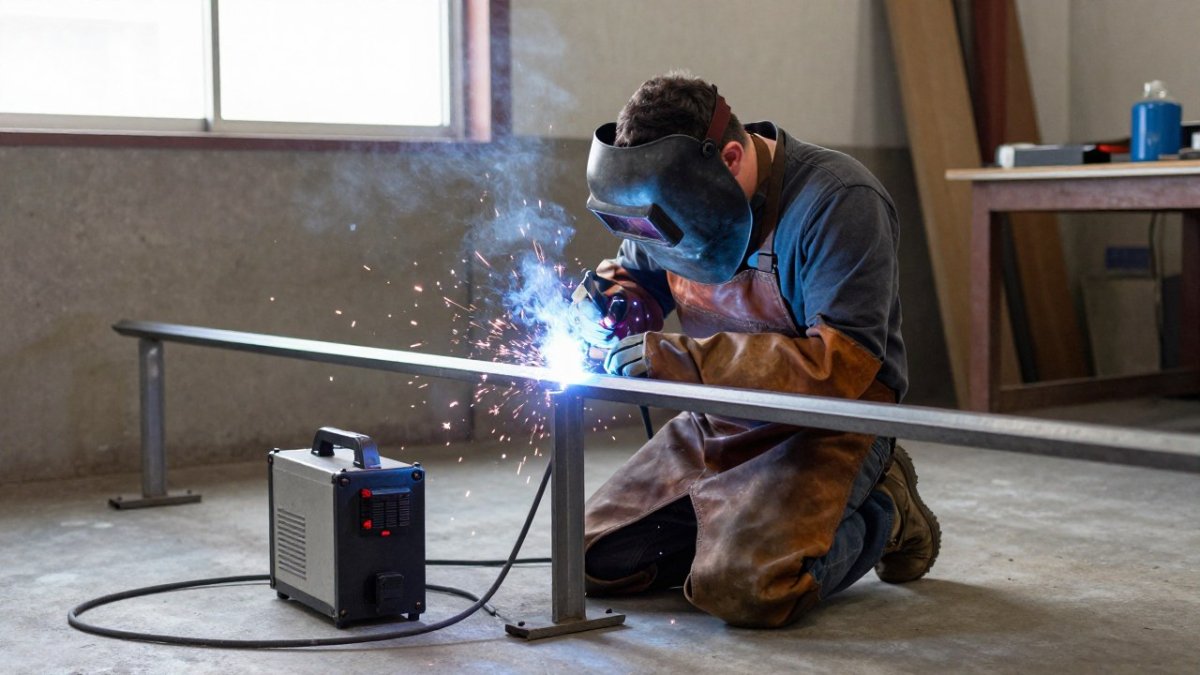
Mobile welding silver spring means professional welding delivered to your job site, so you never transport heavy equipment or structures to a shop. At Patriot Iron Work, we bring our expertise and equipment to you for everything from emergency repairs to custom fabrication. This saves time, cuts logistics costs, and keeps your operations running.
We serve residential, commercial, and industrial sites across Montgomery County and the broader DMV. Whether you need structural repairs, custom metalwork, or fabrication, we arrive equipped to assess and complete the work. On-site welding adapts to your schedule and site conditions instead of shop availability.
Common projects include equipment repairs, machinery maintenance, gate and railing installation, and light structural steel erection. We handle mild steel, stainless steel, and aluminum, applying the right process for each material. Every weld meets industry standards.
On-Site Welding Repair for Commercial and Residential Projects
When structural damage occurs or equipment fails, waiting for a shop appointment costs money and productivity. On-site welding repair brings certified welders to your location with mobile equipment that handles most common repairs without disassembly or transport, minimizing downtime for commercial properties and restoring residential sites quickly.
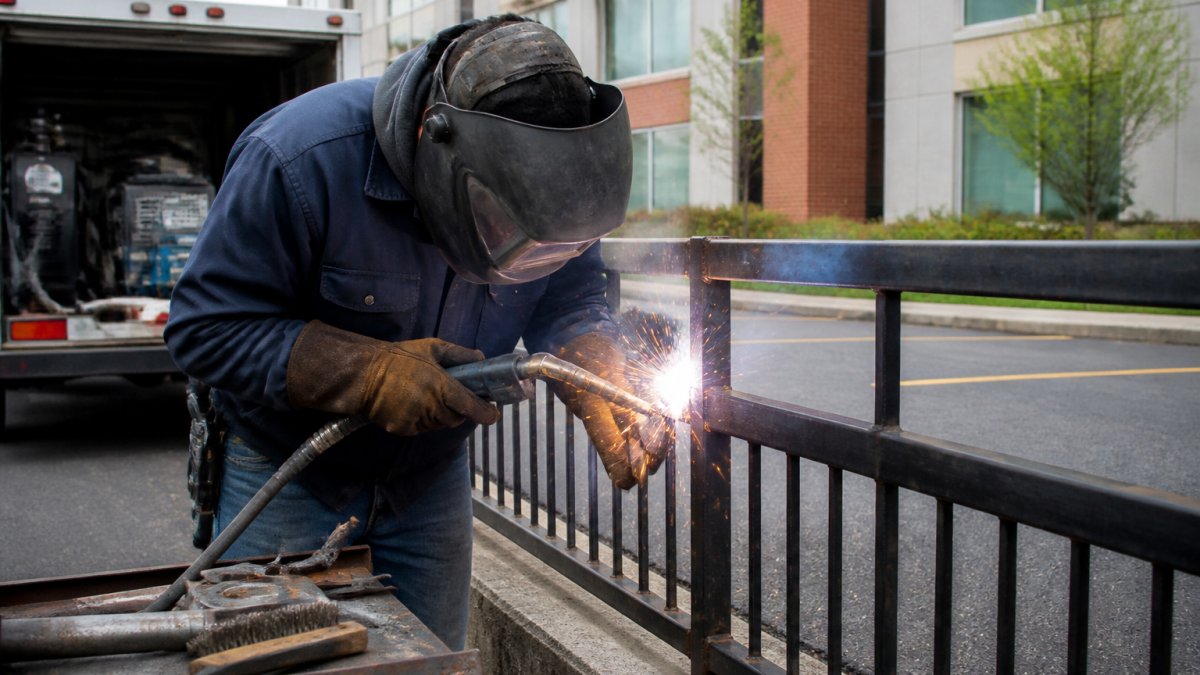
Commercial facilities face tight timelines, and a broken railing, damaged gate, or failed structural connection creates liability and disruption. Mobile welding eliminates shop scheduling and logistics: we arrive, diagnose, and repair on your timeline. Residential clients benefit too, a cracked metal staircase, broken fence connection, or damaged deck support gets fixed on site without removal and reinstallation.
The key advantage is assessment and repair in one visit: we evaluate the damage, recommend the best approach, and complete the work with minimal disruption. If fabrication is needed first, we discuss timelines upfront so you understand the full scope.
Steel Railing Repair and Custom Metal Fabrication
Steel railings provide safety and aesthetic value, but exposure to weather, impact, and heavy use causes cracks, rust, and structural failure. Steel railing repair requires precise welding to restore structural integrity while maintaining appearance. Custom railing fabrication lets you design solutions that match your property's style and meet safety codes.
Residential railings often crack at connection points or rust until strength is compromised; commercial railings face heavier stress from foot traffic and weather. We repair both through damage assessment, material selection, and precision welding that restores original strength. For custom fabrication, we build railings to your specifications, from wrought iron aesthetics to modern steel designs.
Fabrication starts with your vision: we discuss dimensions, style, material preferences, and safety requirements, then design to building codes and your aesthetic goals. Once approved, we fabricate the components and install them on-site or deliver them for your contractor.
Common railing materials include mild steel, stainless steel, and aluminum. We recommend based on location, traffic level, and maintenance preferences, applying the right welding process for each.
Iron Gate Repair and Structural Metalwork
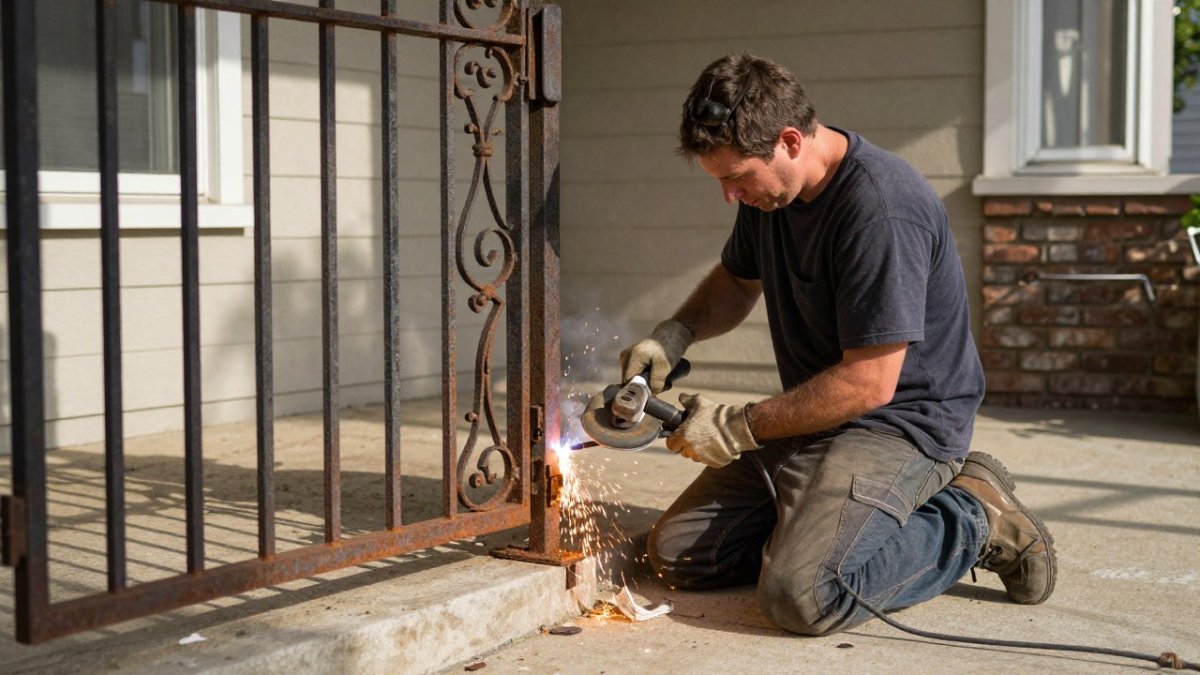
Iron gates combine security with visual appeal, but rust, impact damage, and weathering degrade both function and appearance. Iron gate repair restores damaged sections while preserving the gate's original character and structural integrity. For gates beyond repair, we fabricate custom replacements that match your property's design.
Residential gates often rust at joints and hinges where moisture collects, and ornamental sections crack from impact or freeze-thaw cycles; commercial gates see heavier use and need stronger repairs. We assess the damage, remove rust, repair or replace sections, and reinforce weak points so the gate functions smoothly and looks maintained.
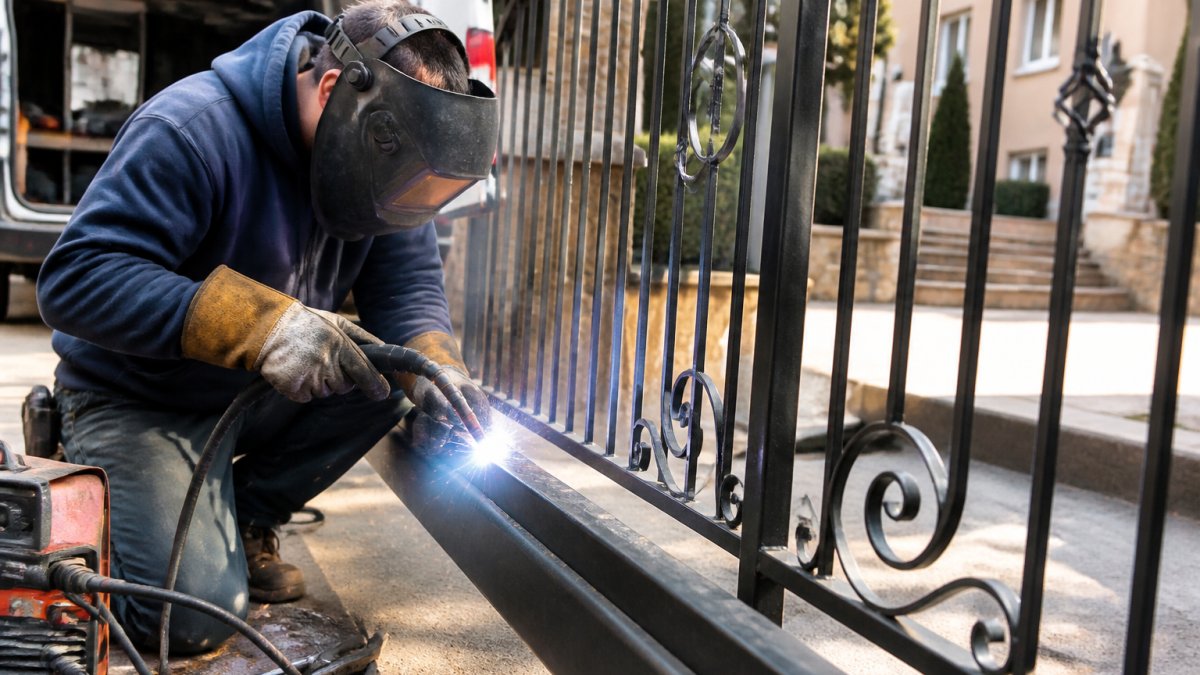
Custom gate fabrication opens possibilities for unique designs, whether traditional wrought iron, modern geometric patterns, or specialized security features. Fabrication includes proper hinge installation, latch mechanisms, and structural reinforcement for daily use and weather exposure.
Structural metalwork extends beyond gates and railings. We handle custom steel frames, support beams, connections, and light structural steel erection for residential additions, commercial projects, and industrial applications. Improper welding of structural components creates safety risks, so we approach every project with the rigor and certification it demands.
Finding a Mobile Welder Near Me: What to Look For
When you search for a mobile welder near me, the results often look interchangeable: a phone number, a list of metals, and a promise of fast service.
1. Confirm the certification that matches your work. The American Welding Society (AWS) publishes qualification standards for welding processes and materials, and many structural and commercial projects require documented welder qualification.
2. Request proof of insurance before work begins. A professional mobile welding service should carry general liability insurance, workers' compensation coverage, and commercial vehicle insurance.
3. Ask about experience with your specific project type. Welding a decorative iron gate differs from light structural steel erection or a load-bearing connection repair.
4. Check references and recent reviews. Ask for two or three references from comparable projects and follow up with a short call.
5. Verify service-area coverage and response expectations. Confirm the welder regularly serves your part of Montgomery County and the broader DMV, and ask how travel time affects scheduling.
**6.
A short verification conversation before scheduling protects your property, your timeline, and your budget. The goal is not to find the cheapest welder, but the one whose credentials, experience, and communication match the work you need done.
How to Prepare Your Site and Request a Mobile Welding Quote
Most mobile welding projects go smoothly or badly before the welder ever strikes an arc. The quality of your quote and the speed of the visit depend on how well you prepare the site and describe the work. Here are the details to send, the photos to take, and the factors that shape an estimate.
Step 1: Document the job before you call
Gather the information a welder needs to quote accurately:
- Material type if you know it: mild steel, stainless steel, aluminum, wrought iron, or cast iron. If you are unsure, say so and send a close-up photo.
- Dimensions of the part or structure: length, width, height, and material thickness if measurable.
- Damage description: crack location, rust severity, bent section, failed weld, or missing piece.
- Access details: driveway width, gate clearance, stairs, elevators, loading zones, and whether the work area is indoors or outdoors.
- Power availability: whether a standard outlet, a higher-amperage circuit, or a generator is available on site.
- Photos: take wide shots showing the surrounding area and close-ups of the damage, plus one photo with a tape measure or common object for scale.
Send these details in one message rather than across several calls, so the welder can see the scope and access constraints, give a realistic estimate, and bring the right equipment on the first visit.
Step 2: Prepare the work area for on-site hot work
Mobile welding involves open flame, sparks, and high heat, so site preparation is a safety requirement.
- Clear the area of combustible materials, including cardboard, paper, solvents, dry vegetation, and debris.
- Move vehicles, equipment, and stored items away from the work zone.
- Confirm ventilation if the work is indoors; welding fumes and gases need to escape.
- Identify fire hazards nearby and have a fire extinguisher accessible.
- Protect finished surfaces, glass, and painted areas from spatter with welding blankets or shields.
- Confirm that the welder can safely reach the work area with equipment and that the ground is stable for the truck or generator.
If the work is near flammable construction materials or in a confined space, tell the welder in advance so the job can be planned correctly or referred to a shop.
Step 3: Understand what drives the estimate
Mobile welding quotes vary because the work varies. Main factors include:
- Travel distance and time from the welder's base to your site, especially for locations outside the immediate service area.
- Labor hours based on job complexity, access difficulty, and whether the repair requires disassembly or fit-up.
- Materials such as replacement steel, welding consumables, and finish coatings.
- Equipment needs such as a generator, lift, or specialty tools for the site.
- Minimum call-out charges that many mobile services apply to small jobs to cover travel and setup.
- Site conditions such as weather exposure, limited access, or the need for temporary support during a structural repair.
Ask the welder to explain which factors apply so you can compare estimates fairly.
Step 4: Request and compare written quotes
Ask for the estimate in writing and confirm it lists labor, materials, travel, equipment, and exclusions. Compare at least two quotes on the same scope and clarify anything vague. Prioritize certification, insurance, and relevant experience over the lowest number.
Step 5: Confirm scheduling and communication
Before the visit, confirm the date and time window, who will provide access, and how the welder will reach you if the schedule changes. Ask how unexpected findings, such as hidden rust or a cracked connection, will be handled and whether additional work needs approval. Clear expectations prevent surprises.
Why Professional Welding Certification and Insurance Matter
Welding is a skilled trade where mistakes have serious consequences: a poorly executed weld on a structural component can fail under load, creating safety hazards and liability. Professional certification proves the welder has demonstrated competency through rigorous testing and keeps current with industry standards.
The American Welding Society (AWS) sets welding standards in the United States, including qualification requirements for different processes and materials (Welding Standards & Publications: Industry Best Practices).
Insurance protects both parties. Liability insurance covers property damage or injury during the work, and workers' compensation covers the welder if injured on your property. If something goes wrong, insurance ensures you're not liable for medical costs or property damage.
Patriot Iron Work maintains current AWS certification and comprehensive insurance coverage. Our commitment to professional standards means your project gets the reliability and quality that stand the test of time. When you hire a certified, insured welder, you're investing in work that lasts and protects you legally.
Finding reliable mobile welding silver spring services means prioritizing certification, insurance, and experience. Patriot Iron Work delivers professional welding solutions for residential, commercial, and structural projects across Montgomery County and the DMV.
Frequently Asked Questions
What types of repairs can a mobile welder handle on-site?
Mobile welders handle a wide range of field repairs including structural steel fixes, machinery component repairs, trailer and equipment welding, railing and gate repairs, and custom metal fabrication work. On-site welding repair eliminates the need to transport heavy or large items to a shop, saving time and reducing downtime for your operation. Common jobs include reinforcing damaged beams, repairing broken brackets, and fabricating new metal components to your exact specifications.
How do I prepare a work area for mobile welding?
Clear the work area of obstacles and flammable materials within a safe distance from the welding site. Ensure proper ventilation and confirm that electrical power is available if needed. Communicate any site-specific safety requirements or restricted areas to your welder in advance. Provide access for the mobile welder's vehicle and equipment. Discuss environmental conditions such as weather, temperature, and humidity, as these can affect welding quality and scheduling.
What should I send a mobile welder before requesting a quote?
Provide clear photos or measurements of the damaged or fabricated component, details about the material type (steel, aluminum, stainless steel), and the intended use or load requirements. Describe the scope of work, any time constraints, and your site location and access details. Include information about existing welds or connections that will be affected. The more detail you provide upfront, the more accurate your quote will be and the faster the welder can schedule and prepare for the job.
When should a damaged steel part be replaced instead of repaired?
A professional welder can assess whether repair or replacement is the right choice based on the damage extent, structural integrity, and cost-benefit analysis. Minor cracks, breaks, and wear typically warrant repair, while severe corrosion, extensive damage, or parts beyond safe load capacity may require replacement. A qualified welder will inspect the component and recommend the most reliable and cost-effective solution for your specific situation.