 How-to
How to Get Commercial Metal Repair Done in Maryland
Quick Summary
Commercial metal repair services in Maryland cover cracked structural steel, failing handrails, sagging gates and worn machinery parts. Start by documenting the damage with dated photos and a short written description, then decide between repair and replacement based on safety, remaining service life, downtime and lifecycle cost. Request a written scope before comparing contractors.
- Take clear photos from several angles with a tape measure in the frame before calling a contractor.
- Any structural member or change to the load path should be reviewed by a qualified professional before work begins.
- Repair is usually better when damage is isolated and the repair restores full function.
- Compare bids line by line, since the lowest price often excludes finishing, cleanup or mobilization.
- Ask upfront about emergency response times and whether temporary stabilization is available.
Table of Contents
- How to Get Commercial Metal Repair Done in Maryland
- Assessing Damage Before You Call a Contractor
- Repair or Replace: Deciding on Commercial Steel Repair
- Mobile Commercial Metal Repair Services in Maryland: On-Site or in the Shop
- Steel Railing Repair and Gate Repair for Commercial Properties
- When Custom Metal Fabrication Is the Better Fix
- Safety, Inspection and Preparing Your Site for Metal Work
- Requesting a Quote and Scheduling Your Commercial Metal Repair
- Frequently Asked Questions
How to Get Commercial Metal Repair Done in Maryland
Last Updated: November 17, 2026
Commercial metal repair services in Maryland cover far more than a single broken weld. It includes cracked structural steel, failing handrails, sagging gates, damaged light steel framing and worn machinery components. This guide explains how to scope a job, decide between repair and replacement, and request a quote that gets accurate answers.
Metal fabrication shops across the country report trouble filling advanced-skill roles. According to Metals Delivered 2026 fabrication trends article, 60% of fabrication shops report shortages in advanced skill sets. That shortage makes a clear scope of work more valuable, because the right welder and the right shop schedule are harder to find on short notice.
Assessing Damage Before You Call a Contractor
Most repair requests go smoothly when the property owner or facilities manager can describe the problem clearly. A short inspection before you call saves time and helps the contractor price the job correctly.
Signs That Steel Needs Attention
Look for visible cracks along welds, rust that flakes or bubbles paint, bent or loose brackets, and gates that drag or no longer latch. Movement at connection points is a warning sign. So is any change in how a railing or gate feels under load.
Do not wait for a failure. A loose railing that is left alone can become a fall hazard, and a cracked structural member can grow under repeated loading.
Documenting the Damage for Quotes
Take clear photographs from several angles, with a tape measure or ruler in the frame. Note the location, the material if you know it, and how long the problem has existed. Record what the metal is attached to and whether it sits indoors or outdoors.
A written description with photos lets a contractor estimate scope before a site visit. It also gives you a record if the repair is later disputed.
Repair or Replace: Deciding on Commercial Steel Repair
Repair is usually the right choice when the steel is sound apart from one defect, such as a single cracked weld or a bent rail section. Replacement makes more sense when corrosion has thinned the base metal across a large area, or when the original design no longer meets your needs. But the decision is rarely that simple, and a structured comparison helps you justify the choice to ownership, insurers, and building inspectors.
Four Criteria That Drive the Decision
Safety and load path. If the damaged member carries structural load, a stair stringer, a canopy support, a light structural steel beam, any repair must restore the original capacity. A welded patch on a tension member is not equivalent to a replacement part unless an engineer confirms it.
Remaining service life. A railing with surface rust and one loose baluster has years left. A gate post rusted through at the base is near the end of its life even if the rest looks fine.
Downtime and business disruption. On-site repair of a fixed railing or gate usually avoids closing an entrance or removing a heavy assembly. Replacement may require removal, shop fabrication, and reinstallation, which can take a loading dock or stairwell out of service for days. Factor in the cost of lost access, not just the invoice.
Lifecycle cost. A repair that fails again in a year costs more than a replacement that lasts a decade. Ask the contractor to explain the expected service life of the repair and whether the underlying cause, water intrusion, vibration, poor drainage, has been addressed. If the cause remains, the repair will not last.
A Simple Decision Framework
Most practitioners find a three-question test works well: (1) Is the defect isolated to one area, or is the base metal thinned across the component? (2) Does the repair restore full function, or is it a patch on a failing system? (3) Will the repair last at least half as long as a replacement? If the answers are isolated, yes, and yes, repair is usually the better call. If any answer is no, price a replacement before committing.
Watch out: a contractor who recommends replacement without explaining why may be upselling, and one who always recommends repair may be avoiding fabrication work. Ask for the reasoning in writing and compare it against the criteria above.
When to Bring in a Qualified Professional
For any structural member, any repair that changes the load path, and any component subject to building or fire code, a licensed engineer or qualified inspector should review the scope before work begins. The contractor can coordinate this, but the property owner should confirm who is responsible and obtain the written opinion for building records.
The article offers a three-question test and four criteria to help decide between repair and replacement.
| Criterion | What to check | Why it matters |
|---|---|---|
| Safety and load path | Does the member carry structural load? | Repairs must restore original capacity |
| Remaining service life | Repair cost vs. expected remaining life | Short-lived fixes are often poor value |
| Downtime and disruption | On-site repair vs. removal and shop work | Replacement can close access for days |
| Lifecycle cost | Will the repair fail again within a year? | Repeat failures cost more than replacement |
Mobile Commercial Metal Repair Services in Maryland: On-Site or in the Shop
Some repairs can be done on site, while others need the part removed and taken to a fabrication shop. On-site work avoids the cost and downtime of removing a heavy gate or railing. Shop work offers better control over fit-up, heat and finish, and it suits parts that need extensive rebuilding.
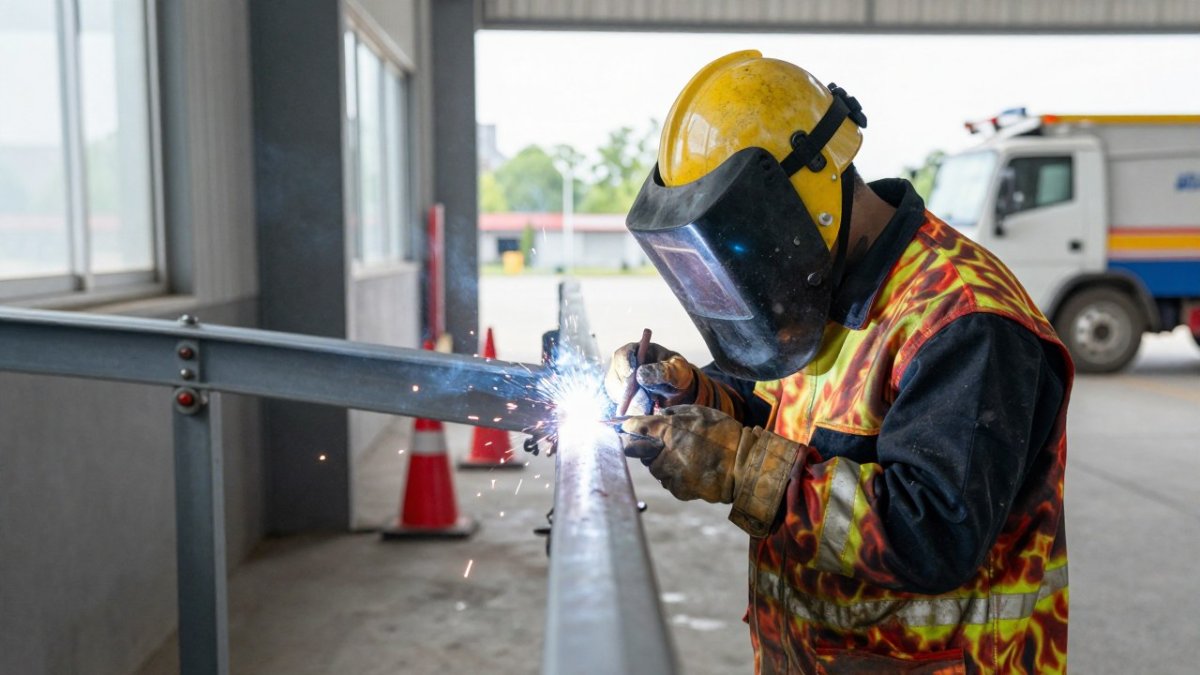
Mobile welding fits well when the damaged item is fixed to the building, when access is available, and when the job can be completed without a long shutdown. See whether mobile welding service suits your property and how to book it.
Ask the provider which method they recommend for your situation and why. Residents in the area can check local mobile welding options in Silver Spring to see whether on-site repair is available nearby. Look for a clear answer that ties the choice to access, weld position and the finish required.
Steel Railing Repair and Gate Repair for Commercial Properties
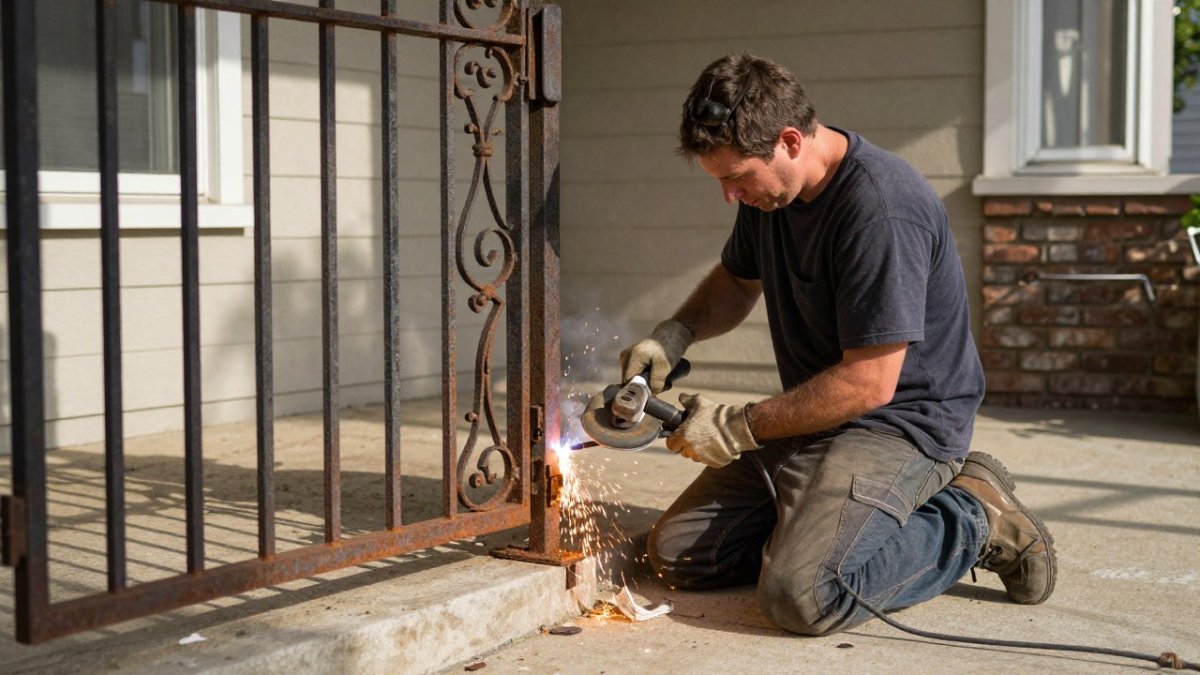
Railings and gates take heavy daily use. Common repairs include re-welding loose balusters, replacing corroded posts, straightening bent rails and rebuilding gate frames that have sagged. Stair handrails that wobble should be inspected promptly.
Repairs should match the original profile, height and spacing so the piece still meets the building's design and access needs. Ask whether the repaired area will be primed and painted to match, since bare welds left exposed can corrode outdoors.
When Custom Metal Fabrication Is the Better Fix
Some damaged components are no longer made in a standard size or style. In those cases, custom fabrication gives a better result than patching. Examples include a unique entry gate, a stair stringer that must fit an irregular opening, or a machinery bracket that has been modified over time.
Custom work takes longer to design and build, so plan the schedule earlier. Provide accurate measurements and drawings where possible. Small changes made during fabrication can add cost, so settle the design before work begins.
Safety, Inspection and Preparing Your Site for Metal Work
Welding and cutting create heat, sparks and fumes, so the work area needs to be cleared of combustibles and ventilated. Confirm who is responsible for site access, lockout procedures for any equipment and any permits your building requires. The Occupational Safety and Health Administration publishes OSHA guidance on welding, cutting and brazing safety that property managers can review with their contractor.
Ask the provider how they handle inspection of their own work. Clear documentation of the completed repair, including materials and any testing performed, is useful for your building records. Learn how weld quality is verified with visual inspection steps and acceptance criteria before you accept the work.
Requesting a Quote and Scheduling Your Commercial Metal Repair
A useful quote request includes your photos, measurements, the location, a description of the problem, your preferred timeline and any access restrictions. Ask whether the price covers removal, transport, finishing and cleanup. Pricing depends on the scope, the material, the access and the timeline, so the best approach is to request a written quote for your specific job.
What a Written Scope Should Contain
A quote that says only "repair railing" is not a scope. Ask for a written scope that lists: the specific components to be repaired or replaced; the materials and finishes to be used; whether work is on-site or in the shop; who provides access, power, and permits; the schedule and work windows; and what documentation you will receive at completion. Use a vetting checklist for welding contractors to compare bids before requesting a free quote. A clear scope protects both sides and makes it easier to compare bids. To find structural welding contractors near you, compare local options and request a free quote for steel work.
How to Evaluate and Compare Contractors
Use a checklist rather than gut feel. Confirm relevant experience with commercial work, not just residential, and ask for references from similar properties. Verify insurance and licensing as required by the jurisdiction. Ask how they handle inspection of their own work and what warranty they provide on labor and materials. A contractor who cannot produce a written scope, certificate of insurance, and references is a risk regardless of price.
Watch out: the lowest bid often excludes finishing, cleanup, or mobilization, which then appear as change orders. Compare scopes line by line, not just totals.
Scheduling and Minimizing Business Disruption
Plan work windows around your operations. For occupied buildings, early-morning or after-hours work may reduce disruption to tenants and customers. Confirm who will escort the crew, where materials and equipment will be staged, and how the work area will be secured. For emergency repairs, ask what temporary safeguards, barricades, shoring, temporary railings, can be put in place while the permanent fix is scheduled.
Emergency Response Expectations
Ask upfront how the contractor handles urgent calls: what response time they target, whether they can provide temporary stabilization, and how after-hours scheduling works. A clear answer here is often the difference between a minor repair and a multi-day closure.
For current pricing and availability, contact Patriot Iron Work directly. Our team can review your photos and measurements and tell you whether the job is best handled on site or in the shop.
BUTTON: Get a Free Quote CARD_TITLE: Need steel repaired at your property? CARD_TEXT: Patriot Iron Work handles welding, railing, gate and light structural steel repair for commercial sites.
Frequently Asked Questions
What types of commercial metal repairs can a welding contractor handle?
Ask the contractor which types of repair they handle, and whether they fabricate replacement parts in their shop or only weld in the field, since that affects lead time.
When should a business choose mobile welding instead of shop repair?
Choose mobile welding when the steel is attached to the building, too large or heavy to remove, or when taking it offsite would shut down operations. Shop repair suits smaller parts that can be unbolted, and work that needs controlled conditions for precision or coating. Mobile work saves transport and reinstallation time but requires a safe, accessible work area. Compare both options with your contractor before deciding, since the right choice depends on the part, its location and your schedule.
What should I ask before hiring a commercial metal repair contractor?
Ask about welding certifications and the testing they perform, whether they handle on-site work and how they manage safety on active properties, and whether one team will take the job from fit-up through final inspection. Request a written scope, a schedule with milestones, and a plan for rework if a quality issue appears. Ask how pricing is structured and what drives it. For current pricing, contact Patriot Iron Work directly, since costs depend on quantity, dates and site conditions.