 Ultimate guide
High-Quality Service Delivery for Heavy Machinery
Table of Contents
- What High-Quality Service Delivery for Heavy Machinery Actually Means
- Industrial Welding Safety Standards That Govern Repair Work
- Heavy Machinery Maintenance Best Practices That Prevent Failures
- Minimizing Heavy Equipment Downtime Before It Hits the Schedule
- Managing Complex Welding Project Timelines Without Slippage
- Field Welding Versus Shop Welding: Choosing the Right Setting
- Frequently Asked Questions
Last Updated: October 2, 2026
What High-Quality Service Delivery for Heavy Machinery Actually Means
High-quality service delivery for heavy machinery is the practice of completing repair, fabrication, and maintenance work so that equipment returns to production on schedule, within specification, and without recurring failures. It combines documented procedures, verified welders, and disciplined scheduling. For buyers, it is measured in uptime, not promises.
The Five Markers Buyers Use to Judge a Provider
Experienced buyers rarely judge a provider on price alone. They check five things:
- Written procedures. A qualified welding procedure specification (WPS) exists for each joint type.
- Traceable welder qualifications. Current certification records, not verbal assurances.
- Inspection documentation. Visual, dimensional, and where required, non-destructive testing results.
- Schedule discipline. Milestones with dates, not vague completion windows.
- Single-point accountability. One contact from fit-up through final inspection.
Industrial Welding Safety Standards That Govern Repair Work
Industrial welding safety standards are the published rules covering fume control, arc flash protection, fire watch, and confined-space entry that govern any repair performed on or near production equipment. Compliance is not optional when machinery sits inside an operating plant.
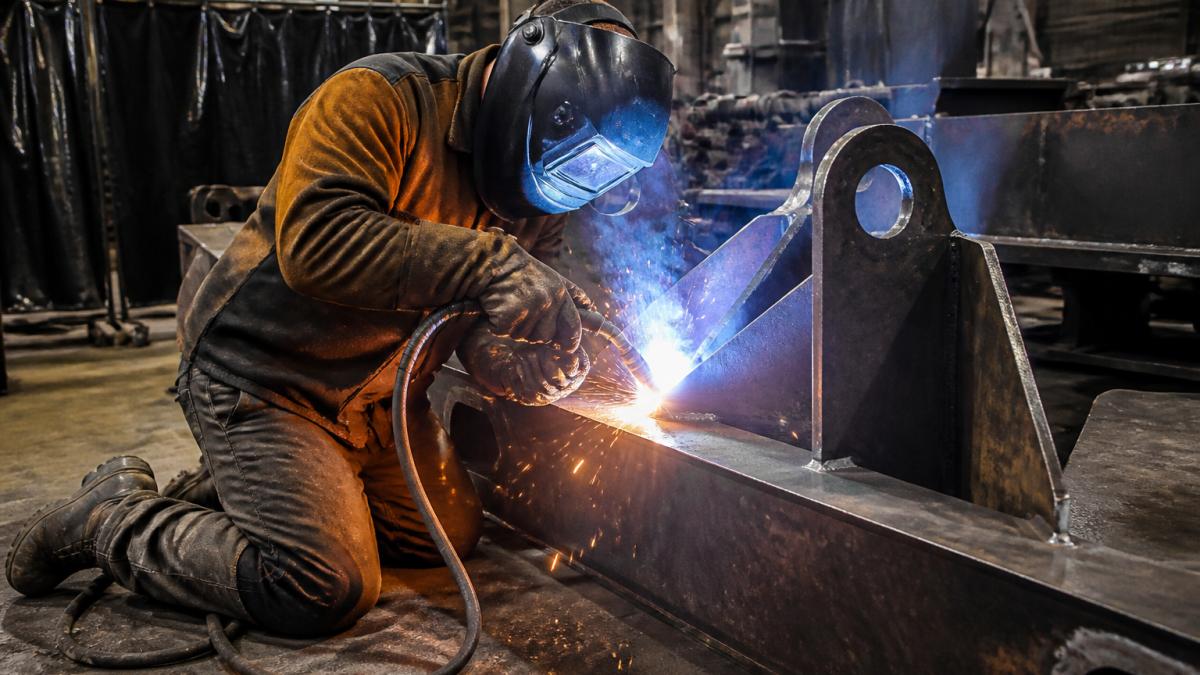
What to Ask for in a Welding Procedure Specification
A welding procedure specification is a written document that defines the base metal, filler, joint design, preheat, current range, and pass sequence for a specific weld. Ask to see the WPS before work begins.
A useful WPS includes:
- Base metal grade and thickness range
- Filler metal classification
- Preheating and interpass temperature limits
- Current type, polarity, and amperage range
- Number of passes and inspection method
Heavy Machinery Maintenance Best Practices That Prevent Failures
Heavy machinery maintenance best practices prevent failures by catching structural wear before it becomes a production outage. Scheduled inspection beats reactive repair every time. Most catastrophic equipment failures trace back to a crack or stress point that was visible weeks earlier.
A practical maintenance cycle looks like this:
- Weekly: visual walkaround for cracks, corrosion, and loose fasteners
- Monthly: dimensional checks on high-load joints and pivot points
- Quarterly: weld inspection on frames, booms, and attachment points
- Annually: full structural review with repair planning built into the shutdown window
Minimizing Heavy Equipment Downtime Before It Hits the Schedule
Minimizing heavy equipment downtime starts with planning repairs around production windows instead of reacting to breakdowns. The goal is to move unplanned outages into scheduled ones. Every hour of unplanned downtime compounds: crews idle, downstream processes stall, and delivery commitments slip.
Effective downtime reduction follows a simple sequence:
- Build a repair backlog ranked by risk, not by age.
- Group repairs that share a shutdown window.
- Pre-stage materials, filler, and fixtures before the window opens.
- Schedule inspection immediately behind welding so nothing waits.
Managing Complex Welding Project Timelines Without Slippage
Managing complex welding project timelines means sequencing fit-up, welding, and inspection so no stage waits on the one before it longer than necessary. Slippage usually comes from inspection bottlenecks, not slow welding. When inspection is treated as an afterthought, the whole project stalls at the end. But on heavy machinery, the timeline does not end at the last weld, it ends when the machine is back in production, and that means transport, permitting, and delivery are part of the schedule, not a separate conversation.
A workable timeline structure:
| Phase | Typical Duration | Common Delay Cause |
|---|---|---|
| Fit-up and alignment | 1-2 days | Missing fixtures or shims |
| Welding passes | 2-4 days | Interpass temperature holds |
| Inspection and testing | 1-2 days | Inspector not pre-booked |
| Rework (if needed) | 0.5-1 day | Undocumented procedure changes |
| Transport and permitting | 1-5+ days | State permit lead time, escort availability |
| Delivery and verification | 0.5-1 day | No pre-shipment photo set or tiedown plan |
Sequencing Fit-Up, Welding, and Inspection Around Production
Inspection should be booked before welding starts, not after. On live production sites, access windows are short, and an unbooked inspector can push a finished weld into next week. The American Society for Nondestructive Testing's method overview explains how radiographic, ultrasonic, and dye penetrant testing each require different access and timing.
Emergency Contingency Planning: What Happens When the Plan Breaks
This is the part most guides skip. A timeline that assumes no failures is not a plan, it is a hope. A working contingency plan names the failure modes and the response before the job starts:
- Welding equipment failure mid-job. Who has a backup machine within driving distance, and how long until it is on site? A field repair that stalls for a day waiting on a replacement power source is a lost production day.
- Inspection failure. If NDT finds an unacceptable indication, is the rework procedure written and the inspector re-booked, or does the job go back to the end of the queue?
- Weather on a field job. Wind above roughly 15-20 mph, active precipitation, or surface moisture can halt open-arc work. A contingency plan names the covered alternative or the reschedule trigger.
- Transport delay. A permit that does not clear, a driver shortage, or a mechanical breakdown on the tractor can push delivery by days. The plan should identify a second carrier or a hold location.
- Site access denial. If the receiving plant cannot accept the load on the scheduled day, where does the machine sit, and who insures it there?
The Scheduling Discipline That Separates Providers
Providers who plan field work around your production calendar, rather than their own convenience, can cut total downtime. That planning discipline is where high-quality service delivery for heavy machinery separates from general fabrication work. The practical test is simple: ask for the schedule in writing, with named dates for fit-up, welding, inspection, transport, and delivery, and ask what happens if any one of them slips.
Field Welding Versus Shop Welding: Choosing the Right Setting
Field welding versus shop welding comes down to access, environment, and control. Shop welding wins when the component can be moved and conditions must be controlled. Field welding wins when the machine cannot be relocated without major cost or lost production. The decision is rarely about welding skill; it is about logistics, and logistics is where high-quality service delivery for heavy machinery is won or lost.
Choose shop welding when:
- The part is removable and transportable
- Weather or contamination would affect weld quality
- Precision positioning and fixture access matter
- Post-weld machining, stress relief, or coating is required
Choose field welding when:
- The structure is fixed or too large to move
- Production windows are short and relocation adds days
- The repair is localized and the surrounding area can be protected
- Disassembly would void an OEM warranty or require re-certification
The Trailer Decision That Follows the Shop Decision
If the job goes to the shop, the next question is how the component moves, and that choice is driven by dimensions, not by the welder's preference. The four trailer types that dominate heavy machinery transport each fit a different envelope:
| Trailer type | Deck height | Typical use | Watch for |
|---|---|---|---|
| Flatbed | ~5 ft | Long, low, self-supporting loads | No drop deck; height adds fast |
| Step-deck | ~3.5 ft front, ~5 ft rear | Mid-size machines that need a lower well | Step transition can foul low ground clearance |
| Double-drop / lowboy | ~2 ft well | Tall excavators, dozers, cranes | Well length limits track or wheelbase |
| RGN (removable gooseneck) | ~1.5-2 ft | Oversize, non-drivable, or damaged equipment | Ramp angle and winch capacity |
Permits, Escorts, and the Legal Envelope
Once a load exceeds legal width, height, length, or weight, it becomes an oversize/overweight move and the paperwork changes the schedule. Most states set the legal width threshold at 8.5 ft, legal height around 13.5-14 ft, and legal gross weight at 80,000 lb without a permit; anything beyond that requires an oversize/overweight permit, and many states add escort or pilot-car requirements once width passes roughly 12 ft or height passes roughly 14.5 ft.
Securement and the Delivery Inspection
Load securement is governed by the Federal Motor Carrier Safety Administration's cargo securement rules, which set minimum working-load limits for tiedowns based on load weight. The practical rule most drivers use is one tiedown per 10 ft of cargo length, with a minimum of two, and aggregate working-load limit of at least 50% of the cargo weight. Chains and binders are sized to that limit, not to what happens to be on the truck.
Post-Delivery Verification Checklist
Most guides stop at delivery. The step that protects your repair is the inspection that happens in the first hour after the truck leaves. A practical post-delivery check covers:
- Photograph the load before unstrapping. Document tiedown contact points and any shift in position.
- Check for new cracks or coating damage at lifting lugs, tiedown points, and any weld made in the last 30 days.
- Verify dimensional alignment on any joint that was fit-up in the shop, thermal cycling during transit can move a restrained weldment.
- Confirm documentation traveled with the load: WPS, welder certifications, inspection reports, and any NDT results.
- Log the arrival condition against the pre-shipment photos. Disputes are won or lost on this comparison.
The Honest Trade-Off
Field work is harder to control. Wind, moisture, and confined access all affect results, and a field weld that fails inspection costs a second mobilization. Shop work is easier to control but adds transport cost, permit lead time, and transit risk. The right answer depends on which risk you can absorb, and a provider who has run both, and can quote the trailer, the permit path, and the inspection method before you sign, is the one whose delivery will hold.
Frequently Asked Questions
What defines high-quality service delivery in the heavy machinery industry?
It comes down to four things: documented weld procedures, certified welders, inspection records you actually receive, and a single point of contact from fit-up through final inspection. A provider that hands you a WPS, passes ultrasonic or visual testing, and returns your equipment on the promised date is delivering at a different level than one that just quotes a price. Ask for the paperwork before you award the job, not after.
How does professional welding affect the longevity of heavy machinery?
A properly executed weld restores the load capacity of a structural member instead of just covering the crack. That means correct joint preparation, the right filler metal for the base steel, and controlled heat input to avoid a brittle heat-affected zone. Poor welds fail again at the same location, often within months. Repairs done to a written procedure can contribute to the longevity of the surrounding metal and push the next failure point further down the machine.
How can we minimize downtime through effective equipment maintenance?
Schedule inspections around production, not after a breakdown. Walk the machine monthly and log cracks, corrosion, and loose fasteners so repairs get quoted and sequenced before they become emergencies. Keep a spare-parts list for your most-worn components, and book your welding provider during planned shutdowns rather than peak season. Most downtime is scheduled work that was ignored until it turned into unplanned work.
What safety standards should be prioritized during heavy machinery repairs?
Start with lockout/tagout under OSHA 1910.147 so no stored energy reaches the repair area, then hot work permitting under 1910.252 before any arc is struck. Confined space entry, ventilation, and fire watch apply whenever welding happens inside a vessel or near combustible dust. Ask your provider for their written hot work procedure and their welders' current certifications. Safety documentation is also your best clue about how the rest of the job will be run.
Heavy machinery repair punishes guesswork. A missed inspection window or an undocumented weld can stall a production line for days. Patriot Iron Work approaches every job with documented procedures, verified welders, and scheduling built around your operation, backed by an unwavering commitment to safety and professional craftsmanship. Get a free quote and put high-quality service delivery for heavy machinery to work on your next repair.