 Ultimate guide
Industrial Metal Fabrication Maintenance and Repair: 2026 Guide
Last Updated: November 22, 2026
Quick Summary
Industrial metal fabrication maintenance and repair is the planned inspection, upkeep, and corrective work that keeps fabricated steel structures, railings, gates, and equipment safe and functional. A strong metal fabrication maintenance program splits work into monthly visual inspections, quarterly functional checks, and annual structural and weld reviews, so small defects get caught before they become structural problems.
- Intervals should follow exposure, not the calendar alone, so high-traffic railings are checked more often.
- Monthly visual inspections should cover base plates and the underside of railings, where moisture sits longest.
- Track mean time to repair, repeat-failure rate, maintenance backlog, and downtime hours, and review them quarterly.
- A gate that drags on the ground usually signals a failing hinge or settling post, not a lubrication problem.
- Repair wins when the defect is localized and the base metal is sound; replace when section loss is widespread.
Table of Contents
- Why Industrial Metal Fabrication Maintenance and Repair Matters in 2026
- The Metal Fabrication Maintenance Checklist Every Facility Needs
- Mobile Welding Repair: Fixing Steel On Site, Not in a Shop
- Steel Railing Repair: What to Check Before Someone Gets Hurt
- Iron Gate Repair: Keeping Entrances Safe and Working
- Repair or Replace? How to Decide on Fabricated Metal Components
- How to Vet a Metal Fabrication Repair Contractor
- Get a Free Quote for Metal Fabrication Maintenance and Repair
- Frequently Asked Questions
Why Industrial Metal Fabrication Maintenance and Repair Matters in 2026
Industrial metal fabrication maintenance and repair is the planned inspection, upkeep, and corrective work that keeps fabricated steel structures, railings, gates, and equipment safe and functional. Skipped maintenance is costly: a railing that passed inspection two winters ago can start moving under hand pressure. The global metal fabrication equipment market is projected to grow from $66.47 billion in 2026 to $90.57 billion by 2034, according to Fortune Business Insights market projections, which means more installed steel than ever needs watching.
Here is the uncomfortable truth most guides avoid: fabrication quality gets all the attention, but maintenance determines whether that steel survives its second decade. Below, we break down the checklist, the repair decisions, and the vetting process that separate facilities with reliable infrastructure from those chasing emergency welds twice a year.
The Metal Fabrication Maintenance Checklist Every Facility Needs
A metal fabrication maintenance checklist is a scheduled inspection plan covering welds, connections, coatings, and moving parts on fabricated steel. The best programs split work into frequent visual checks and periodic structural reviews, so small defects get caught before they become structural problems.
What separates a real program from a clipboard exercise is the schedule logic. Intervals should follow exposure, not the calendar alone. A railing on a loading dock that sees daily impact needs a different cadence than a decorative gate at a low-traffic entrance. A practical program often sets three tiers.
Tier 1: Monthly Visual Inspections
Walk the same route every month and look for the same things. Rust blooms at weld toes, loose anchor bolts, cracked paint along heat-affected zones, and gates that drag or bind. Photograph anything suspicious with a date stamp. A common mistake is inspecting only what is at eye level; check base plates and the underside of railings, where moisture sits longest.
Tier 2: Quarterly Functional Checks
Every quarter, operate every moving element through its full range. Gates should latch without lifting, hinges should move without binding, and automated operators should complete a cycle without strain. Check anchor bolts with a torque wrench on a sample basis, and confirm that safety reversal on automated gates still functions. Record the results so you can spot a trend rather than a single bad day.
Tier 3: Annual Structural and Weld Reviews
Once a year, bring in someone qualified to assess weld quality and connection integrity, not just appearance. The NIST publication on advanced maintenance costs and benefits notes that maintenance decisions carry real cost trade-offs, and vibration-based monitoring case studies show the value of catching deterioration early. For fabricated steel, the annual review should include weld inspection at high-stress connections, measurement of section loss at corrosion-prone details, and a check that the structure still matches its original design intent. If you want a structured way to verify weld quality and acceptance criteria, our guide on how to verify structural steel weld quality walks through visual inspection and testing methods step by step.
Preventive vs. Predictive Maintenance
Preventive maintenance is scheduled work done on a fixed interval: inspections, coating touch-ups, bolt re-torquing, and hinge lubrication. Predictive maintenance uses condition data to decide when work is actually needed. For fabricated steel, practical predictive signals include vibration monitoring on equipment frames, periodic thickness readings at known corrosion zones, and trend logs of gate operator current draw.
Metrics That Tell You the Program Is Working
Track four numbers and review them quarterly:
- Mean time to repair (MTTR): how long a failed element stays out of service from report to return.
- Repeat-failure rate: how often the same joint or component fails again within a year. A high rate points to a diagnosis problem, not a workmanship problem.
- Maintenance backlog: open work orders past their due date. A growing backlog is the leading indicator of an emergency repair in the making.
- Downtime hours: total hours a gate, railing, or equipment frame is unavailable. This is the number your operations team feels.
A program with a shrinking backlog and a stable repeat-failure rate is doing its job. A program with rising downtime despite more inspections is inspecting the wrong things.
Watch out: a checklist that never changes after the first year is not a maintenance program; it is a habit. Update the route and intervals whenever the site layout, traffic patterns, or equipment change.
Mobile Welding Repair: Fixing Steel On Site, Not in a Shop
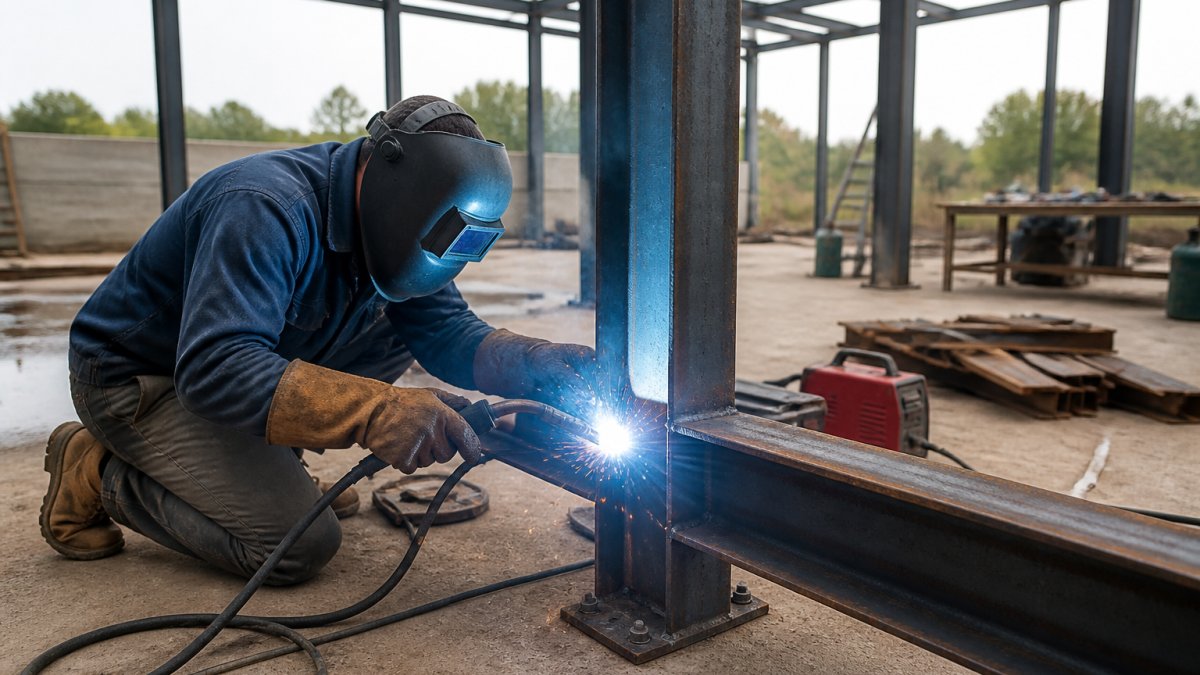
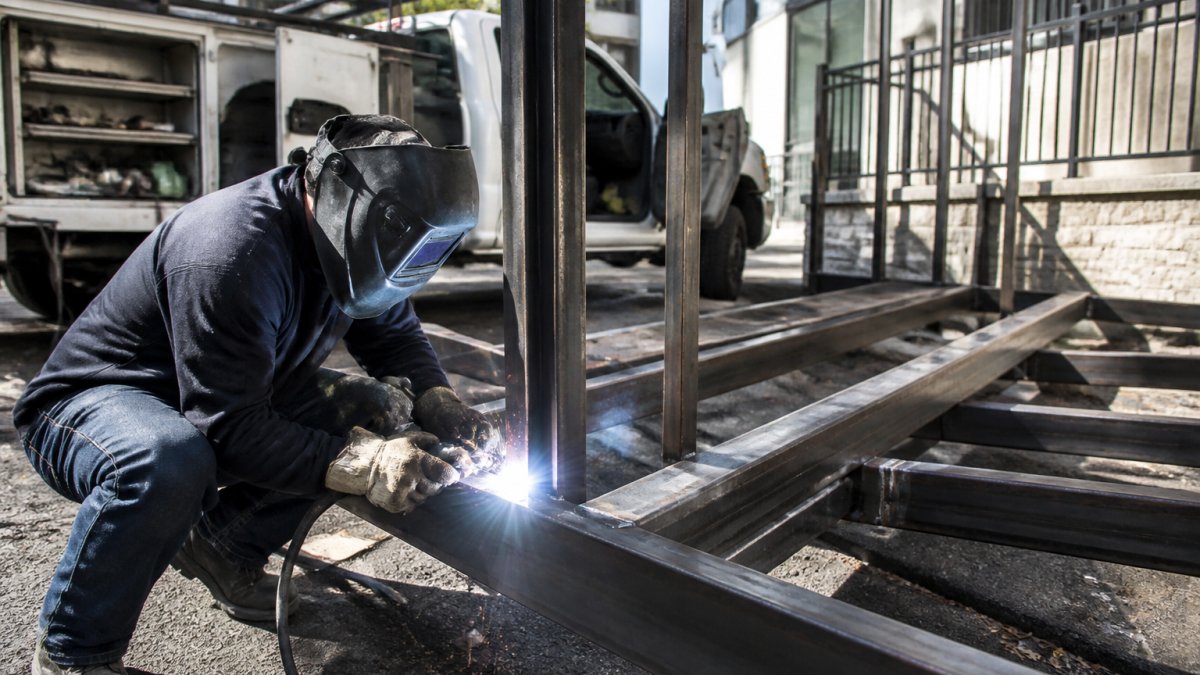
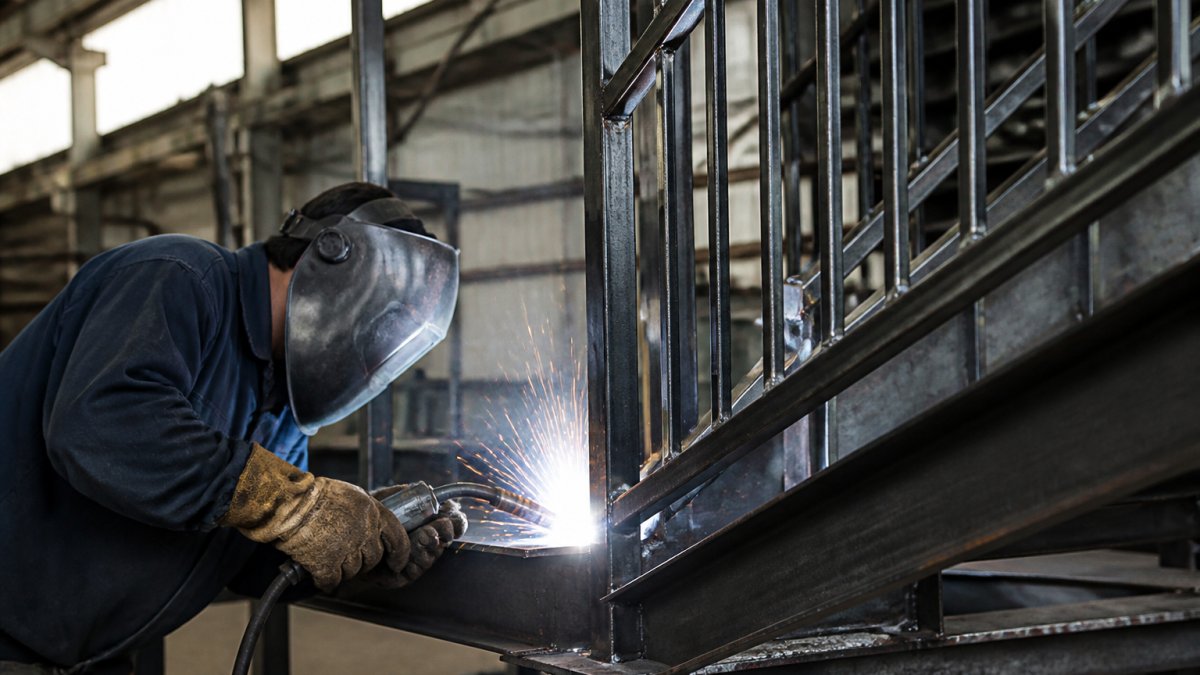
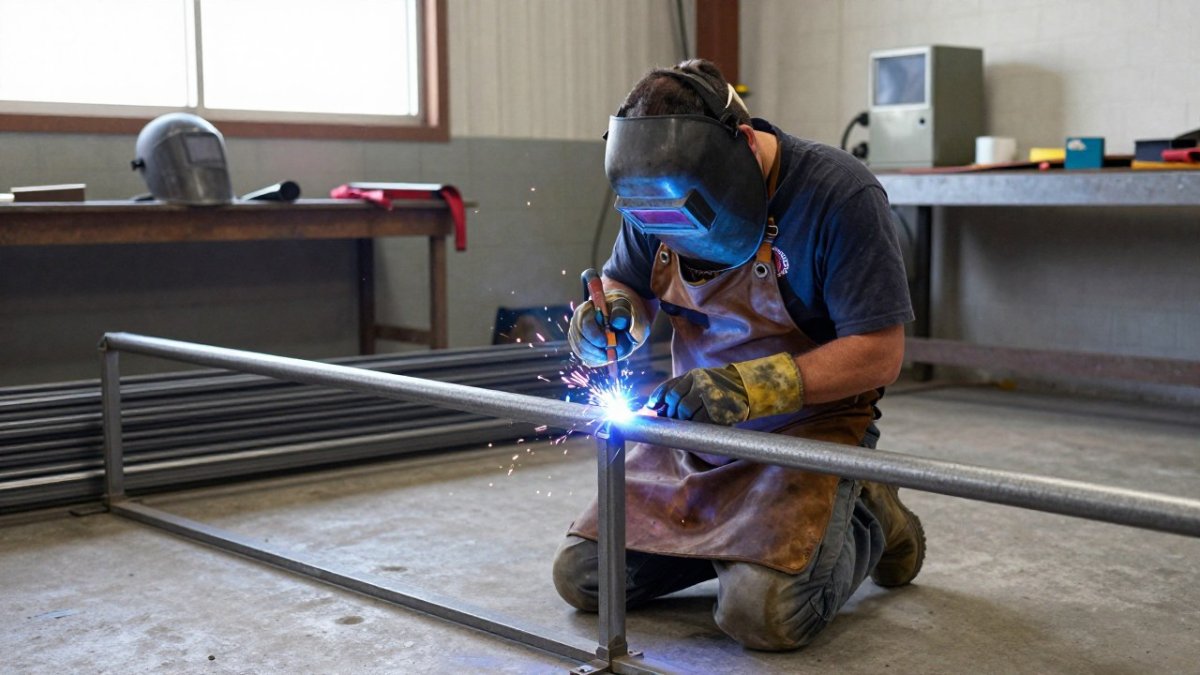
Mobile welding repair brings the welding rig to your facility instead of hauling steel to a shop. For railings, gates, equipment frames, and light structural connections, on-site repair usually means less downtime and fewer logistics headaches.
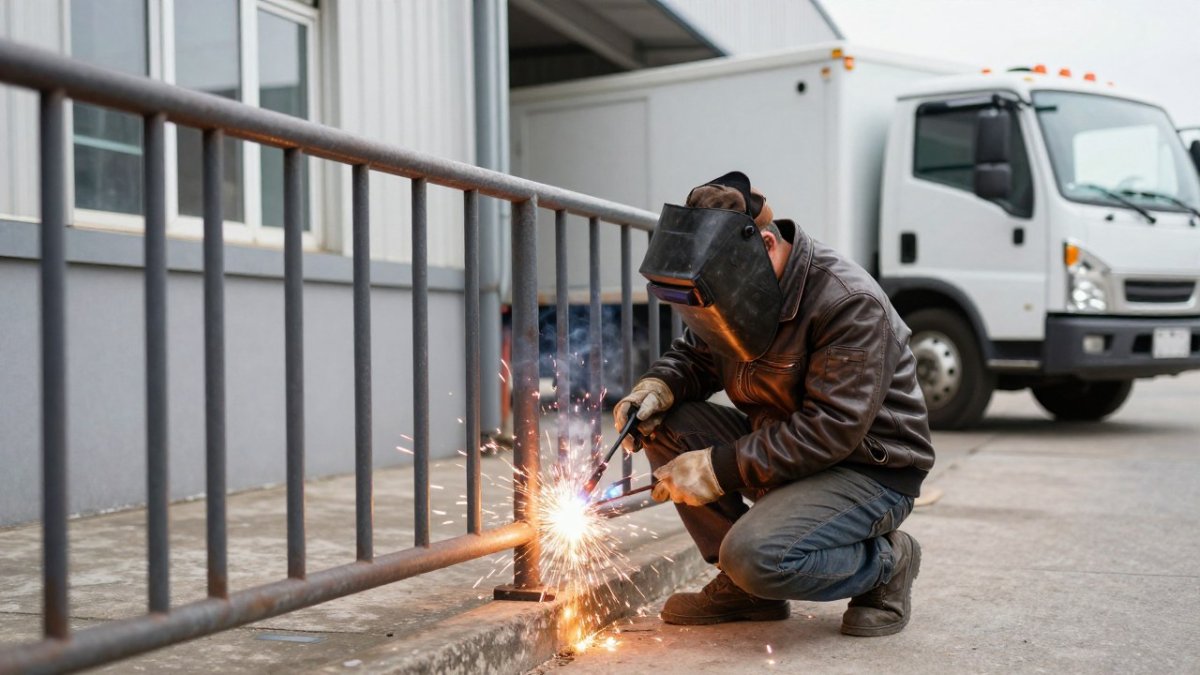
Most guides stop at the sales pitch. What actually determines whether a field repair holds is the workflow behind it. A disciplined mobile repair follows five stages, and each one has a failure mode that shows up months later if it is skipped.
1. Assessment and documentation. The crew photographs the defect, measures section loss with a caliper or ultrasonic thickness gauge where accessible, and records the surrounding condition.
2. Diagnosis. Field diagnosis separates three causes: overload, fatigue, and corrosion. Fatigue cracks typically start at weld toes and propagate perpendicular to the stress direction.
3. Repair execution. Field welding differs from shop welding because wind, moisture, and access affect arc stability and shielding. Field crews generally manage shielding coverage and heat input to limit distortion, and on occupied sites the work is typically sequenced around ongoing operations.
4. Testing and inspection. After welding, the joint is inspected visually and, where the connection is structural, with the method specified in the scope. Dye penetrant or magnetic particle testing is common for surface-breaking defects.
5. Return to service. The area is recoated, hardware is re-torqued to specification, and the repaired element is function-tested under load where practical. A gate or railing should be operated through its full range before the crew leaves.
Turnaround expectations vary with scope. Multi-connection structural repairs may require a return visit after coating cure or after fabrication of a replacement component. Ask for the expected number of visits in the written scope, not just a start date.
Proper prep to bare metal is essential before field welding, since welding over paint, rust, or moisture can lead to repairs that crack again.
You can see the scope of mobile welding services we provide across Silver Spring and the surrounding area.
Steel Railing Repair: What to Check Before Someone Gets Hurt
Steel railing repair fixes the defects that compromise load capacity: loose posts, corroded welds, cracked base plates, and bent sections. Railings fail gradually, then all at once, and the liability lands on the property owner.
Three checks matter most:
- Post movement: grab each post and push. Any wobble means the anchor or weld is failing.
- Weld condition: look for rust staining and hairline cracks at joints, especially where horizontal rails meet posts.
- Coating integrity: bare steel holds moisture. Touch up chips before winter.
If your building needs commercial metal repair, start with dated photos and a written damage scope so you can compare contractors on the same basis. Our guide on how to get commercial metal repair done in Maryland explains that process in detail.
Iron Gate Repair: Keeping Entrances Safe and Working
Iron gate repair covers hinge alignment, latch function, corrosion treatment, and structural straightening on ornamental and security gates. Gates take more abuse than any other fabricated element because they move every day.
Watch out: a gate that drags on the ground is usually a sign of a failing hinge or a settling post, not a lubrication problem. Greasing it hides the symptom for a month and accelerates wear on the operator. Fix the alignment first. For automated gates, test the safety reversal and check that the frame has not racked before calling anyone about the motor.
Repair or Replace? How to Decide on Fabricated Metal Components
Repair wins when the defect is localized and the base metal is sound. Replace when corrosion is widespread, the section has lost measurable thickness, or the original design was undersized for current loads.
Use this decision framework:
| Situation | Recommended Action | Why |
|---|---|---|
| Isolated weld crack, sound base metal | Repair | Grind out, reweld, inspect |
| Surface rust, intact section | Repair and recoat | Coating failure, not structural |
| Widespread section loss | Replace | Strength is compromised |
| Undersized for current use | Replace or reinforce | Repair restores old capacity only |
| Bent post from impact | Repair if straightenable | Check anchor and weld after |
When the answer is replace, understanding the full scope of industrial metal fabrication services helps you specify the right fix rather than accepting whatever the first contractor proposes.
How to Vet a Metal Fabrication Repair Contractor
Vetting a metal fabrication repair contractor means checking four things: welding qualification, field experience, scope documentation, and how they handle rework. Ask for the written scope before you talk price. A contractor who cannot describe the repair in writing will not deliver it reliably.
Our vetting checklist:
- Written scope with photos and acceptance criteria
- Welder qualifications for the work type
- Field experience in occupied facilities
- Named point of contact from fit-up to inspection
- Documented rework process and turnaround
Our guide on how to hire reliable commercial welding contractors includes the full checklist and a free quote path for fabrication and steel erection.
Get a Free Quote for Metal Fabrication Maintenance and Repair
The hard part is not knowing what to inspect. It is finding a crew that shows up, documents the work, and stands behind the weld six months later. Patriot Iron Work handles custom fabrication, mobile welding, steel railing and iron gate repair, and light structural steel erection for facilities across Silver Spring, Montgomery County, and the DMV.
Patriot Iron Work emphasizes high standards of safety, efficiency, and professional craftsmanship. Request a quote from Patriot Iron Work to put a maintenance plan behind your steel before the next failure sets your schedule.
Frequently Asked Questions
How do you maintain fabricated metal components?
Start with a written metal fabrication maintenance checklist. Inspect welds, bolts, and joints monthly for cracks, rust, or loosening. Clean and repaint coated surfaces yearly to slow corrosion. Check moving parts on gates and railings for wear. Schedule a professional structural and weld inspection annually, and keep records of every repair so you can track recurring problems and plan replacement before a failure shuts down operations.
When should a fabricated metal part be repaired or replaced?
Repair is usually the right call when damage is localized, such as a cracked weld, a bent rail, or surface rust, and the surrounding steel is sound. Replace the part when corrosion has thinned the section, cracks keep returning after repair, or the component no longer meets the load requirements of its use. A contractor should inspect the part and give you a clear recommendation based on its condition, not a default answer.
Can mobile welding repair steel railings and gates?
Yes. Mobile welding repair brings the welder and equipment to your site, so railings, gates, and structural connections can be fixed without dismantling and hauling them to a shop. This shortens turnaround time and avoids the cost of removal and reinstallation. On-site work is especially useful for railings and gates that are anchored into concrete or part of an active entrance, where removal would disrupt access or security.
How often should industrial steel structures be inspected?
Most facilities should do a visual walkthrough monthly and a detailed structural and weld inspection once a year. Increase the frequency for structures exposed to heavy vibration, moisture, chemical exposure, or high traffic. After any impact, overload, or major storm, inspect the affected structure immediately. Keep every inspection and repair on file; a documented history makes it easier to spot deterioration early and supports safety and compliance reviews.