 Ultimate guide
Managing Field Welding Safety Requirements on Site
Last Updated: November 1, 2026
Quick Summary
Field welding safety is a planning discipline built on a documented pre-job hazard assessment, a hot work permit, and a named fire watch that stays in place after the arc stops. Most safety professionals follow a minimum 30-minute fire watch after welding ends, extended to 60 minutes near concealed combustibles, followed by delayed and end-of-shift checks.
- A hot work permit should name the authorizer, the specific area, the work, the controls, and the expiry.
- Ending fire watch the moment the welder stops is the single most common hot work failure.
- Inspect leads, grounds, stinger, and electrode holder before every shift, and log the inspections.
- In open air natural ventilation often works; in basements, tanks, or tight interiors it almost never does.
- On multi-employer sites a welding contractor can be cited for hazards it created, controlled, or should have known about.
Table of Contents
- Why Field Welding Safety Demands a Different Plan Than Shop Work
- Hot Work Permit Requirements, Fire Watch, and Post-Work Monitoring
- Welding PPE Requirements: Helmets, Eye Protection, and Flame-Resistant Clothing
- Welding Fume Control and Field Ventilation Decisions
- The Field Welding Safety Checklist Every Crew Should Run
- Coordinating With Other Contractors and Site Activities
- How Regulations Apply Across Jurisdictions and Who Owns Safety
- Request a Field Welding Safety Review for Your Next Project
- Frequently Asked Questions
Why Field Welding Safety Demands a Different Plan Than Shop Work
Field welding safety starts with one fact: the shop controls the environment, and the field does not. According to Western Welding Academy's report on the welder shortage, the American Welding Society projects a need for 82,500 new welders each year, which means more welding is moving to job sites with less supervision and more variables.
A shop has fixed ventilation, level floors, and one crew. A worksite has none of that. Hazard identification has to happen before the truck rolls, not after the arc starts.
Pre-Job Hazard Assessment and Risk Assessment
A pre-job hazard assessment is a documented review of every condition that could injure a worker or start a fire, completed before equipment reaches the site.
Walk the area and record:
- Overhead power lines and their distance from the work
- Combustible materials within spark range, including dust and debris
- Confined spaces and any fall exposure
That last item is the one most crews skip, and it's the one that causes the most near-misses. For the full permit and PPE workflow, our guide on managing on-site industrial welding safety walks through it step by step.
Hot Work Permit Requirements, Fire Watch, and Post-Work Monitoring
A hot work permit is a written authorization confirming that fire hazards have been controlled before welding begins. Most commercial sites require one, and the permit usually names who authorized it, what area it covers, and how long it stays valid. The permit is not paperwork for its own sake, it forces a documented pause where someone with authority confirms the area is ready before the first arc.
What a Hot Work Permit Should Contain
A workable permit answers five questions in writing:
- Who authorized it, name and title of the person with authority to approve hot work on that site
- What area it covers, specific location, floor, or grid reference, not just "the building"
- What work is authorized, welding, cutting, grinding, or all three, and the equipment involved
- What controls are in place, combustibles cleared or covered, fire extinguisher staged, fire watch assigned by name
- When it expires, most permits run for a single shift; some sites cap them at a few hours
A permit that says "hot work approved" with no area, no time limit, and no named fire watch is not a control, it is a liability transfer.
Fire Watch Responsibilities and Timing
Fire watch requirements are where crews get sloppy. The watch must be maintained during the work and, critically, after it ends. The standard practice most safety professionals follow is a minimum 30-minute fire watch after welding stops, with some sites requiring 60 minutes for work near concealed combustibles.
A named fire watch should:
- Have a fire extinguisher within reach and know how to use it
- Have the authority to stop work if conditions change
- Watch for sparks traveling beyond the work zone
Watch out: ending fire watch the moment the welder stops is the single most common hot work failure. Assign a named person with a clock, not a vague "someone will check."
Post-Work Monitoring and Closeout
Post-work monitoring means someone returns to check the area after the crew has packed up. A practical closeout runs three checks:
- Immediate check, fire watch confirms no smoldering material in the work zone before leaving
- Delayed check, a second look 30 to 60 minutes after work ends, especially in concealed spaces
- End-of-shift check, a final walk of the area before the site closes, documented on the permit
The permit should be signed off at closeout, not just at issuance. A permit that is opened but never closed tells an inspector nothing about whether the area was actually monitored.
For the full permit and PPE workflow, our guide on managing on-site industrial welding safety walks through it step by step.
Here are the permit, fire watch, and monitoring timings the article specifies.
| Item | Value | Note |
|---|---|---|
| Hot work permit validity | Single shift; some sites cap at a few hours | Permit names authorizer, area, work, controls, expiry |
| Minimum fire watch after welding stops | 30 minutes | Standard practice most safety professionals follow |
| Fire watch near concealed combustibles | 60 minutes | Some sites require the longer period |
| Delayed post-work check | 30 to 60 minutes after work ends | Especially in concealed spaces |
| Closeout checks | Immediate, delayed, end-of-shift | Documented on the permit |
Welding PPE Requirements: Helmets, Eye Protection, and Flame-Resistant Clothing
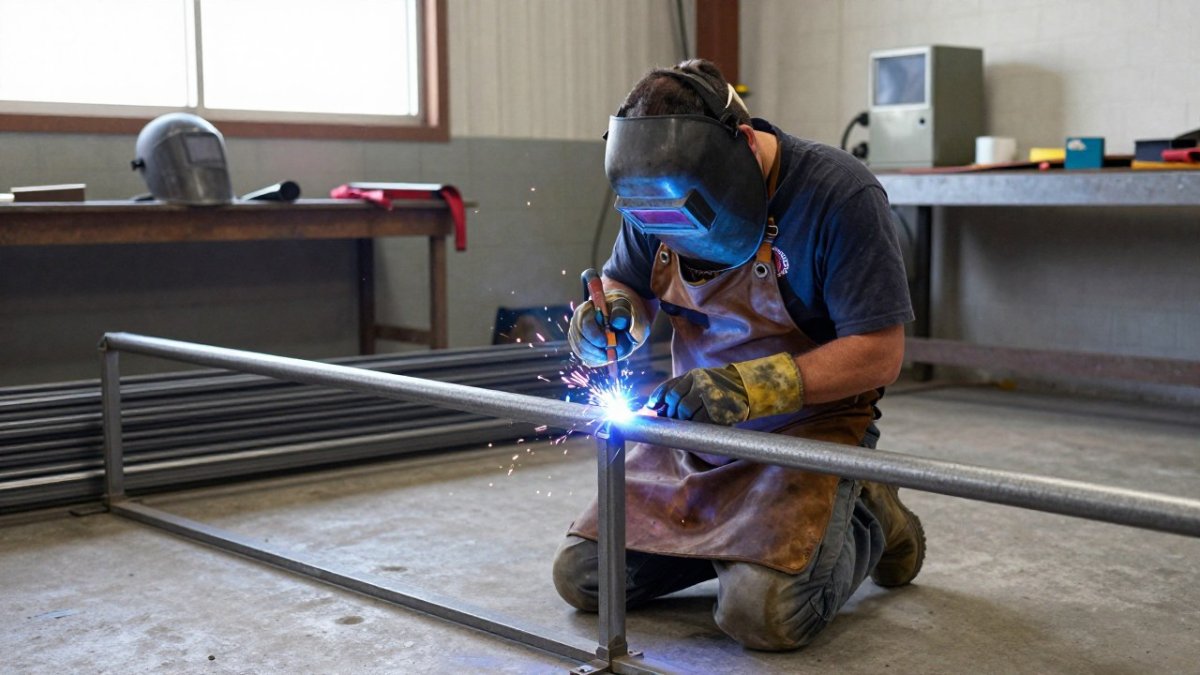
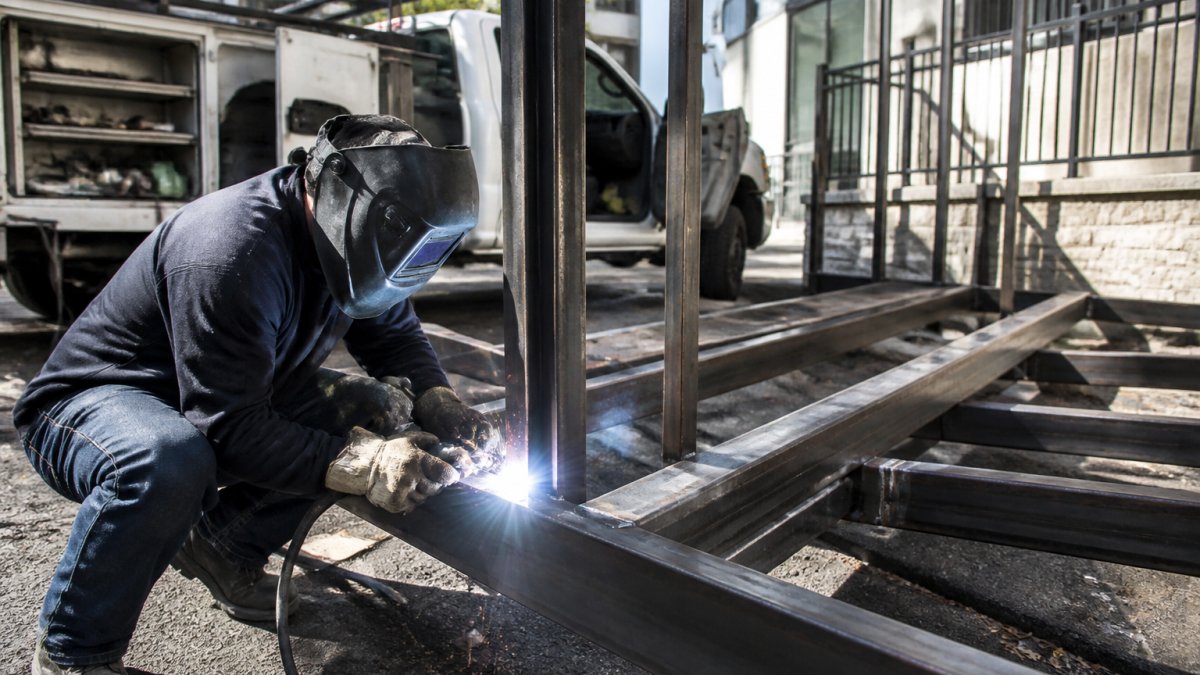
Welding PPE requirements cover four zones: eyes and face, body, hands, and feet. Arc radiation causes burns to the eyes and skin, so protection is not optional clothing choice, it's a control measure.
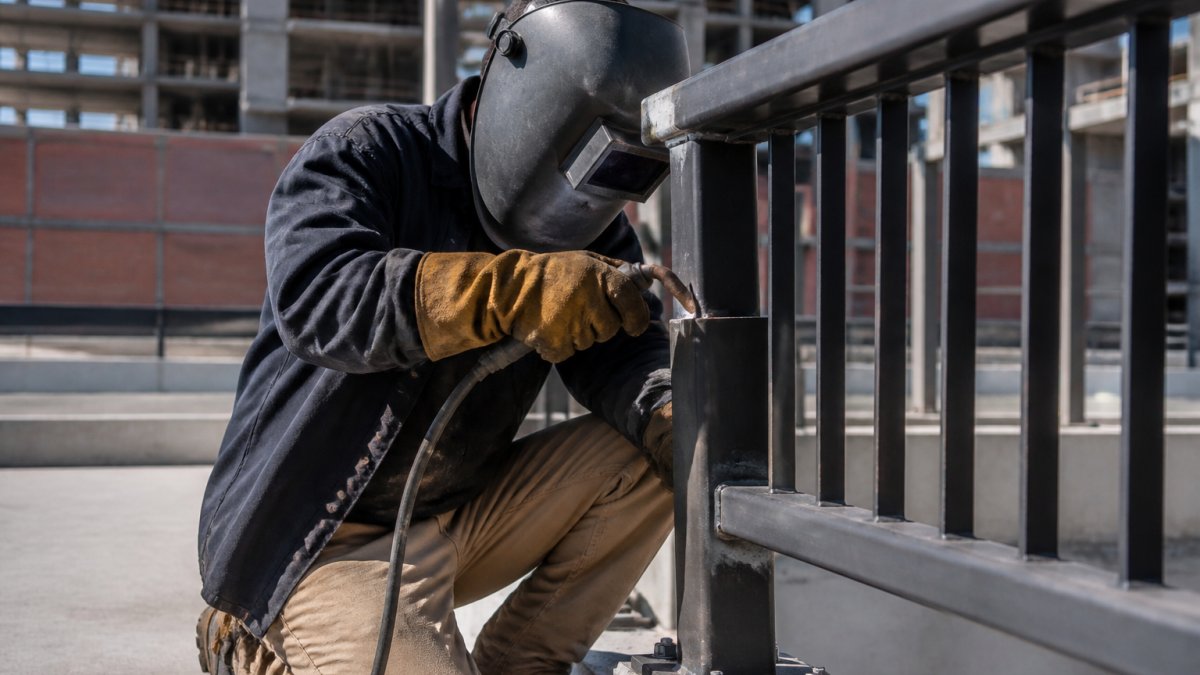
The baseline kit:
- Welding helmet with the correct shade for the process and amperage
- Safety glasses underneath, worn at all times on site
- Flame-resistant clothing covering arms and legs, no cuffs or frayed hems
- Welding gloves rated for heat and electrical resistance
- Protective boots with metatarsal coverage where overhead work occurs
A 2026 study in HealthScope on welding occupational safety examined welding hazards and proposed worker-safety strategies built around optimized PPE. The lesson: fit and condition matter as much as the specification.
Electrical Safety and Equipment Inspection
Electric shock prevention begins with equipment inspection before every shift. Check leads for cuts and exposed conductor, confirm the ground connection, and inspect the stinger and electrode holder for damage.
Maintenance is a schedule, not a reaction. Log inspections so you can prove they happened. Our breakdown of how to verify structural steel weld quality covers the inspection side that ties back to technique and equipment condition.
Welding Fume Control and Field Ventilation Decisions
Welding fume control in the field comes down to one question: can you move the air, or does the worker need respiratory protection?
In open air, natural ventilation often does the job. In a basement, a tank, or a tight interior, it almost never does. Options, in order of preference:
- Position work so fumes rise away from the breathing zone
- Use portable fans or smoke extractors to pull contaminated air out
- Add respiratory protection when engineering controls can't get exposure down
Dusts and fibers from grinding and surface prep add to the load. A 2025 SAGE-published study on welder training priorities used structured decision methods to rank essential training topics, and fume awareness consistently sits near the top.
The Field Welding Safety Checklist Every Crew Should Run
A field welding safety checklist is a short, repeatable list a crew runs at three points: before mobilization, before the arc starts, and at closeout. It works because it's short enough that people actually use it.
- Pre-job hazard assessment completed and signed
- Hot work permit issued and posted
- Fire watch assigned by name, with post-work check scheduled
Run it out loud at the tailgate meeting. A checklist nobody reads is a document, not a control.
Coordinating With Other Contractors and Site Activities
Coordination is the difference between a safe weld and an incident. Sparks travel, and the crew working below you may not know you've started. Notify adjacent trades before hot work begins and confirm who owns fire watch when two crews share a floor.
Lifting and rigging operations are the most common concurrent activity, and the two rarely mix well. If steel is being flown while welding is underway, sequence them apart. Our guide on planning structural steel lifting operations covers the load calculations and rigging checks that keep those operations separated from hot work.
Material handling and plant movement deserve the same treatment. Establish a work zone with barriers, and keep clear walkways so nobody has to step over leads to get through.
How Regulations Apply Across Jurisdictions and Who Owns Safety
OSHA requirements set the federal floor for welding safety, and state or local rules can add to it. A job that crosses a county line can carry different permit requirements, different inspection expectations, and different reporting obligations. The practical problem is not knowing that rules vary, it is knowing which rules apply to a specific job and how to turn them into procedures a crew can follow.
Identifying Which Requirements Apply
Before mobilization, work through three layers:
- Federal, OSHA's welding, cutting, and brazing standard (29 CFR 1910.252 for general industry and 29 CFR 1926.352 for construction) sets baseline requirements for fire prevention, PPE, ventilation, and equipment. These apply everywhere.
- State, some states run their own occupational safety programs with standards that differ from federal OSHA, and some add welding-specific rules for permits, training, or recordkeeping. Check whether the state has its own plan and whether it covers welding.
- Local, fire codes, building permits, and hot work permit programs are often administered at the city or county level. A jurisdiction may require a separate hot work permit, a fire watch with specific training, or notification to the local fire department before welding starts.
A common pattern is that the general contractor's site safety plan already reflects the local requirements, ask for it and read the hot work section before bidding or mobilizing.
Translating Requirements Into Site Procedures
Regulations describe outcomes; procedures describe actions. The translation step is where most safety programs fail. For each requirement that applies, write down:
- Who performs the action, the named role, not "the crew"
- When it happens, before mobilization, before the arc starts, at closeout
- What record proves it happened, permit, checklist, photo, sign-off
For example, if the local fire code requires a fire watch with a specific training credential, the procedure should name who holds that credential, how the watch is scheduled, and where the training record is kept. If the state requires annual equipment inspections, the procedure should name the inspector and the log location.
Who Owns Safety on a Multi-Employer Site
Who owns safety? The employer owns it for its own workers. The general contractor usually owns site-wide coordination. On a multi-employer site, more than one party can be cited, so "that's the GC's problem" is not a defense.
Practically, that means asking three questions before mobilization:
- Which authority has jurisdiction here, federal OSHA, a state plan, or both?
- What permits does this specific site require, and who issues them?
- Who signs off on hot work, and who is responsible for post-work monitoring?
When safety responsibility and contractor accountability are unclear, use our contractor vetting checklist to establish who is responsible for what before work begins.
Request a Field Welding Safety Review for Your Next Project
Field welding safety is a planning discipline, and it shows up in the schedule. Crews that assess hazards, run permits properly, and coordinate with other trades finish projects without the shutdowns that follow an incident.
Patriot Iron Work brings high standards of safety and professional craftsmanship to every field job, from steel repairs and railings to light structural steel erection across Silver Spring, Montgomery County, and the DMV. If you need on-site welding with a crew that manages the requirements for you, mobile welding is where to start.
Get a Free Quote and put a safety plan behind your next steel project.
Frequently Asked Questions
What safety requirements apply to field welding?
Field welding safety requirements cover hazard identification before work begins, a written hot work permit where the site requires one, fire watch during and after welding, and personal protective equipment. OSHA's welding standard (29 CFR 1910.252) sets baseline rules for fire prevention, ventilation, and protection of personnel. Because field conditions change with weather, access, and nearby trades, most contractors also run a pre-job risk assessment and coordinate with the general contractor before striking an arc.
What PPE is required for welding work?
Welding PPE requirements start with a welding helmet with the correct filter shade, safety glasses under the hood, and face protection for grinding and chipping. Flame-resistant clothing, leather welding gloves, and protective boots cover exposed skin against sparks, spatter, and arc radiation. Hearing protection and a respirator may be added based on the process and fume exposure. Inspect gear before each shift: cracked lenses, worn gloves, and frayed sleeves all fail when they matter most.
How do you control fire hazards during field welding?
Move combustible materials at least 35 feet from the work area, or shield them with fire-resistant covers when relocation is not possible. OSHA's welding standard sets this distance for combustibles. Assign a fire watch during welding and for at least 30 minutes after the last spark, and check hidden spaces, floor openings, and ductwork where sparks can travel. A charged extinguisher stays within reach. On occupied sites, the general contractor's hot work permit process usually governs the exact steps.
What should a field welding safety checklist include?
A field welding safety checklist should confirm the hot work permit is signed, combustibles are cleared or shielded, a fire watch is assigned, and an extinguisher is on hand. Add PPE inspection, welding equipment inspection for cable damage and ground connections, ventilation or respiratory protection for fume control, and a clear work-area setup with walkways kept open. Close the checklist with post-work monitoring: a fire watch check at the end of the shift and a documented sign-off before the area is released.
When is a hot work permit needed for welding?
A hot work permit is needed whenever welding, cutting, or grinding happens outside a designated hot work area, which covers most field welding. The permit documents the location, the fire watch, the precautions taken, and the person authorizing the work. Permit rules vary by site and jurisdiction, so the general contractor's requirements control on commercial projects. Many permits expire at the end of a shift, meaning a new permit is needed each day work continues.
How should welding fumes be controlled outdoors?
Outdoor welding still produces welding fumes and airborne contaminants, and wind does not guarantee safe exposure levels. Position the work so fumes travel away from the welder, use natural ventilation where it is reliable, and add local exhaust or a supplied-air respirator in enclosed or low-lying areas. Confined spaces require testing and a permit before entry. Match the respiratory protection to the process and the metals involved, and never assume an open roof makes fume control unnecessary.