 Listicle
Why Structural Welding Delivers Stronger Steel Connections
Last Updated: November 10, 2026
Quick Summary
Structural welding joins steel members with continuous fused connections instead of bolts or rivets, creating stiffer frames with fewer connection points to fail or corrode. Benefits include rigidity, a clean profile and continuous load transfer, but strength depends on correct weld sizing, qualified welders and proper inspection.
- Welded joints transfer load continuously, which generally produces stiffer frames than comparable bolted assemblies.
- Welds have no gusset plates to hunt down and no bolt holes reducing the net section of a member.
- Bolting is often better when access is tight, the work must be reversible or hot work is prohibited.
- Most projects begin with visual weld inspection against AWS D1.1 acceptance criteria.
- Ask any contractor for a WPS, procedure qualification records and welder qualification records.
Table of Contents
- What Structural Welding Actually Does for a Steel Frame
- Load-Bearing Strength and Rigidity in Welded Connections
- Structural Welding Examples in Railings, Gates and Light Steel Erection
- Welding vs. Bolting Structural Steel: Where Each Method Fits
- Trade-Offs, Limitations and Inspection Requirements
- Structural Welding Best Practices That Protect Long-Term Performance
- Planning a Structural Steel Repair or Fabrication Project in the DMV
- Frequently Asked Questions
Structural welding is the process of joining steel members with continuous, fused connections rather than bolts or rivets, and it is one of the most common ways fabricators build the frames, railings and gates that hold up commercial buildings. For property managers, general contractors and facilities teams around Silver Spring, the benefits of structural welding come down to rigidity, a clean profile and fewer connection points to inspect. The practical trade-offs are worth understanding before a project is scoped.
What Structural Welding Actually Does for a Steel Frame
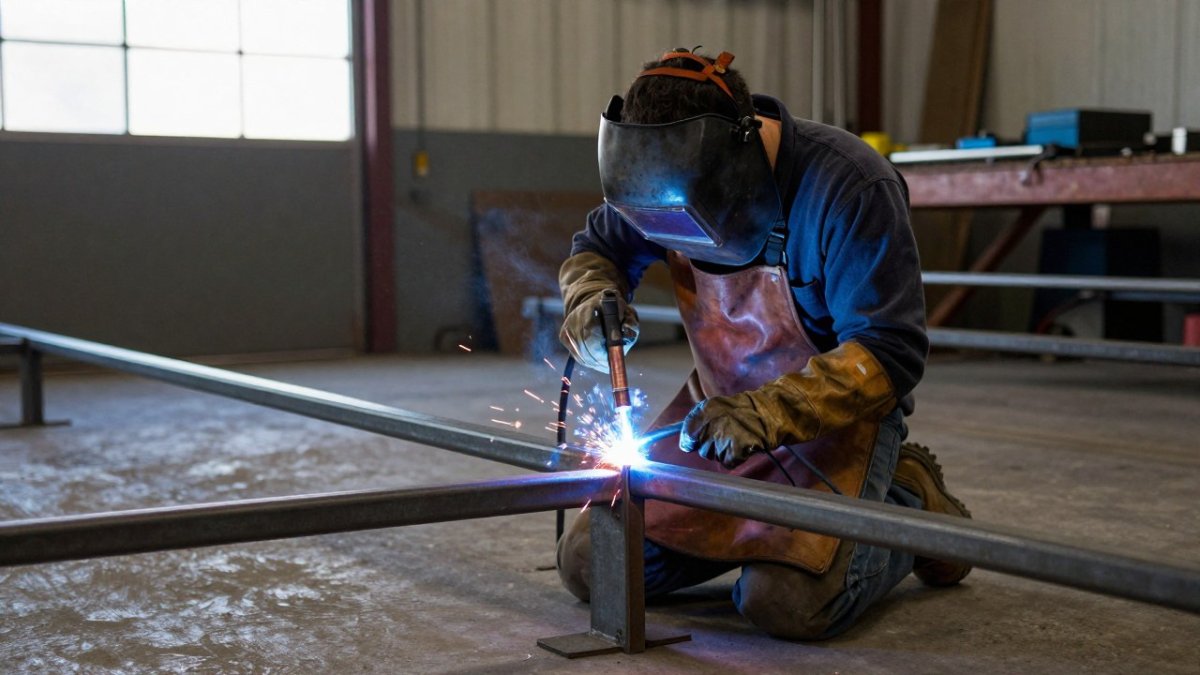
Structural welding fuses two steel members at a joint so that the connection behaves as one continuous piece of metal. A bolted joint depends on friction and bolt tension, while a welded joint depends on the strength of the weld metal itself. That difference shapes almost every decision a fabricator makes.
A welded frame has fewer connection hardware pieces to fail, loosen or corrode. There are no gusset plates to hunt down and no bolt holes that reduce the net section of a member.
Welding is not automatically the better choice, though. Field welding is weather-dependent, requires certified welders and needs inspection. The benefit is real, but it only materializes when the weld is designed and executed correctly.
Load-Bearing Strength and Rigidity in Welded Connections
Welded connections transfer load continuously across the joint, which generally produces stiffer frames than comparable bolted assemblies. Stiffness matters for railings and gates that must resist lateral push, and for light structural members that must limit deflection under their rated loads.
Strength depends on the filler metal, weld size, joint type and base metal, so the claim is never simply "welded is stronger." A properly sized fillet weld in a tested configuration will carry its design load, but an undersized weld or poor penetration will fail well below what the surrounding steel can take. The governing design is set by the applicable building code and AWS D1.1, the structural welding code for steel, which specifies weld sizes, electrode classifications and qualification requirements (AWS D1.1/D1.1M:2025-AMD1: Structural Welding Code - Steel).
Engineers should confirm load values for each project rather than rely on general rules of thumb.
Structural Welding Examples in Railings, Gates and Light Steel Erection
Structural welding shows up in more places than large beams. Common examples include:
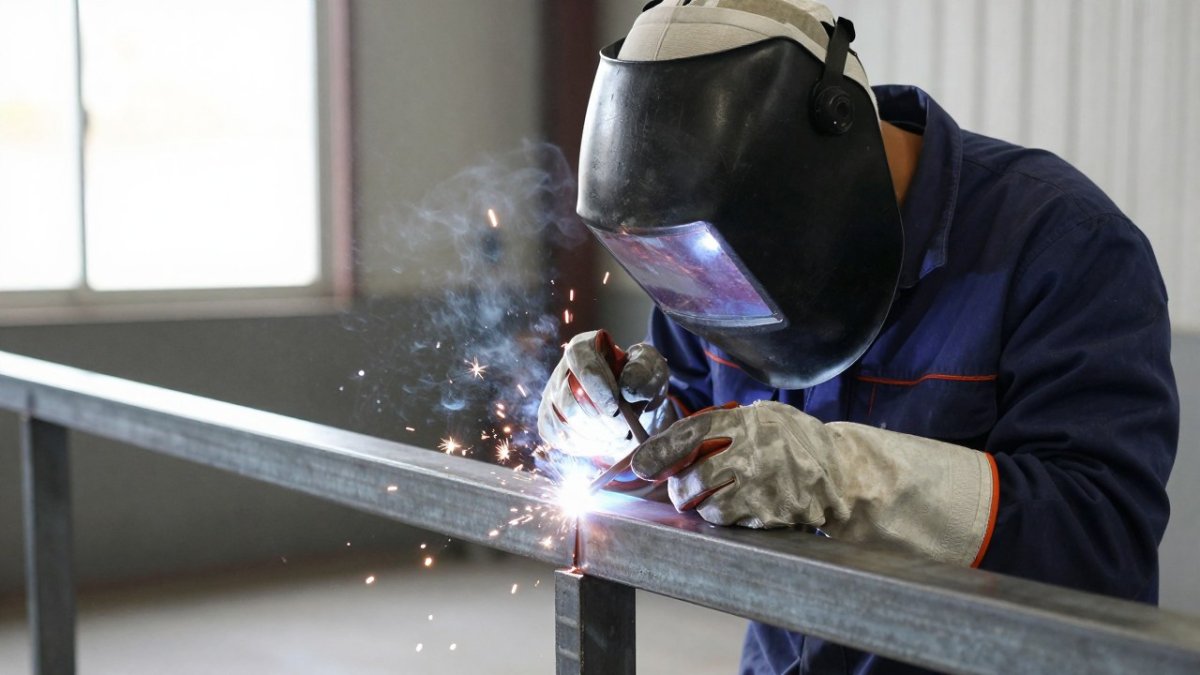
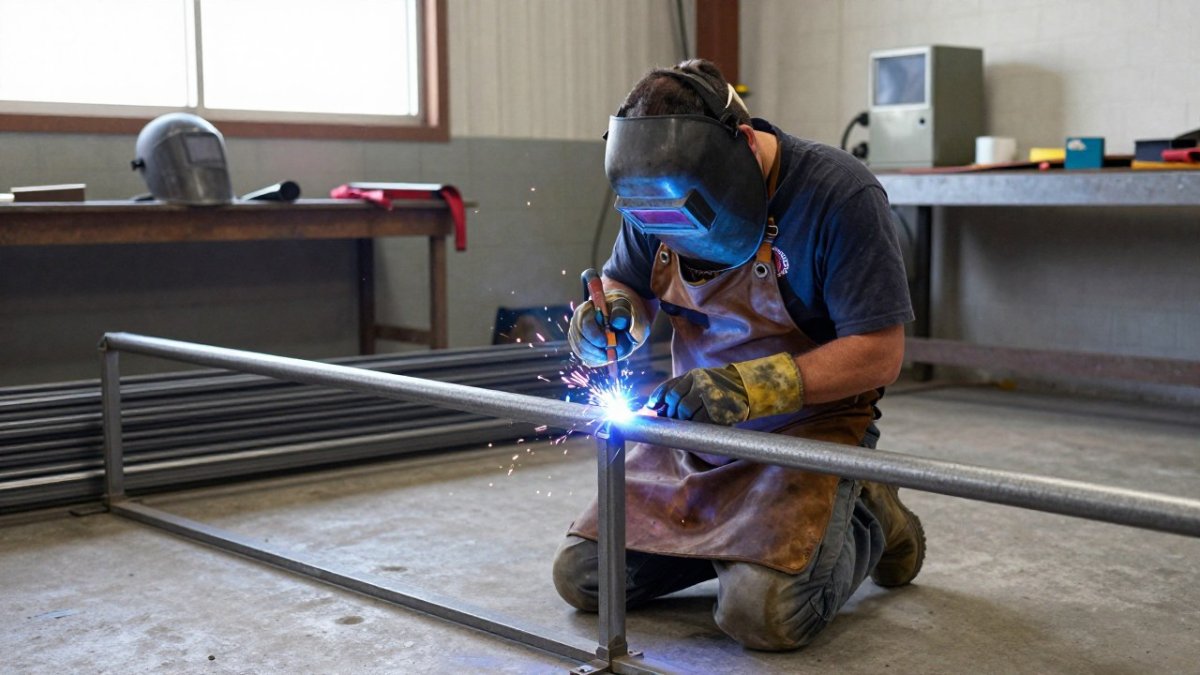
- Railings: Stair and balcony railings are welded at posts, top rails and infill to create a rigid assembly that resists people leaning or pushing against it.
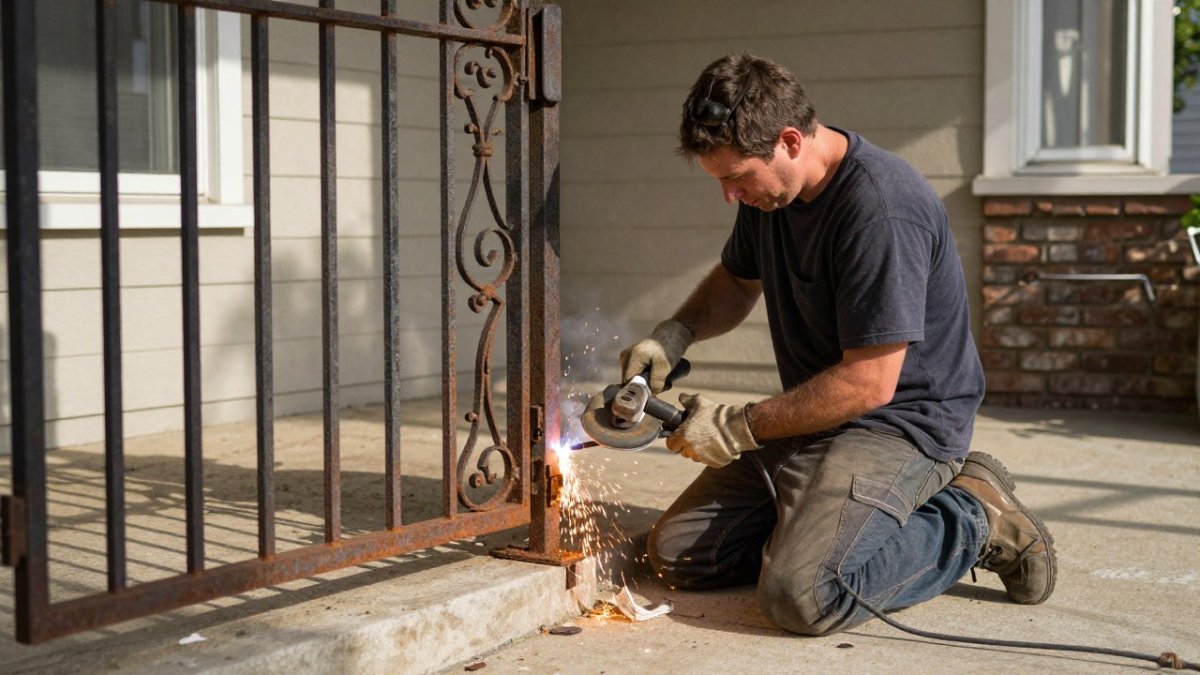
- Iron gates: Welded frames keep the gate square over time, which reduces sag at the latch side and the hinge stress that causes premature failure.
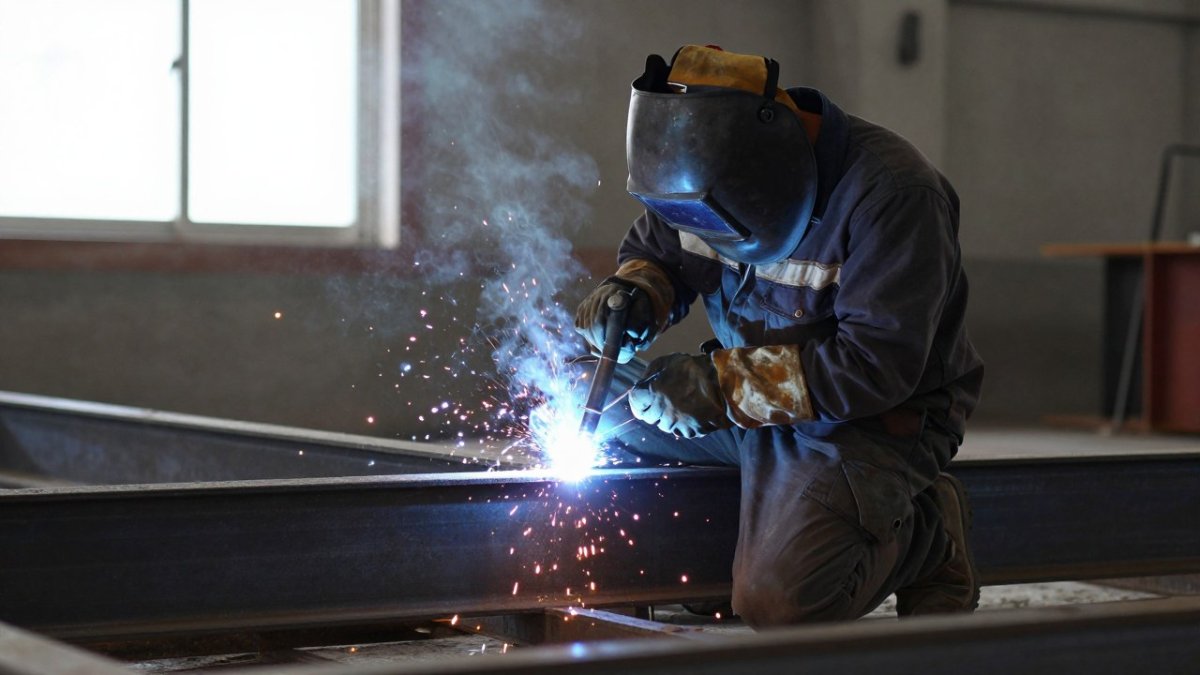
- Light steel erection: Mezzanine supports, canopy frames and equipment platforms are often shop-welded to size, then bolted or field-welded into place.
In each case, the weld design should match the load and the environment. Exterior railings in the DMV face freeze-thaw cycles and road salt, so galvanizing or a proper coating system matters as much as the weld itself.
Welding vs. Bolting Structural Steel: Where Each Method Fits
Welding and bolting are not competitors so much as tools for different jobs. Bolted connections are easier to inspect visually, can be installed without hot work and are easier to modify or disassemble. Welded connections are preferred where continuous load transfer, a clean appearance or low profile matters.
A practical split looks like this:
| Factor | Welded connection | Bolted connection |
|---|---|---|
| Stiffness | Generally higher | Depends on bolt pattern and preload |
| Field conditions | Weather and access sensitive | Easier in rain or cold |
| Inspection | Requires weld inspection | Visual and torque checks |
| Modification | Difficult to undo | Easy to disassemble |
| Typical use | Railings, gates, shop assemblies | Field erection, moment connections |
Many projects use both: members are shop-welded for accuracy and bolted together on site.
Trade-Offs, Limitations and Inspection Requirements
Structural welding is not the right answer for every connection, and a credible benefits article has to say so. The advantages only hold when the joint is designed, qualified and inspected correctly, and when site conditions allow it.
Where welding is the weaker choice. Bolting is often better when:
- Access is tight. A welder needs room to strike an arc, hold a torch angle and see the puddle. If a connection is buried behind finished walls or in a confined space, field welding may be impractical and bolting becomes the safer path.
- The work must be reversible. Welds are permanent. If a member may need to be removed, replaced or adjusted, equipment platforms that get reconfigured, temporary shoring, bolted connections disassemble without cutting.
- Hot work is prohibited. Occupied buildings, fuel storage areas and some insurance policies restrict open flame and sparks. In those cases bolting avoids the permit and fire-watch burden entirely.
- Thin material is involved. Heat input distorts light-gauge members and can warp railing infill. Careful sequencing and fixturing help, but bolting or mechanical fastening may hold tolerances better.
- Weather is against you. Wind, rain and cold degrade weld quality. Field welding in bad conditions is a schedule risk that shop welding and bolting avoid.
Heat and distortion. Every weld shrinks as it cools, and that shrinkage pulls the surrounding steel. On thin sections the result is bowing, twist or a railing that no longer sits square. Fabricators manage this with weld sequencing, back-stepping, fixturing and limiting heat input, but distortion cannot be eliminated, only controlled. That is one reason shop welding is preferred for assemblies that must stay true.
Defects you cannot see. Porosity, undercut, incomplete fusion and slag inclusions can sit below a weld surface that looks fine. That is why inspection is not optional on structural work.
How inspection actually works. Most projects start with visual examination against acceptance criteria in AWS D1.1, the structural welding code for steel. Visual inspection catches surface discontinuities, undercut, crater defects and obvious fit-up problems. You can follow a step-by-step visual inspection with acceptance criteria to check what to look for and when.
Documentation to ask for. A qualified contractor should be able to produce:
- Welding Procedure Specifications (WPS), written instructions for each joint type, covering process, filler metal, current, voltage, travel speed and preheat.
- Procedure Qualification Records (PQR), the test results proving the WPS produces sound welds.
- Welder qualification records, evidence each welder is qualified for the process and position being used.
- Inspection reports, visual and NDT results, dated and tied to the specific joints.
Projects subject to special inspection under the building code may require an independent inspector to verify welds before they are concealed by coatings or finishes. Facilities managers should expect that paper trail as a normal part of the job, not an upsell.
Watch out: a contractor who cannot produce a WPS or welder qualification records on request is a red flag on structural work, regardless of how good the finished weld looks.
Structural Welding Best Practices That Protect Long-Term Performance
1. Design the joint for the load, not the habit. Weld size, length and type should come from the engineer's calculations, not from what the crew always does.
**2. For a step-by-step workflow on permits, PPE and fume controls, see our on-site welding safety guide.
3. Control heat and sequence. Weld in a balanced sequence, back-step long runs, and fixture parts that must stay square. On railings and gates, weld opposite sides of a joint in rotation rather than running one continuous pass down one side.
4. Prepare and protect the surface. Remove mill scale, rust, oil and moisture from the weld zone before welding, trapped contamination causes porosity. After welding, remove slag and spatter, then apply a coating system matched to exposure.
5. Inspect and document, then maintain. Keep inspection records tied to joints so future repairs and modifications are straightforward.
6. Repair rather than replace where it makes sense. One of the underrated benefits of welded steel is repairability.
7. Plan for the environment. The same joint that performs indoors may fail outdoors without the right coating and drainage details. Water trapped in a joint or at a weld toe accelerates corrosion regardless of weld quality.
Following these steps does more than produce a sound weld on day one. It lowers the odds of cracking, corrosion at the joint and premature repair, which is where the real cost of a welded structure is won or lost over its service life.
Planning a Structural Steel Repair or Fabrication Project in the DMV
If you are planning a repair or a new fabrication job in Silver Spring, Montgomery County or the wider DMV, start with a clear scope: the member sizes, the loads, the exposure and whether the work is shop or field. You can find structural welding near you for commercial steel projects. Defining these up front avoids change orders later.
For reliable results, vet any contractor for qualified welders, written procedures and an inspection process. Our guide shows how to compare welding contractors with a vetting checklist before you request a quote. Patriot Iron Work handles custom fabrication, mobile welding, steel repairs, steel railings, iron gates and light structural steel erection in the area, and we are glad to provide a quote.
Get a free quote from Patriot Iron Work to discuss your structural welding project.
Frequently Asked Questions
Is structural welding stronger than bolting?
Welded connections transfer load continuously and are often stiffer, but strength depends on weld size, filler metal and joint design. A properly designed weld meets its rated load; an undersized or poorly fused weld does not.
Do welded steel connections need inspection?
Yes. Weld quality can hide defects, so visual inspection against acceptance criteria and, where required, non-destructive testing should be part of the project.
Can structural welding be done on site?
Yes, but field welding is more sensitive to weather, access and fit-up, so many projects shop-weld members and bolt them together on site.
What codes govern structural welding?
AWS D1.1 is the widely used structural welding code for steel, and local building codes set additional requirements. Confirm the governing standard for your specific project with the engineer of record.
Frequently Asked Questions
How strong are welded structural steel connections?
A properly made structural weld fuses the base metal, so the joint can carry loads comparable to the connected members rather than relying on fasteners to transfer force. Strength depends on the weld process, filler metal, joint design and fit-up quality. Fabricators typically confirm weld quality through visual inspection and, where the design calls for it, nondestructive testing. Ask your fabricator which procedures and welder qualifications apply to your project before work begins.
When is welding better than bolting for a steel connection?
Welding works well when a connection must be continuous, when it needs to be compact, or when access for bolt holes and wrenches is limited. It also suits custom components such as railings and gates where a clean finish matters. Bolting is often preferred for field connections that may need to be disassembled, for slip-critical joints, or where inspection of the connection in service is a priority. The right choice depends on the structural engineer's design and the conditions on site.
What qualifications should a structural welder have?
Structural welders should hold qualifications that match the code and process used on the project, commonly tested under the American Welding Society's Structural Welding Code for steel. Qualifications are process-specific and position-specific, so a welder approved for one position may not be approved for another. Ask for current qualification records and confirm they cover the base metals and thicknesses in your project. Documentation should be available before fabrication starts.
How does structural welding support steel repairs?
Welding can restore a damaged member by adding material, replacing a cracked section, or reinforcing an existing connection. A repair should be engineered for the loads it must carry, and the fabricator needs to know the original steel grade and condition. Preheat, cleaning and sequencing all affect the result. Have the repair scope reviewed before cutting, and plan for inspection of the finished weld.